 Divisi
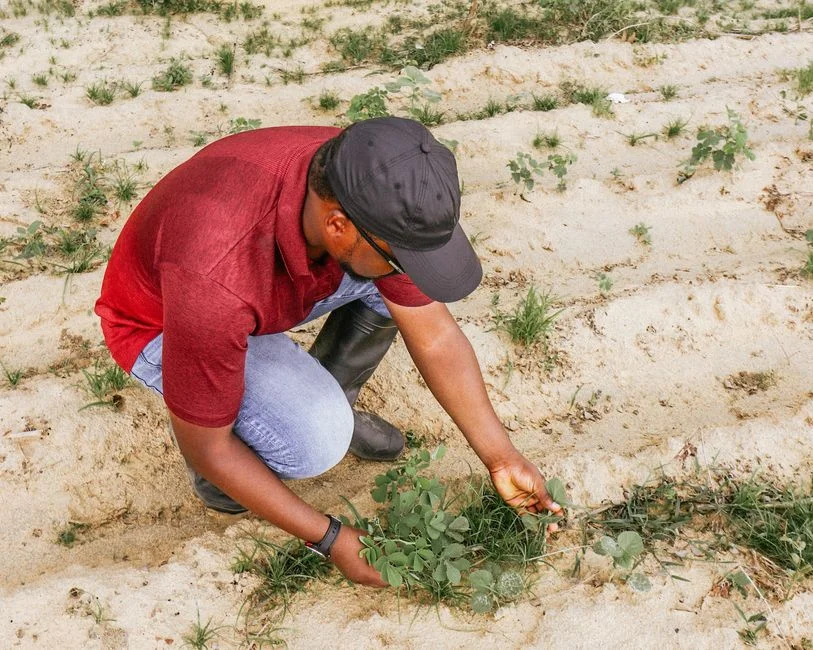
Short-cycle varieties and sowing only on an effective rain are how you protect a groundnut-basin crop when the El Nino monsoon turns erratic — and if the rains came late or your first stand failed, a fast 65-to-90-day variety is your replant insurance right now. FEWS NET expects erratic rainfall across West Africa through the 2026 rainy season, so a crop that finishes fast and goes in on a real rain beats a big crop that runs out of water.
Will El Nino make my rainy season shorter this year?
El Nino has no single fixed effect in Senegal — it makes your monsoon variable and hard to predict, which is a very different job from East Africa's floods. Forecasters give an 82% chance of El Nino developing over May to July 2026, with a higher likelihood of below-normal June to September rain across the Sahel. The groundnut basin already runs on a tight window — Kaolack and Kaffrine average about 655 mm a year — and FAO reports basin farmers are already seeing shorter rainy seasons and lower groundnut yields. New to how El Nino works? Start with what El Nino means for your farm.
Which groundnut, millet and cowpea varieties finish before the rain stops?
Pick a variety by its days-to-maturity, then match it to the rain you expect. In a variable year, a 90-day groundnut that fills its pods is worth more than a 120-day type caught by an early cut-off. Researchers at ICRISAT have released short-cycle, early-maturing groundnut, millet and cowpea for exactly these conditions.
| Crop | Variety | Days to maturity | Why it fits a short year |
|---|---|---|---|
| Groundnut | 55-437 / Fleur 11 | ~90 days | Finishes fast; oil and seed markets |
| Groundnut | 73-33 | ~110 days | Only if the rain looks reliable |
| Pearl millet | IBV 8004 | ~75 days | Fastest cereal option |
| Pearl millet | Souna 3 | ~90 days | Up to ~3,500 kg/ha in a good year |
| Cowpea | Mouride | ~65 days | Classic drought-escape |
| Cowpea | 58-57 | ~75 days | Tough, spreading landrace |
Days-to-maturity come from ISRA variety work on groundnut, pearl millet and cowpea. Keep 2 to 3 kg of certified 90-day groundnut seed back as insurance — a small sac at the co-op, where seed is sold by the kilo and by the 50 kg bag — so you can replant if your first sowing fails. For deeper cereal agronomy, see sorghum and millet in a dry year.
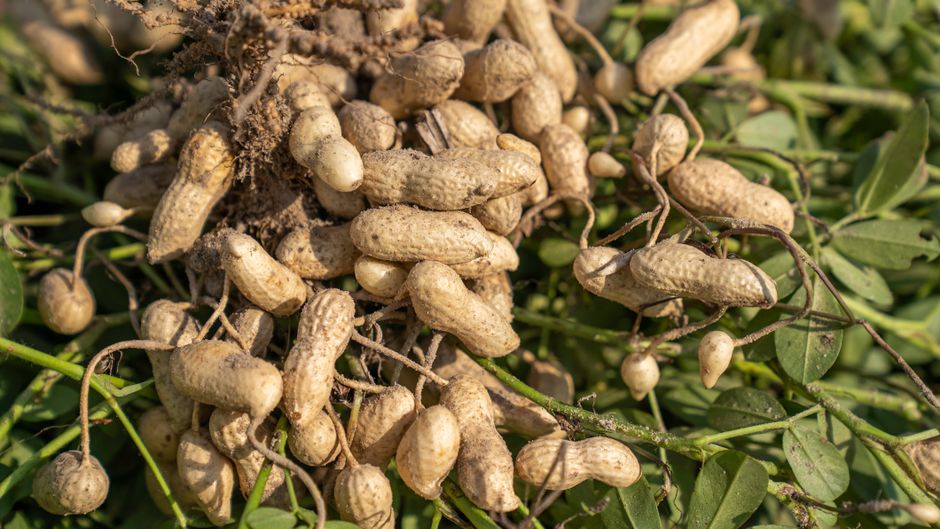
Photo: Mark Stebnicki / Pexels
When should I plant on the first effective rains?
Wait for an effective rain, not a teasing shower. ANACIM counts the season as started after 15 to 20 mm of rain over one to three days with no 20-day dry spell in the next 30 days — 15 mm in the drier north, 20 mm further south.
- Watch every rain from the day you are ready to sow — whether that is an early planting or a late replant.
- No rain gauge? Stand a straight-sided tin in the open. About 2 cm of water collected equals 20 mm of rain.
- Then dig to a hand's depth (about 15 cm). If the soil forms a ball in your fist, roots have water — sow within 24 to 48 hours.
- If it is one shower on dry sand that crumbles apart, hold your seed.
- Sow groundnut 3 to 5 cm deep into moist soil, dropping one seed every 15 cm in rows about 30 cm apart — a close, full stand is what lifts rainfed pod yield.
That tight 30 cm x 15 cm spacing sets about 222,000 plants per hectare — the density a rainfed trial in West Africa's semi-arid tropics found best for pod yield and profit. A denser stand needs more seed: groundnut seed rate climbs with close spacing and bigger seed, so for a small-seeded erect variety like 55-437 or Fleur 11 at this spacing, budget about 80 to 90 kg of shelled seed per hectare and fill every row rather than thinning to stretch the sac.
Miss the moment and you are chasing a dry spell later — the West Africa dry-spell playbook and microdosing guide shows how to feed a young crop with tiny, well-placed doses of fertiliser.
How do I use the ANACIM and PRESASS forecast?
Treat the seasonal forecast as your planting compass, not a promise. Each year ANACIM and the regional PRESASS forum run by ACMAD and AGRHYMET publish an outlook of whether rain is likely to be below, near, or above normal.
- Read the tercile (below / near / above normal) for your region.
- Note the predicted onset date and any late-start warning.
- If it says "below normal" or "late", lean on your 75 to 90-day varieties.
- Re-check the update just before you sow.
New to terciles? How to read a seasonal rainfall forecast breaks it down step by step.
How do I protect sandy basin soil that dries fast?
Basin sand drains quickly, so every rain has to count. Build the soil's grip on water before the season, then harvest whatever falls.
- Work compost or manure into the top layer to hold moisture — see build soil that holds water.
- Keep a mulch of millet or groundnut residue over bare sand.
- Catch runoff in simple basins or half-moons — smart rainwater harvesting.
- Rotate groundnut with millet or cowpea to build nitrogen and break pest cycles.
Your next step this week
Write down two things: the days-to-maturity of the seed you already hold, and the latest ANACIM/PRESASS outlook for your region. If your first stand failed or the rains came late, a very-short-cycle variety is still worth sowing — Mouride cowpea at about 65 days finishes fastest, then a 75-day millet or a 90-day groundnut. Buy 2 to 3 kg — a small sac at the co-op, where seed sells by the kilo — of a 65-to-90-day variety as replant cover, and set the same note in your calendar so next season you start on the first effective rain. That one habit is your cheapest cover against a variable El Nino monsoon.