 Divisi
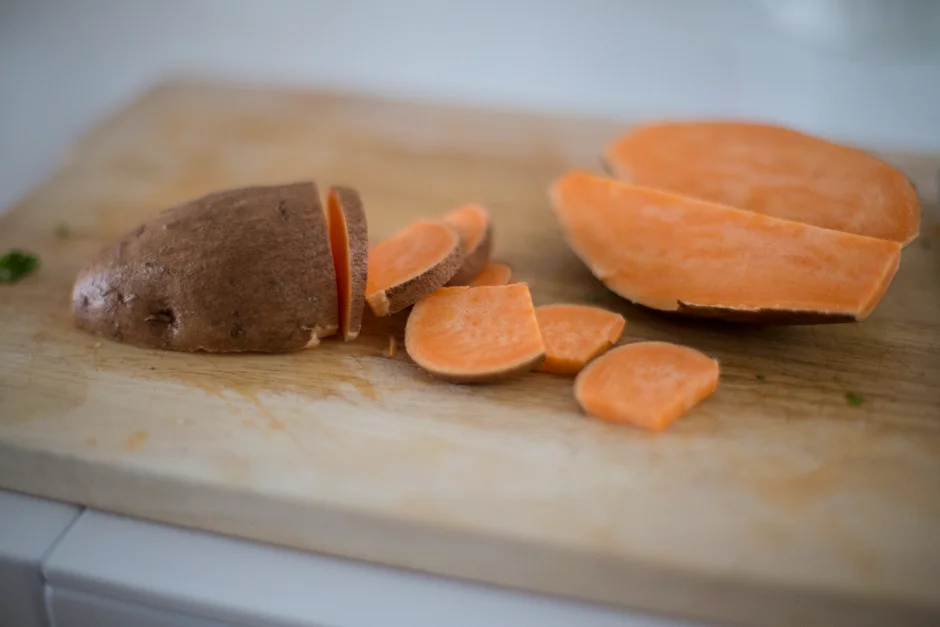
Plant sweet potato and you spread your risk in a single move: it makes a crop in 3-5 months from a few vine cuttings, holds on through dry spells better than maize, and the orange-fleshed types sell for more. On a small plot in a wobbly El Nino season, that mix of food you can dig as you need it and cash you can bank is exactly the buffer you want.
Sweet potato grows from vine cuttings (short lengths of stem, also called slips) — not seed — so you can multiply your own planting material for almost nothing. Grown well, improved varieties yield 18-25 tonnes per hectare against just 3-7 t/ha for old local types — up to about 200 bags of 50 kg from 0.4 ha (1 acre). It is also relatively drought-tolerant and gives two or three crops a year where rain allows. Pair it with cassava as a second root buffer — see our Zambia root-crop land-prep guide — and read what El Nino means for your farm first.
Quick reference:
| Job | Figure | No-tool guide |
|---|---|---|
| First harvest, early types | under 4 months | about 90-120 days |
| Plant spacing on the ridge | 30 cm | one adult hand-span |
| Space between ridges | 50 cm | about knee-height apart |
| Vine cutting length | 25-30 cm from the tip | hand to elbow |
| Well-grown yield | 18-25 t/ha | ~200 bags of 50 kg per acre |
Which sweet potato matures fastest in a dry year?
Choose an early-maturing variety — one that reaches harvest in under four months. These "escape" drought by finishing before the soil dries out. Medium types take 4-6 months and only suit wetter ground.
Your agro-ecological zone (the climate-and-soil band you farm in) decides which to plant:
- Semi-arid, single-rains (unimodal) zones — much of central and southern Malawi, Uganda's cattle corridor: go early-maturing, one strong crop.
- Sub-humid, twice-a-year (bimodal) zones — Uganda's Lake Victoria crescent, northern Mozambique: you can stagger two crops a year.
Drought-tolerant OFSP varieties released for the region include Malawi's Mathuthu, Chipika and Kadyaubwereder. More on matching seed to a dry year in choosing seed for a dry year.
How do I get clean sweet potato vines to plant?
Cut 25-30 cm lengths from the fresh growing tips of healthy plants — tip cuttings taken this way rarely carry weevils, even from an infested field.
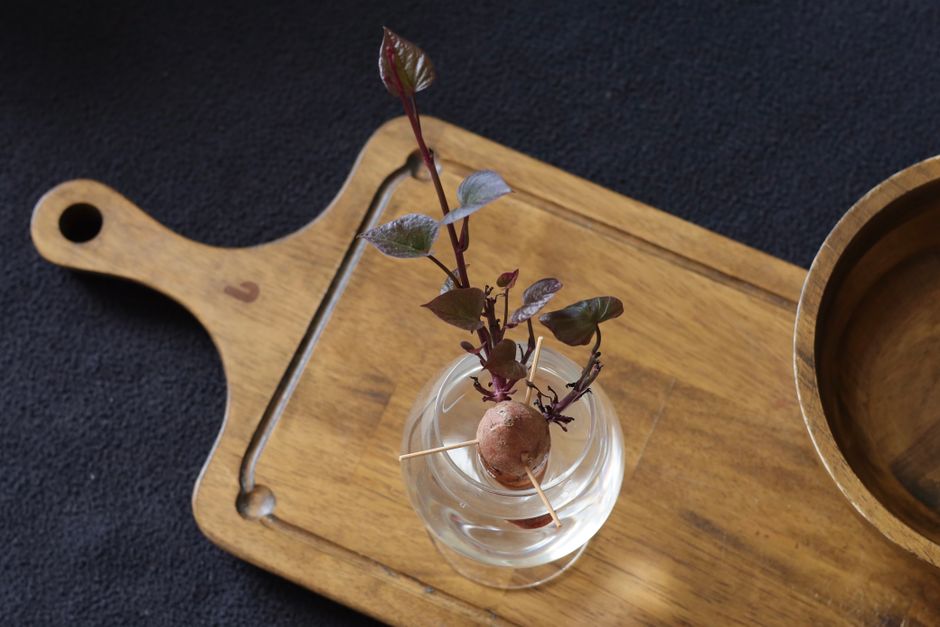
Photo: Phượng Lê / Pexels
No-tool test: a good cutting snaps crisply and shows white sap; an old vine bends like rope — throw it out.
- Take cuttings from disease-free mother plants that are putting out fresh new growth, or buy from a certified multiplier.
- Use the top third of the vine; discard woody bases.
- Plant on ridges or mounds (raised soil banks that give roots room and drain heavy rain). Push about two-thirds of each cutting into the ridge, leaving the top two or three leaves and their nodes (the joints where roots and shoots form) above the soil. Space plants 30 cm apart, ridges 50 cm apart.
Build soil that holds moisture first — see the compost, manure and mulch guide. Clean vines are also a side income: a 10 kg bag of OFSP vines can sell for under USD 20, and demand spikes at planting.
How do I stop weevils from ruining my sweet potatoes?
The sweet potato weevil (Cylas puncticollis, and the brown C. brunneus) is the crop's biggest enemy — a slender, ant-like beetle 6-8 mm long whose white, legless 8 mm grubs tunnel into roots and leave them spongy, bitter and bad-smelling. Damage is worst from the root-bulking stage onward, and worst of all late in a dry season, because the weevil reaches roots through cracks in dry soil.
Beat it in this order — IPM (integrated pest management) means using the cheapest, safest tools first:
- Sanitation: after harvest, bury infested roots over 15 cm deep or feed them to livestock; clear volunteer "morning glory" weeds (wild Ipomoea) that shelter weevils between seasons.
- Cultural: plant clean tip cuttings; re-hill the ridges about 30 days after planting to close cracks, and close them again after every dig. Field test: if you can slide a finger into a crack in the ridge, a weevil can too — earth it up. Don't plant sweet potato in the same field for 2-3 seasons, and harvest as soon as roots reach usable size.
- Biological / botanical: dust cuttings and soil with the fungus Beauveria bassiana or with neem; encourage predatory ants. A 5-litre jerry-can pheromone trap with soapy water and a lure replaced every 8 weeks catches male weevils.
- Chemical (last resort): sprays cannot reach grubs already inside the roots, so the real wins are cultural. If you use a registered soil insecticide at planting, wear gloves, closed boots and eye cover, and never dig roots before the pre-harvest interval — the minimum number of days between treatment and harvest — printed on the label.
Is orange sweet potato worth more than white?
Yes. Orange-fleshed sweet potato (OFSP) is biofortified — bred to be naturally richer in a nutrient — and earns both a health and a price advantage. Just 125 g, about one medium root, meets a young child's daily vitamin A need, which supports healthy eyes and a strong immune system. In markets that know it, OFSP fetches a 25% premium over white and yellow types. In Malawi, one grower earned about USD 280 from nine bags of biofortified roots. White types store more starch and travel well — grow some of each and let your market decide.

Photo: Ana Kenk / Pexels
Can I leave sweet potatoes in the ground until I need them?
Yes, and this is the crop's quiet superpower. Once roots size up, you can dig a few at a time — a staggered (piecemeal) harvest — over several weeks, so your household always has food to lift and produce to sell fresh, by the 20-litre bucket or the 50 kg bag.

Photo: Mark Stebnicki / Pexels
No-tool test: scrape soil from the base of a plant; when roots are about fist-sized, start lifting.
Two cautions in a dry season:
- Every time you dig, close the ridge back over the remaining roots — open cracks invite weevils.
- Don't leave a mature crop in dry, cracking soil for weeks on end. To keep planting material for next season, use the CIP "Triple S" method — storing selected roots in dry sand and sprouting them before the rains.
Your next step this week
Find a healthy sweet potato field or a certified multiplier and cut 20-30 clean tip cuttings (25-30 cm each) to start your own vine nursery — so you have planting material ready the moment the rains steady.