 Divisi
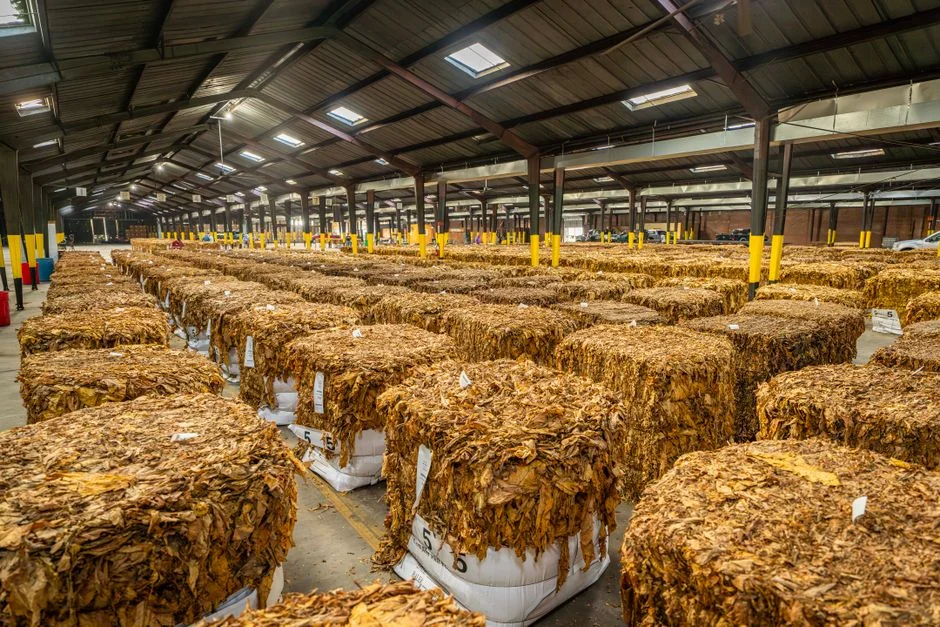
The top price goes to quality leaf, not to a date on the calendar. In Zimbabwe's selling season — roughly March to August, when the auction floors open in early March and the season closes in August — well-cured, cleanly graded, honestly-packed leaf earns the premium on any selling day. So cure it right, grade it hard, and watch the floor's daily price trend instead of betting your crop on "late."
Is it better to sell tobacco early or late in the season?
Neither automatically. Tobacco is sold by the kilogram, and the price is set two ways: on the auction floor by open bidding (highest bid wins), and on contract floors by a grade-price matrix built from the previous day's average auction prices. Auction floors handle only about 5% of the crop but remain the market's main price setter, so the daily auction average is the number to watch.
The season does not reliably reward waiting. In 2024 the floors opened strong and hit a record US$5.05/kg — the highest in a decade, with auction prices up 26%. But with an oversupplied crop in 2026, auction lows sank to around US$0.80/kg. Holding good leaf into a falling market costs you. Check TIMB's daily sales figures, and sell your best grades when quality is clearly being paid for — not on a hunch that later is higher.
How does curing affect the price of tobacco?
Curing is the single biggest quality step, and where value is most often lost. Two crops, two methods:
| Flue-cured (Virginia) | Burley | |
|---|---|---|
| Method | Controlled heat from barn flues | Air-cured in a ventilated shed |
| Temperature | Yellowing to ~42°C, colour-fixing 43–54°C, stem-drying 55°C up to ~68°C | Ambient ~18–32°C, relative humidity 65–70% |
| Vent management | Hold each stage until the leaf is ready before advancing the heat | Open or close vents to keep drying steady and stop mould |
| Duration | About 4–8 days | About 5–10 weeks |
| Colour target | Bright lemon to orange | Even light-to-medium brown |
Rush the heat and you scorch the leaf; hold it too cool and it stays green and dull. In flue barns the stem-drying stage is commonly held near 68°C. No timing trick rescues badly cured tobacco.
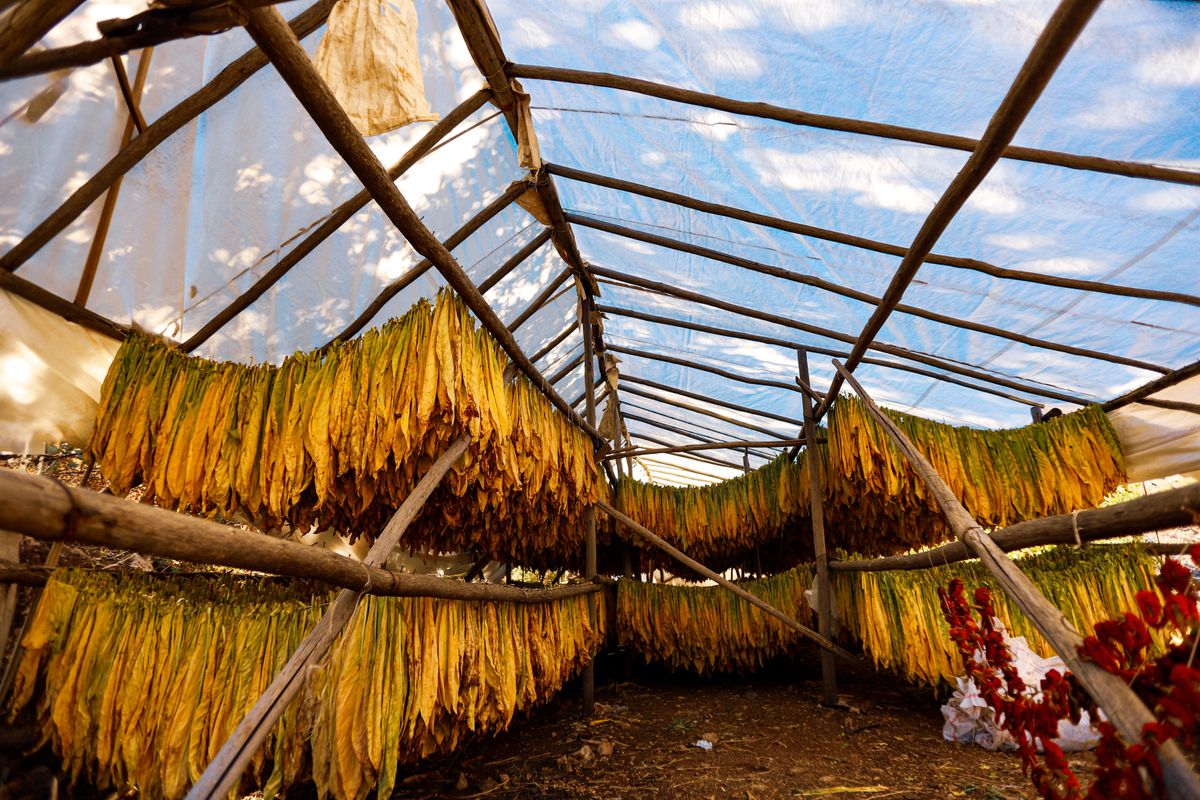
Photo: Furkan Işık / Pexels
Why should I grade tobacco before baling?
Buyers pay for what they can see, and a bale is priced by its worst handful. Mix good leaf with trash or off-colour leaf and the whole bale is bid down to that lowest part — your best leaf then sells at the price of your poorest. Zimbabwe's rules only allow a split bale for two closely related grades, and foreign matter or "nesting" (hiding poor leaf inside) can get a consignment withdrawn or forfeited. Grade it hard first:
- Sort by stalk position — leaves from the same part of the plant belong together, because position drives quality.
- Within a position, separate by colour and ripeness — bright, even leaf apart from green, dull or scorched.
- Pull out all trash: sand, soil, string and non-tobacco matter.
- Set aside torn, mouldy or rotted leaf — it drags a whole bale down.
- Bale each grade on its own at 20–120 kg net, in approved hessian or tobacco paper (no plastic), packed evenly so the top leaf represents what is underneath.
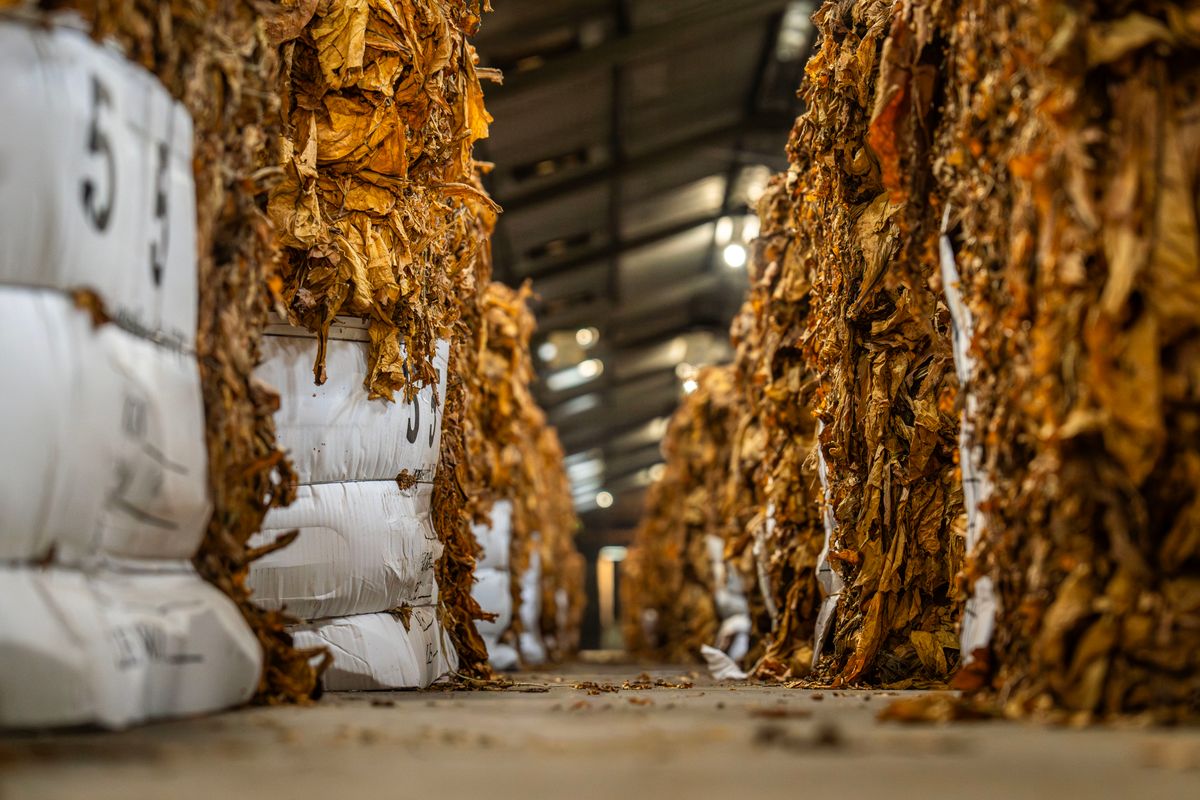
Photo: Mark Stebnicki / Pexels
A single clean grade per bale invites a strong bid.
How do I present tobacco to get a better price?
Bring every bale to the right moisture — "in order," or in case. Too dry, the leaf shatters and loses weight; too damp, it moulds and can be rejected for over-conditioning. No meter? Use the hand test:
- In order: the leaf is pliable and folds without cracking.
- Too dry: it snaps or crumbles — condition it back gently before baling.
- Too high: it feels cold and damp to the touch — dry it down first.
Then keep bales clean, free of sand and string, and consistent inside. Clean, even, honestly-packed bales signal a grower who knows their crop — and get treated accordingly.
Your next step this week
Re-grade your top two barns by stalk position and colour, re-bale each grade on its own in clean hessian at 20–120 kg net, then check this week's TIMB daily auction average before you book a sale — and sell your best grades on a day the floor is clearly paying for quality.