 Divisi
Bagworms
· Insect
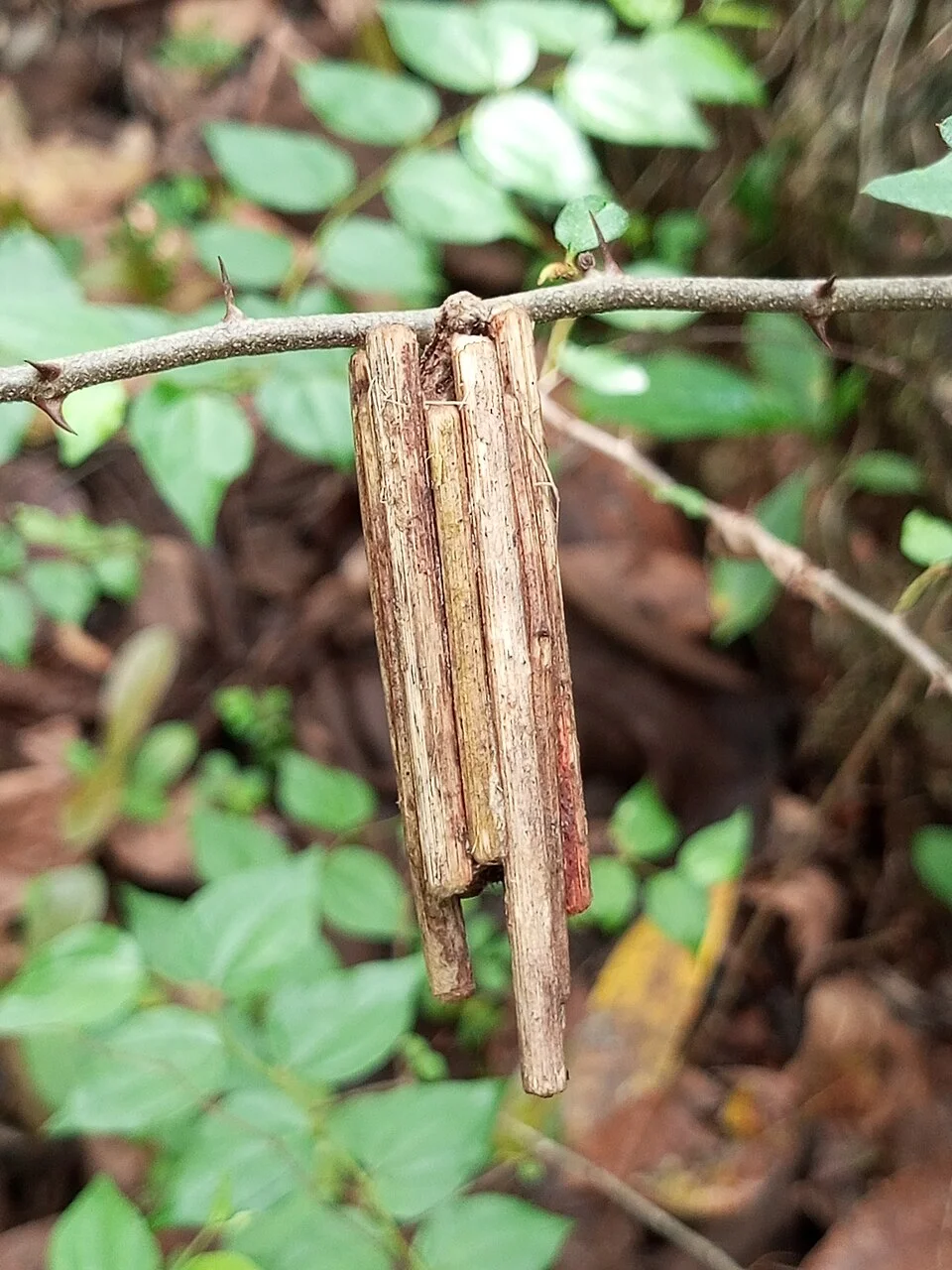
Photo: Nativeplants garden · CC BY-SA 4.0
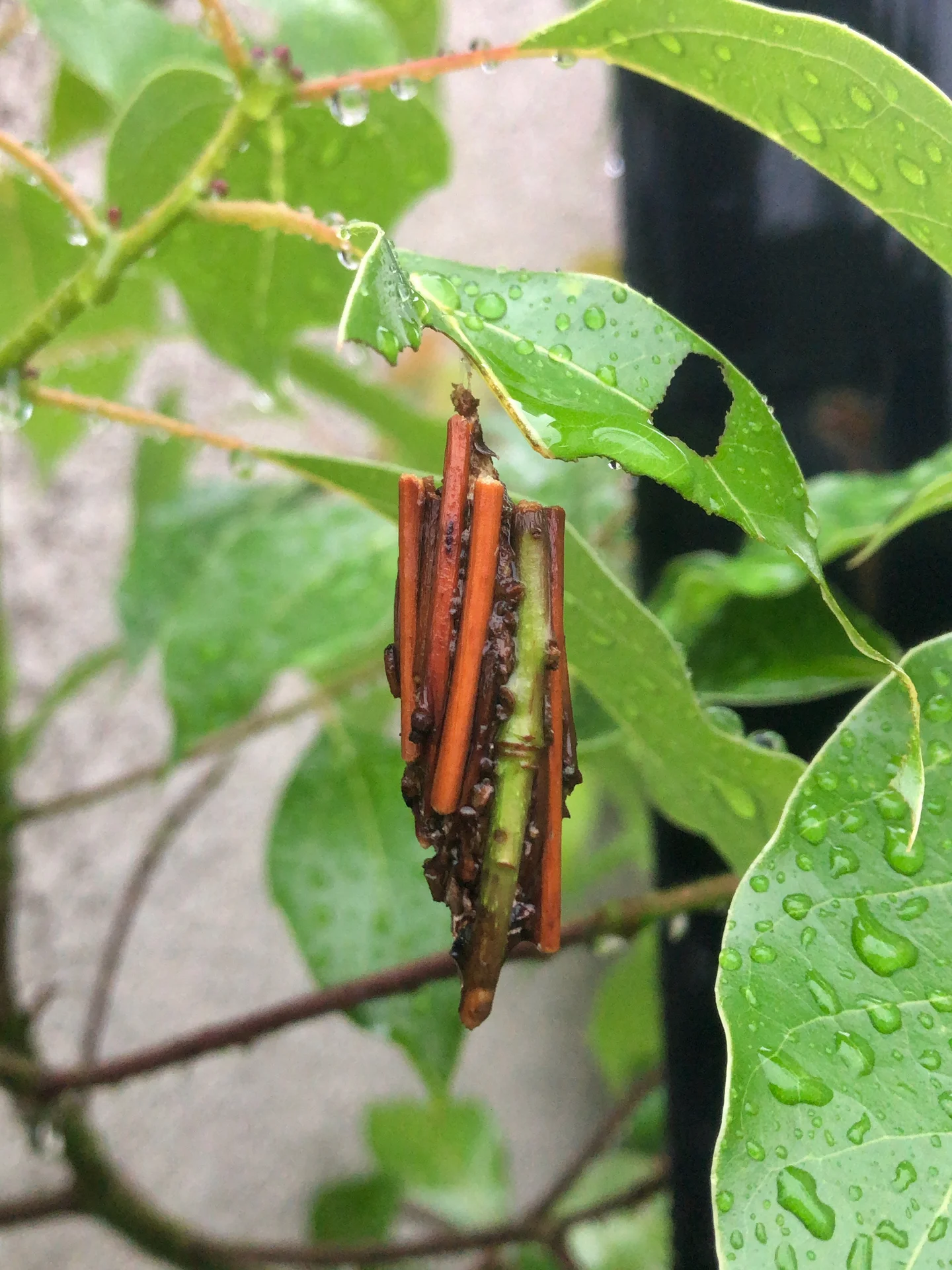
Bagworms are the caterpillars of several small moths that spend their whole growing life hidden inside a portable case they build around themselves out of silk covered in bits of leaf, twig and their own droppings. From inside this hanging bag the larva chews away at the leaf — scraping it to a thin, papery "window" and stripping it to a lace of veins — until fronds and branches go bare, on perennial and plantation crops such as oil palm, coconut, citrus, cassava and tea. Only the males ever turn into winged moths; the females stay wingless inside their bags to breed, so an attack does not fly in but creeps slowly outward from one first spot, building fastest in warm weather under a dense canopy.
KKPCW · CC BY-SA 4.0 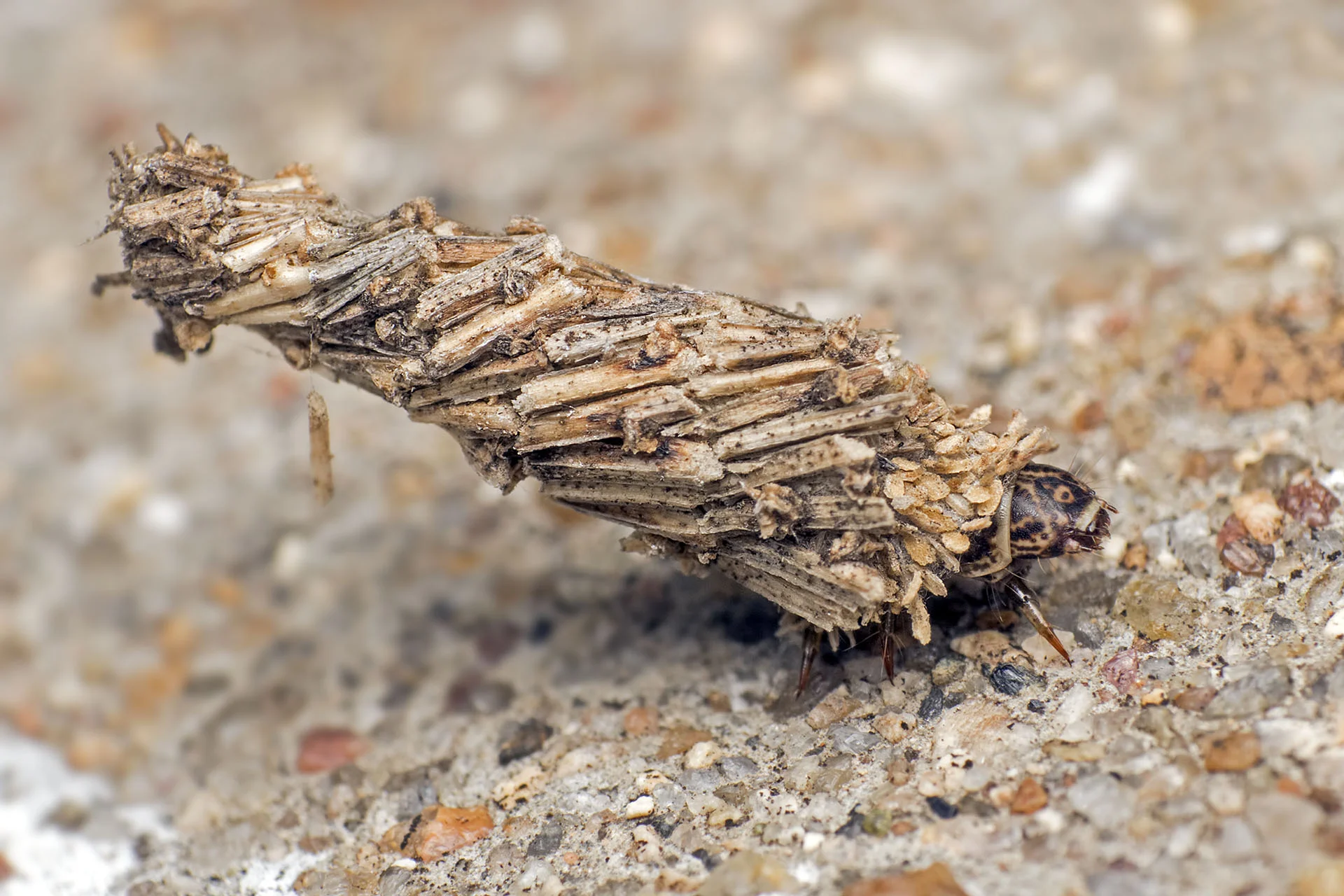
arian.suresh from Chennai, India · CC BY 2.0
Why it matters
Bagworms are leaf-eating caterpillars that each live inside a little hanging bag, quietly chewing your oil-palm, coconut, citrus, cassava or tea leaves until whole fronds and branches go bare. A heavy attack strips so much leaf that the tree can no longer feed itself and you can lose up to 40% of your yield — and on a tree crop that lost canopy takes seasons, not weeks, to grow back. They are hard to stop once settled because the female never leaves her bag: she breeds hidden inside it, the grubs seal themselves into tough cases that most sprays cannot get through, and the patch creeps slowly outward tree by tree. That is why catching the first few bagged trees early — and never blanket-spraying, which kills the tiny wasps that naturally hold them back — matters so much.
When to act
More than about 5 active bags per frond or branch, or visible defoliation spreading across the canopy.
This guidance is general, compiled from published agronomic references including FAO and CABI. Thresholds and timing shift with your crop, your variety and the season.
In much of the region a spray is simply called mushonga — medicine. But a chemical group you cannot name is one you cannot rotate, and a product you did not write down has no pre-harvest interval you can observe. Mushonga, and other farming words →
The full Bagworms field guide
Identify it
The damage first
the earliest sign is leaves that look scraped thin — pale, papery "windows" where the caterpillar has eaten one side of the leaf and left the other skin behind. As feeding goes on you'll see leaves skeletonised (only the veins left, like green lace) and whole fronds or branches turning brown and bare in patches as the stripping spreads.
The pest itself — the bag:
the give-away is a small hanging bag or case, like a tiny dangling cocoon, stuck to leaves and twigs. Each bag is a caterpillar's home, built of silk plastered with bits of leaf, twig and droppings, so it looks like a scrap of dead plant — anywhere from the size of your fingernail up to your little finger (about 1–5 cm). Watch a feeding bag and you'll see the caterpillar's dark head and front legs poke out of the open top to eat, then pull straight back in when you touch it.
Don't confuse it
with a dead curled leaf, a bird dropping, or a spider's egg-sac caught in the tree — a live bag is firmly anchored by silk, hangs down, and sways or inches along on its own, and holds a fat caterpillar when you open it (dead leaves don't move). Also don't confuse it with webworms, which spin a loose shared web of silk over a clump of foliage — a bagworm carries its own single tight bag and makes no communal web.
Scout for it
When to look hardest
bagworms build up in the warm season once the canopy is full and dense (the mid-to-late part of the season) — that warm, still, shaded inner canopy is exactly where they thrive. Start checking closely as the hot weather sets in, and straight after any neighbouring block has had bags.
Walk a big "W"
across each block so you cover all four corners and the middle, not just the trees by the path. Bagworms spread slowly out from one spot (a single starting "focus"), so a cluster of a few heavily-bagged trees is your early warning — the patch is what you're hunting.
Make about 10 stops
At each stop pick a tree and check a couple of lower, shaded fronds or inner branches — that's where bags hide first. Turn the frond or leaf over and look on the underside and along the twigs, counting the active (living, feeding) bags — the ones that are green, freshly decorated, and have the caterpillar's head poking out — and note any fresh scraped "window" leaves and skeletonised patches.
Act now if you find more than about 5 active (feeding) bags on a single frond or branch
, OR you can see bare, stripped patches of leaf loss spreading across the canopy. Below that, keep watching. A few old, empty, dry bags with no fresh feeding is a past attack that has moved on — don't treat for that.
Control it
Prevent it
-
pick the bags off and starve the outbreak:
because the female bagworm is wingless and never leaves her bag, every bag you pull off and destroy removes a whole future family. On young or isolated trees, and at any hotspot, handpick the bags by hand or with a hooked pole, then drop them in a bucket of soapy or paraffin water, or burn them — never just toss them on the ground, where the caterpillars crawl back up. Do this while the patch is still small and local, before the larvae grow up and breed.
-
protect the wasps that work for free:
tiny parasitic wasps and other predators (helpful insects that lay their eggs in the bagworms and kill them) naturally keep this pest rare. Harsh, broad insecticide sprays kill these helpers and are the main reason bagworms flare into a full outbreak — so do not blanket-spray the plantation "just in case." Keeping the natural enemies alive is your cheapest and strongest defence.
Act early — spray Bt on the young feeding larvae:
when bags are many but still small and actively feeding (heads out, chewing), spray Bt (Bacillus thuringiensis — a natural bacterium that kills caterpillars but is harmless to people, bees and the helpful wasps). Bt only works when the caterpillar eats the sprayed leaf, so cover the feeding foliage well and spray while the larvae are young and out feeding — once they are big and sealed inside thick bags, nothing reaches them.
Chemical — last resort only, and targeted:
only for a severe, expanding outbreak that handpicking and Bt cannot hold, use a recommended insecticide, and spot-treat just the affected block, never the whole plantation. Timing still rules — aim at the young feeding larvae; mature larvae sealed in thick bags survive most sprays. Safety: cover your skin, eyes, nose and mouth; spray in the cool of morning or evening with the wind at your back; keep it off food, water, children and bees; respect the pre-harvest interval (the set number of days you must wait between spraying and picking the crop); and wash yourself and your clothes afterwards. To stop the pest building resistance (surviving the poison so it stops working), rotate to a different chemical group each time rather than using the same one over and over — and remember that broad insecticide kills the parasitic wasps, so over-using it makes the next outbreak worse.
If it keeps spreading → cut out the worst and protect the rest
if bags keep multiplying and the bare, stripped patches spread tree to tree despite handpicking and Bt, cut off and burn the worst-hit fronds and branches to physically remove the breeding females and slow the creep, and treat the leading edge of the patch rather than chasing every tree. Where a block is already stripped bare and the larvae have matured, spraying won't bring the leaves back — cut your losses on that block, keep those trees well watered and fed so they can re-flush a new canopy, and put your effort into protecting the healthy blocks around it and knocking back the next generation early.
Catch Bagworms before it costs you the harvest
This guide is the general answer. Divisi works out yours — the week to scout your own field for Bagworms, and what to do the day you find it.


Crops it affects
Plan the crops it attacks
-
 When to plant Cassava in Banalia
 -
 When to plant Coconut in Chake Chake
 -
 When to plant Oil palm in Itsandra-Hamanvou
 -
 When to plant Tea in Kabarole
All planting calendars, country by country
Get Insights by email
A short digest of new Divisi articles. No email on quiet weeks.
Frequently asked questions
How do I identify Bagworms?
The damage first. the earliest sign is leaves that look scraped thin — pale, papery "windows" where the caterpillar has eaten one side of the leaf and left the other skin behind. As feeding goes on you'll see leaves skeletonised (only the veins left, like green lace) and whole fronds or branches turning brown and bare in patches as the stripping spreads.
When should I take action against Bagworms?
More than about 5 active bags per frond or branch, or visible defoliation spreading across the canopy.
How do I control Bagworms?
Prevent it — pick the bags off and starve the outbreak:. because the female bagworm is wingless and never leaves her bag, every bag you pull off and destroy removes a whole future family. On young or isolated trees, and at any hotspot, handpick the bags by hand or with a hooked pole, then drop them in a bucket of soapy or paraffin water, or burn them — never just toss them on the ground, where the caterpillars crawl back up. Do this while the patch is still small and local, before the larvae grow up and breed.
Which crops are attacked by Bagworms?
Among the crops covered here: Cassava, Coconut, Oil palm, Tea.