 Divisi
Fall armyworm
Spodoptera frugiperda · Insect
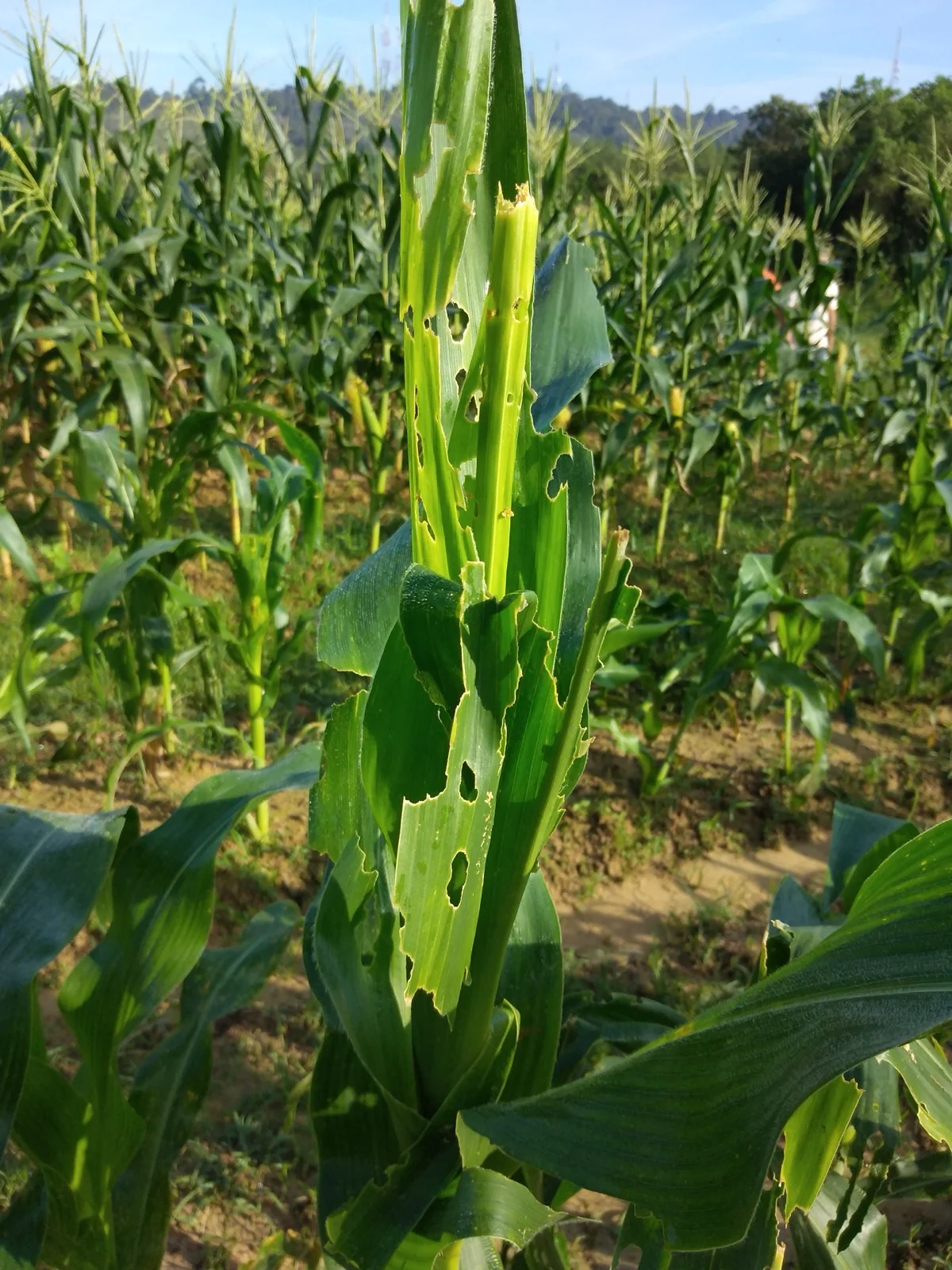
Photo: Wee Hong · CC BY-SA 4.0
A migratory caterpillar pest of cereals. Moths lay egg masses on leaves; young larvae scrape leaf tissue then move into the whorl, where they feed protected from sprays. Later they can attack tassels and cobs. The pest breeds continuously wherever young cereal foliage is available and spreads long distances by flight.
Wee Hong · CC BY-SA 4.0 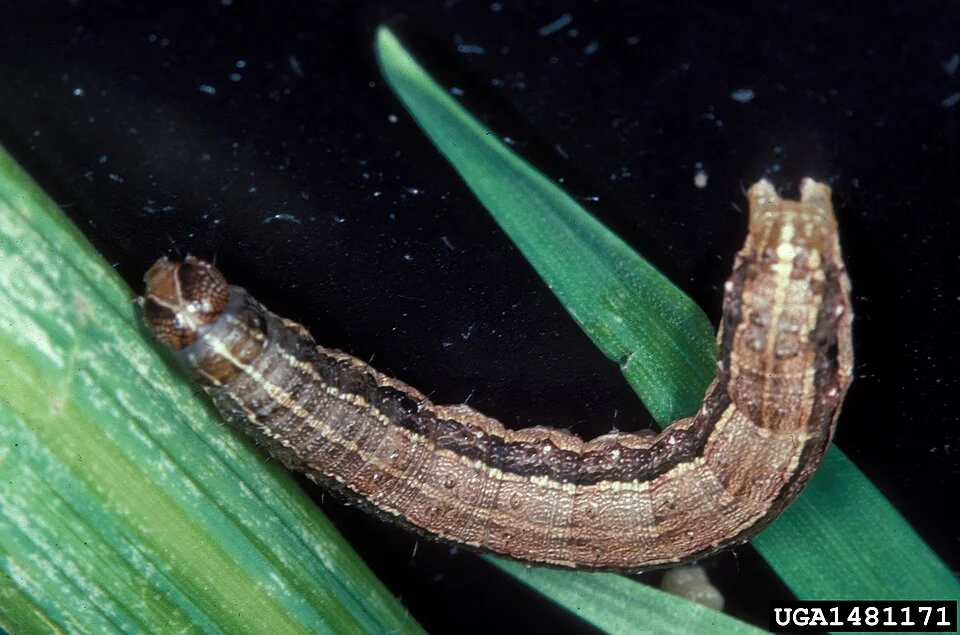
Frank Peairs, Colorado State University, Bugwood.org · CC BY 3.0 us
Why it matters
Fall armyworm is the worst pest of young maize. A bad attack can take a third of your crop, and because the caterpillars hide deep in the whorl where sprays can't reach, they are hard to kill once they grow big. Catching them early — while they're small and near the surface — is everything.
When to act
at least 2 in 10 plants (20%) show fresh whorl damage at seedling to early whorl stage
This guidance is general, compiled from published agronomic references including FAO and CABI. Thresholds and timing shift with your crop, your variety and the season.
In much of the region a spray is simply called mushonga — medicine. But a chemical group you cannot name is one you cannot rotate, and a product you did not write down has no pre-harvest interval you can observe. Mushonga, and other farming words →
The full Fall armyworm field guide
Identify it
The damage
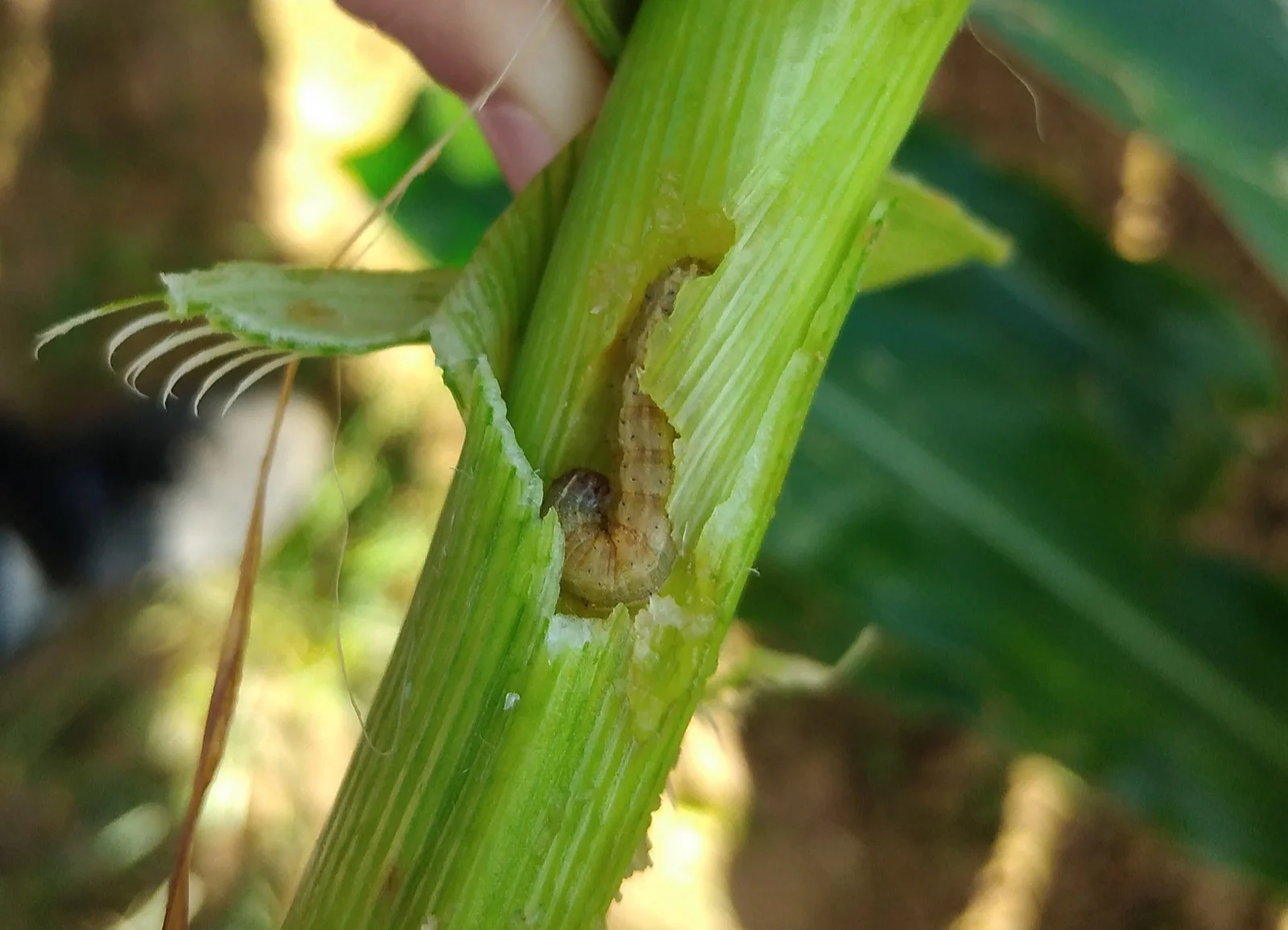
the first sign is pale, papery "windows" on young leaves where tiny caterpillars have scraped one side. As they grow you'll see ragged holes and torn whorls filled with moist, sawdust-like droppings (frass).
The caterpillar
find it down in the whorl — up to 3–4 cm long, with pale stripes along the body, four dark spots in a square on the second-to-last segment, and a pale, upside-down "Y" on the dark head.
Don't confuse it
with the African armyworm (comes in sudden swarms and eats the leaves, not the whorl) or the maize stalk borer (makes neat rows of shot-holes across the leaf). Fall armyworm lives in the whorl, one or two per plant.
Scout for it
Twice a week, walk a large "W" across the field so you check all four corners and the middle — not just the edge by the path.
At about 10 stops, look into the whorls of 10 plants for fresh window-panes, fresh moist frass, and the caterpillars themselves.
Fresh, wet frass means the caterpillar is still inside and feeding
Old, dry frass with no caterpillar is a past attack — don't spray for that.
Count how many plants out of 100 show fresh whorl damage. Act once you reach about 2 in every 10 plants (20%) at the seedling-to-early-whorl stage.
Control it
Prevent it
plant early and all at once with your neighbours, so the crop passes the tender stage before moth numbers build up. A push-pull layout — a repellent legume such as desmodium between the rows with a trap grass around the edge — cuts egg-laying.
Help the natural enemies
birds, ants, earwigs and tiny parasitic wasps eat armyworm. Avoid broad poisons that kill them too. A pinch of dry soil, sand or wood ash dropped into the whorl lets ants and predators reach the caterpillar.
Act at threshold, act early
treat when about 2 in 10 plants show fresh damage, while the caterpillars are still small and near the mouth of the whorl. Big ones deep inside are almost impossible to reach.
Biological spray — Bt:
spray Bacillus thuringiensis directly into the whorl in the cool of the day. It kills small caterpillars and is safe for people, bees and natural enemies.
If you use an insecticide
choose a recommended product, direct it into the whorl at the small caterpillars, spray in the cool of morning or evening, and rotate to a different type each time so the pest doesn't build up resistance.
Catch Fall armyworm before it costs you the harvest
This guide is the general answer. Divisi works out yours — the week to scout your own field for Fall armyworm, and what to do the day you find it.


Crops it affects
Plan the crops it attacks
-
 When to plant Maize in Mougalaba
 -
 When to plant Pearl millet in Kono
 -
 When to plant Rice in Mbama
 -
 When to plant Sorghum in Maracha
 -
 When to plant Sugarcane in Douigni
All planting calendars, country by country
Get Insights by email
A short digest of new Divisi articles. No email on quiet weeks.
Frequently asked questions
How do I identify Fall armyworm?
The damage. the first sign is pale, papery "windows" on young leaves where tiny caterpillars have scraped one side. As they grow you'll see ragged holes and torn whorls filled with moist, sawdust-like droppings (frass).
When should I take action against Fall armyworm?
at least 2 in 10 plants (20%) show fresh whorl damage at seedling to early whorl stage
How do I control Fall armyworm?
Prevent it. plant early and all at once with your neighbours, so the crop passes the tender stage before moth numbers build up. A push-pull layout — a repellent legume such as desmodium between the rows with a trap grass around the edge — cuts egg-laying.
Which crops are attacked by Fall armyworm?
Among the crops covered here: Maize, Pearl millet, Rice, Sorghum, Sugarcane.