 Divisi
Pod-sucking bugs
Clavigralla tomentosicollis · Insect
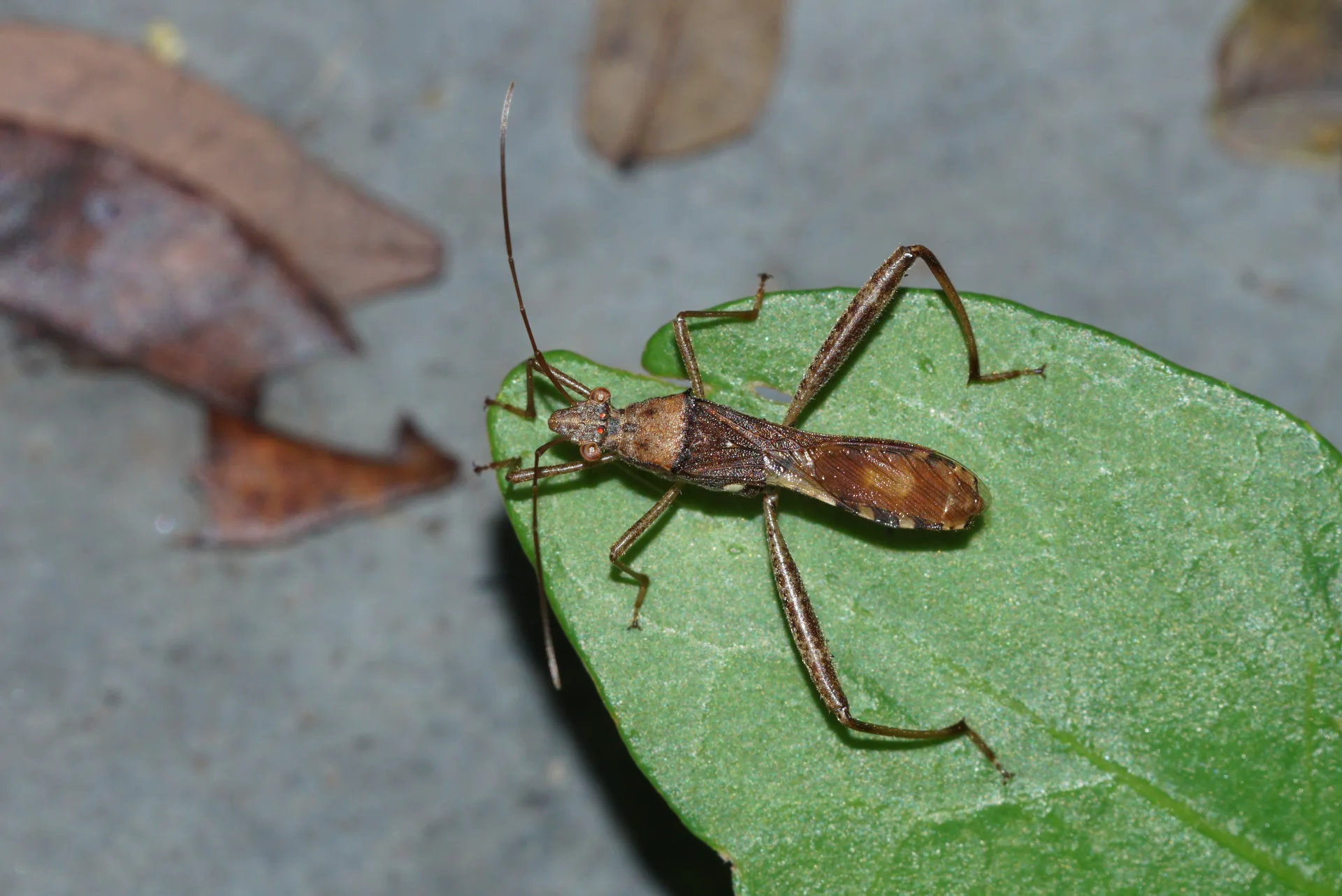
Photo: Vengolis · CC BY-SA 4.0
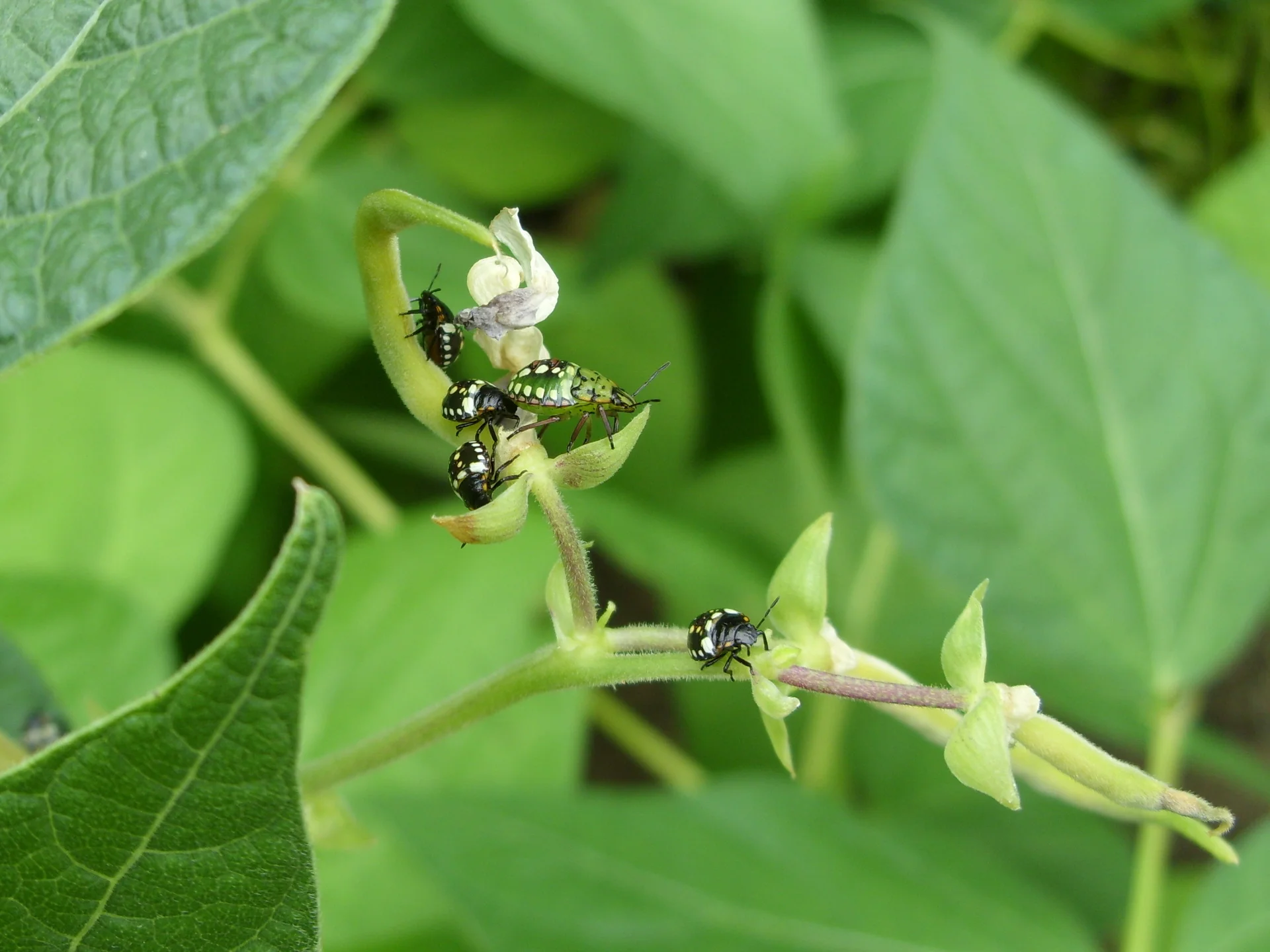
Pod-sucking bugs are a group of shield- and stink-bug-type insects — the commonest being the spiny brown bug — that attack cowpea, pigeon pea, common bean and soybean. Instead of chewing leaves like a caterpillar, they stab green pods with a needle-like beak and drink the developing seeds, injecting spit that shrivels the seed and lets mould in through the wound. Adults and their wingless young feed shoulder to shoulder on the pods through flowering and pod fill, and give off a sharp, foul smell when you disturb them.
Jovo26 · CC BY-SA 4.0 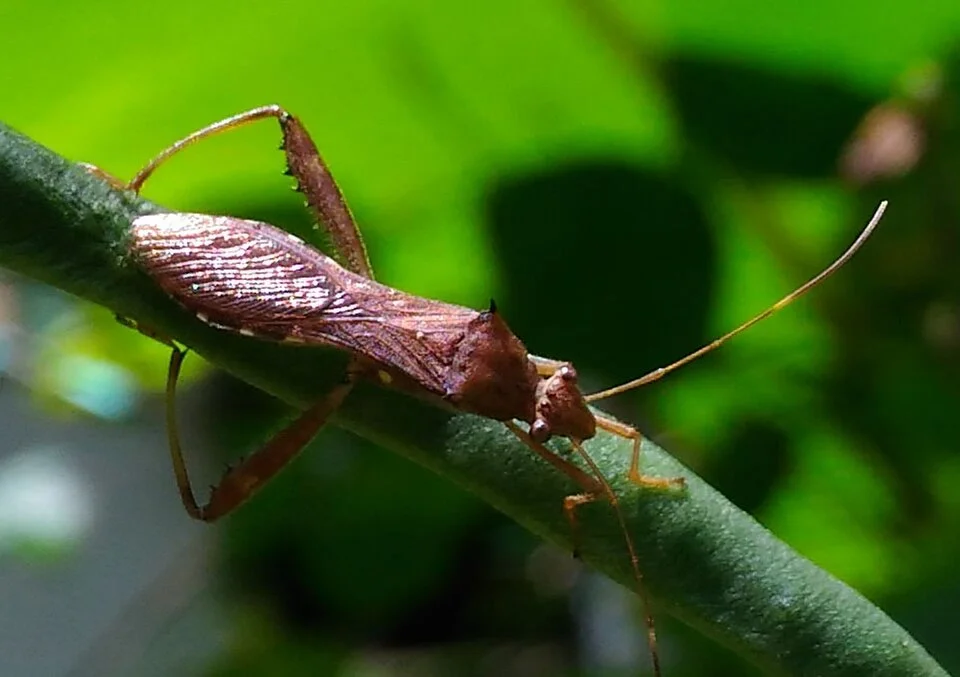
Kottakkalnet · CC BY-SA 4.0
Why it matters
Pod-sucking bugs go straight for the part you actually harvest — the seeds inside the pods. A bad attack can wreck up to 60% of your crop, leaving pods full of shrivelled, stained, worthless seed that won't sell, won't store, and won't grow if you save it for planting. They are hard to beat once they settle in: adults fly in from weeds and neighbours' fields and breed on your pods, and by the time you see the shrunken seed the damage is already done inside the pod — you cannot un-suck a seed. Your one real win is catching them early, at flowering, before the pods fill.
When to act
About 2 or more bugs per metre of row (or per 10 plants) during flowering and pod fill
This guidance is general, compiled from published agronomic references including FAO and CABI. Thresholds and timing shift with your crop, your variety and the season.
In much of the region a spray is simply called mushonga — medicine. But a chemical group you cannot name is one you cannot rotate, and a product you did not write down has no pre-harvest interval you can observe. Mushonga, and other farming words →
The full Pod-sucking bugs field guide
Identify it
The damage shows first — check the pods
Look for tiny dark, sunken spots where the beak went in, and inside, shrivelled, shrunken or stained seeds (often brown- or purple-blotched). Badly hit pods stay flat and empty, bend or curl, and dry out early while the rest of the plant is still green — and a grey or black mould often grows right at the puncture spots.
The bug itself
the common one is the spiny brown bug — a narrow, dull-brown bug about 1 cm long (the size of a coffee bean) with two little spines poking out at the shoulders. The adults and their smaller wingless young — called nymphs — cluster together on the green pods, often right at the pod stalk. Squeeze or disturb one and it lets off a sharp, foul smell; that is why they are called stink bugs. A few in this group are shield-shaped and bright green instead of brown.
Don't confuse it
with the pod borer — a small caterpillar that chews a hole and tunnels inside the pod, leaving droppings and webbing the flowers together; pod-sucking bugs leave no entry hole, only pin-prick punctures and shrivelled seed. And unlike aphids (tiny, soft insects crowded on the shoots and growing tips), these bugs are bigger, firm-bodied, walk about openly on the pods, and fly off when you get close.
Scout for it
Start the day the first flowers open
and keep checking right through pod fill (the mid-to-late season) — this is exactly when the bugs move in and do all their damage. Walk the crop at least twice a week, and more often in hot, dry spells, when the bugs breed fastest.
Look in the early morning while it is still cool, when the bugs are slow and sluggish and won't fly off before you can count them. In the heat of the day they hide low in the canopy or drop to the ground, and you will miss them.
Walk a big "W" across the field so you cover all four corners and the middle — not just the row by the path where you always look. Make about 10 stops, and at each stop check the pods on a metre of row (or on 10 plants): look on the undersides of pods, where pods cluster together, and at the pod stalks, and count every adult and wingless young you see.
Act as soon as you find 2 or more bugs in a metre of row (or in 10 plants)
During flowering and pod fill that is already enough to start eating into your harvest — don't wait for the pods to shrivel, because by the time you see that, the damage is done inside.
Control it
Prevent — start clean and early (cultural control)
Plant early and all at once with your neighbours, so your pods fill and are ready before bug numbers build up. Clear the weeds in and around the field all season — wild legumes and other weeds are where these bugs breed and shelter between crops. And harvest as soon as the pods are mature: bugs pile onto the last drying pods left standing in the field.
Act early — spare the bug's natural enemies (biological control)
Tiny wasps that kill the bug's eggs, plus ants, spiders and other predatory bugs, hold numbers down for free — so avoid routine broad, kill-everything sprays that wipe them out along with the pest. While the bugs are slow in the cool early morning, you can also hand-pick or shake them off the pods into a tin of water and drown them; going over a small plot a few mornings running can clear a light attack with no spray at all.
Spray only as a last resort (chemical control)
If you are over threshold at flowering to pod fill, use a contact insecticide — one that kills the bugs it lands on (unlike a systemic, which is taken up inside the plant and travels in the sap) — and aim it straight at the pods where the bugs feed. Protect yourself: cover your skin, eyes, nose and mouth, spray in the cool of the day with the wind at your back, keep the spray away from food, drinking water, children and animals, and wash well afterwards. Respect the pre-harvest interval — the set number of days you must wait between spraying and picking the pods — so no poison is left on the food you eat or sell.
Guard your bees
Your crop is in flower, so bees are feeding on it — a midday spray on open flowers will kill them. Spray only in the late evening once the bees have gone home, and never drench open flowers in the heat of the day.
If it keeps spreading — and when it's too late
If bugs come back after spraying, rotate to a different type (group) of insecticide next time — using the same one over and over lets the bugs stop dying from it, which is called resistance — and tighten your weeding and harvest promptly. But once the pods are already shrivelled and drying, no spray will bring that seed back: cut your losses — harvest what has filled, dry it, and sort out the stained, damaged seed. Don't keep damaged seed for planting (it germinates poorly), and next season plant earlier and together with your neighbours to slip past the worst of the bugs.
Catch Pod-sucking bugs before it costs you the harvest
This guide is the general answer. Divisi works out yours — the week to scout your own field for Pod-sucking bugs, and what to do the day you find it.


Crops it affects
Plan the crops it attacks
-
 When to plant Common bean in Dilolo
 -
 When to plant Cowpea in Bangui-Rapides
 -
 When to plant Pigeon pea in Buganda
 -
 When to plant Soybean in Dola
All planting calendars, country by country
Get Insights by email
A short digest of new Divisi articles. No email on quiet weeks.
Frequently asked questions
How do I identify Pod-sucking bugs?
The damage shows first — check the pods. Look for tiny dark, sunken spots where the beak went in, and inside, shrivelled, shrunken or stained seeds (often brown- or purple-blotched). Badly hit pods stay flat and empty, bend or curl, and dry out early while the rest of the plant is still green — and a grey or black mould often grows right at the puncture spots.
When should I take action against Pod-sucking bugs?
About 2 or more bugs per metre of row (or per 10 plants) during flowering and pod fill
How do I control Pod-sucking bugs?
Prevent — start clean and early (cultural control). Plant early and all at once with your neighbours, so your pods fill and are ready before bug numbers build up. Clear the weeds in and around the field all season — wild legumes and other weeds are where these bugs breed and shelter between crops. And harvest as soon as the pods are mature: bugs pile onto the last drying pods left standing in the field.
Which crops are attacked by Pod-sucking bugs?
Among the crops covered here: Common bean, Cowpea, Pigeon pea, Soybean.