 Divisi
Rodents
· Rodent
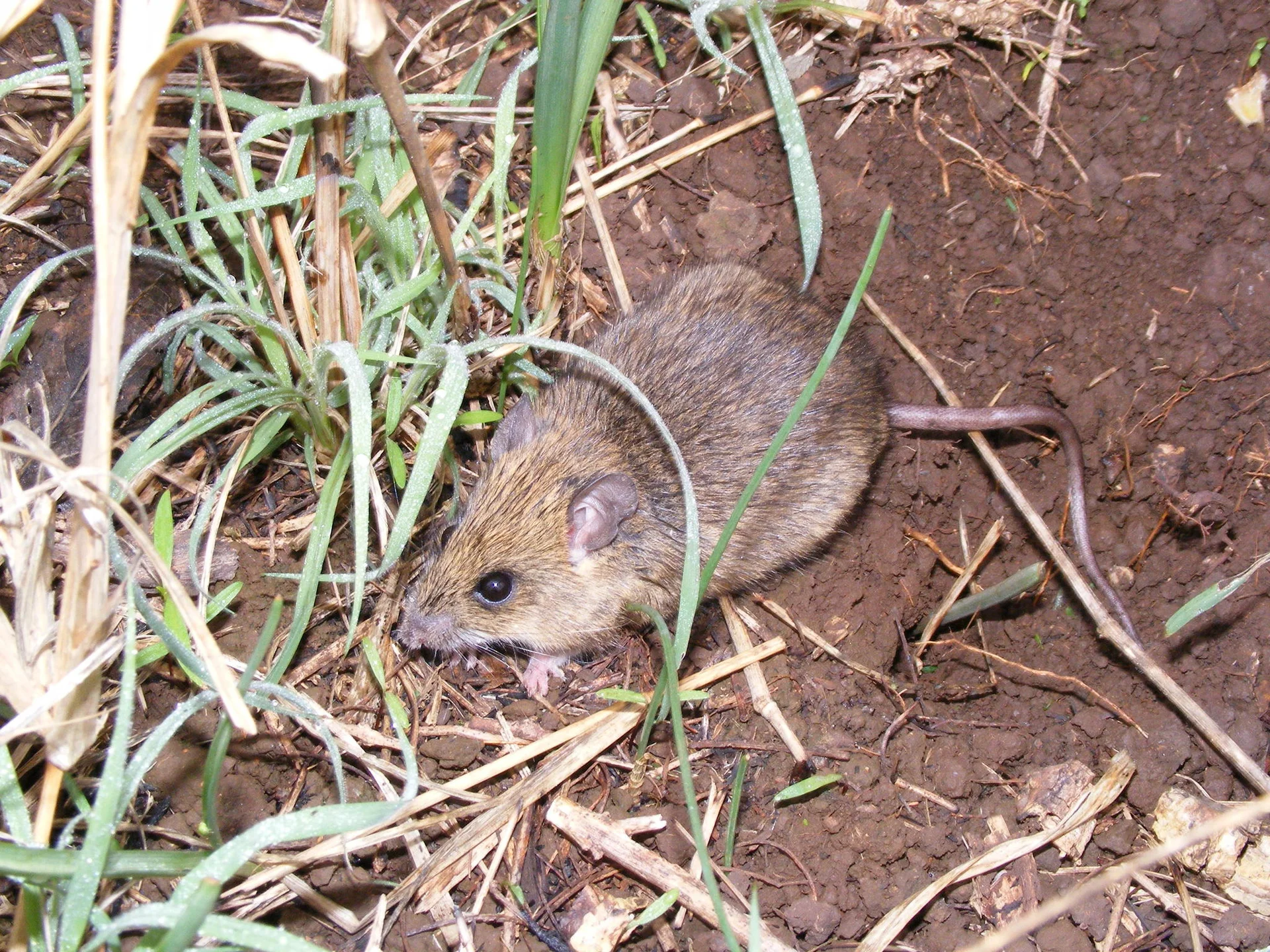
Photo: Robert Taylor · CC BY 4.0
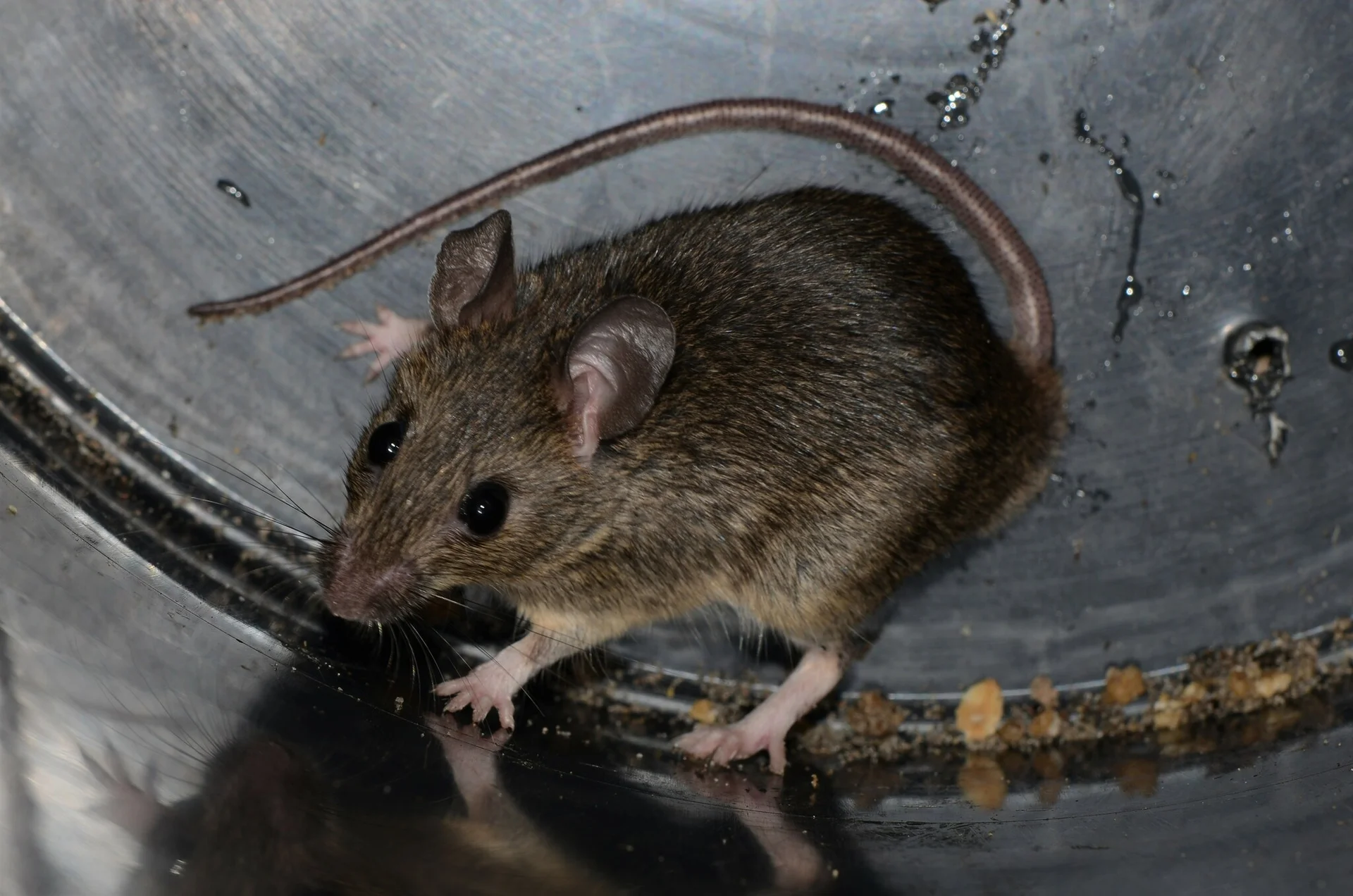
Field and house rats and mice — above all the fast-breeding multimammate rat (Mastomys natalensis), the common grain rat of African fields — that dig up newly sown seed, gnaw through young stems, and strip maturing cobs, heads and stored grain. They shelter in burrows along bunds and field margins and in untidy stores, feed mostly at night, and multiply explosively after good rains, so a whole colony can hollow out a crop in patches both in the field and after harvest.
Marius Burger · CC0 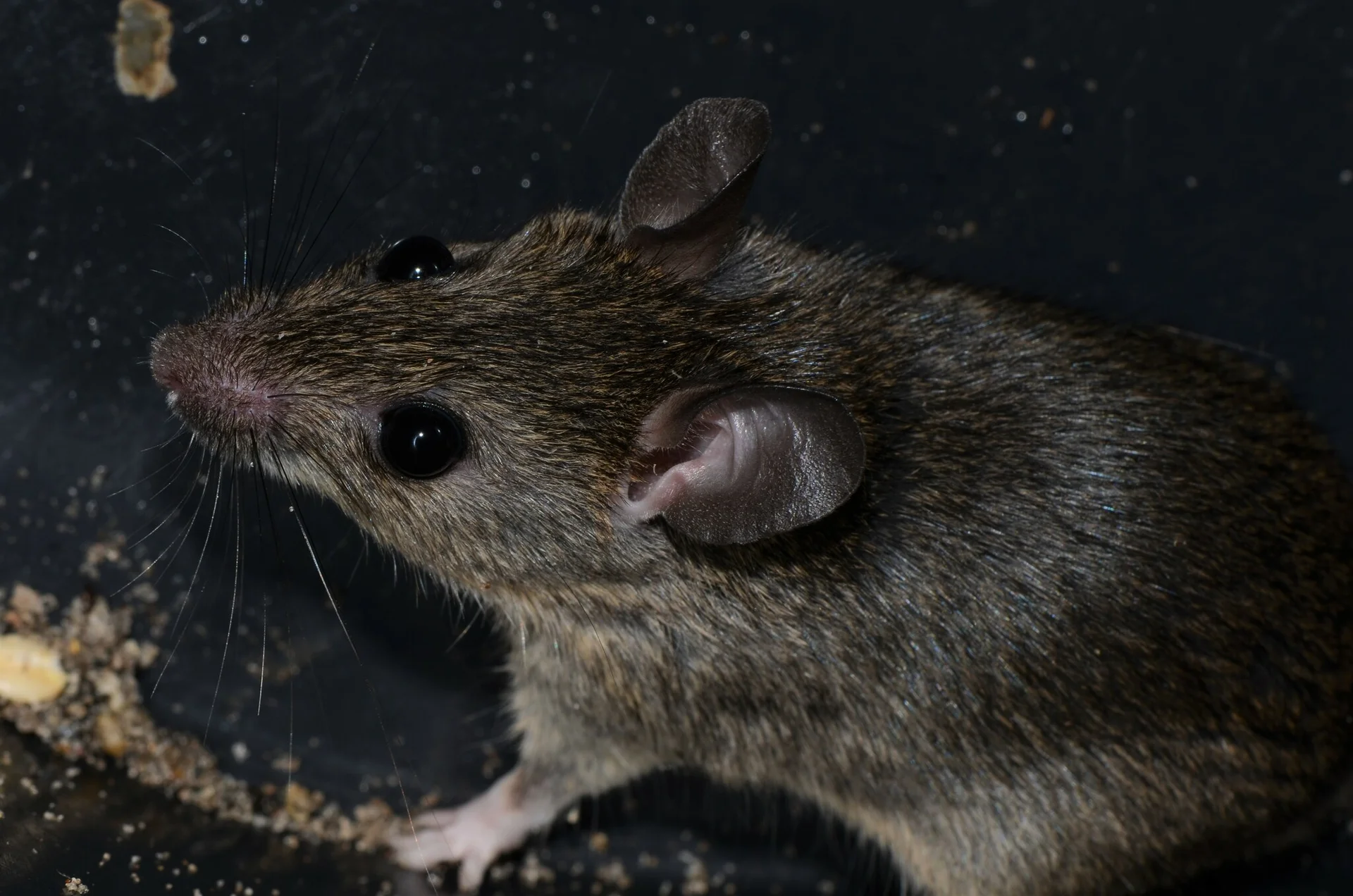
Marius Burger · CC0
Why it matters
Rats and mice can take up to a third of your crop (30%), and they hit you twice: they dig up the seed you have just planted, then eat the grain right when it is filling on the plant and again when it is in the store, after all your work is done. Once a colony is breeding in the bunds and field margins it is very hard to stop — they multiply fast after good rains, hide underground by day, and killing a few does nothing because more simply move in from your neighbours' land. That is why the answer is to act early, rat-proof your store, and work together with your neighbours, not to wait until they are everywhere.
When to act
fresh burrows, runways or cut tillers increasing, or visible gnawing on cobs and stored grain
This guidance is general, compiled from published agronomic references including FAO and CABI. Thresholds and timing shift with your crop, your variety and the season.
In much of the region a spray is simply called mushonga — medicine. But a chemical group you cannot name is one you cannot rotate, and a product you did not write down has no pre-harvest interval you can observe. Mushonga, and other farming words →
The full Rodents field guide
Identify it
The first sign, at planting, is gaps in your stand
— hills or rows that never come up because the seed was dug out and eaten. Look for small holes and scratch-marks where the seed sat, and patchy, uneven emergence, often in bands running in from the field edge where the rats came in.
As the crop grows you'll see cut tillers and toppled heads
— young rice, sorghum and wheat tillers (the young stems) bitten clean through near the base at a slant, and the plants pulled down. Near maturity you'll find maize cobs with the husk torn open and the kernels gnawed off, sorghum and wheat heads stripped, and groundnut pods dug up and emptied out of the ground.
Even before you see a rat, you'll see its sign
dark droppings (rat droppings from the size of a rice grain up to a date stone; mouse droppings tiny like little black seeds); smooth "runways" — beaten, hairless tracks worn through the grass along bunds (the raised earth ridges around and between fields) and margins where the rats run the same path over and over; and fresh burrows — open holes with loose, newly-dug soil fanned out at the mouth.
The animal itself
a rat is about the size of your hand or bigger, brown-grey on top and paler below, with a pointed nose, big ears, and a long naked scaly tail as long as its body; a mouse is only thumb-sized. They hide by day in burrows, crop trash and thatch and come out at dusk and through the night, so dawn and dusk on the runways is when you'll actually catch sight of one. The female multimammate rat carries many teats in two rows down her belly — the mark of the species that breeds fastest.
Tell it apart from birds and stem borers
birds peck grain from the top of the cob or head in daylight and leave no droppings-trails, no runways and no burrows — rodents leave all three, plus paired chisel tooth-marks on the grain and stems. A stalk borer or a wind-flattened plant leaves no clean angled gnaw-cut at the base, and no droppings or runways beside it the way rat-cut tillers do.
Scout for it
Check hardest at the three danger times
Right after sowing and through emergence (the early stage) for dug-up seed and gaps; again as the crop heads and the grain fills toward maturity (mid- and late-season), when field damage peaks — worst after good rains, once rat numbers have already built up; and then keep checking the store after harvest, where losses are heaviest of all.
Start on the edges, not the middle
Rats live and burrow in the field margins, bunds and channel banks, so walk these first, looking for burrows, runways and droppings. Then walk a big "W" across the field — all four corners and the centre, about 10 stops — checking for cut tillers, toppled heads and gnawed cobs.
Count how many are actually living there
One evening, plug every burrow hole on a stretch of bund with soil; next morning count how many have been dug open again — re-opened holes mean live, active rats breeding there. As a second check, smear a patch of fine dust or wood ash across a runway in the evening and count the footprints and tail-drag marks the next morning.
Act now the moment any one of these crosses the line
even 1 or 2 plugged burrows re-opened overnight; OR cut tillers, toppled heads or gnawed cobs on more than 1 plant in 10 at your W-stops and more than you saw last week; OR any fresh droppings, gnawed bags or hollowed grain in the store at all — the store has no safe level, so act the same day.
Control it
Prevent — starve them out and shut them out, with your neighbours
Keep field margins, bunds and channels weed-free and short, and clear crop trash, rubbish piles and spilt grain that hide and feed rats. Plant and harvest in one tight window together with your neighbours so ripe grain is never left standing for long. Make your store rat-proof: raise it on smooth posts fitted with metal rat-guards (a smooth metal collar the rat cannot climb past), use metal bins or well-sealed containers, plaster the walls smooth, and keep it tidy with no spillage. One farm alone cannot win — the real payback comes when the whole community does this together.
Act early, without poison first
Set many snap traps and locally-made traps along the runways and at the burrow mouths, baited with grain or groundnut, and keep them going night after night with everyone trapping at once — a few traps for one night does nothing. Dig out and destroy burrows along the bunds to kill the young and break up breeding. And protect the rats' natural enemies: owls, snakes, mongoose, cats and birds of prey. Put up owl nest-boxes and T-shaped perches on poles near your fields so owls can hunt at night, and don't kill snakes.
Only if it is still building — poison bait, as a last resort
An anticoagulant rodenticide is a slow bait that stops the rat's blood from clotting, so the rat dies over a few days. Use only an approved, registered bait, and always place it inside a covered, tamper-proof bait station (a closed box or a short length of pipe) along the runways and near burrows — never scatter it loose — so that children, livestock, poultry, pets and wild predators cannot reach it. Safety: handle bait with gloves, never near food, water, children or animals, and wash your hands well afterwards; collect and bury or burn every dead rat so cats, dogs and owls are not poisoned by eating the carcasses; and know the antidote if a person or animal swallows it is vitamin K1 — go to the clinic at once. Never rely on poison alone and never use it weakly year after year, or the rats build resistance (they stop being killed by it): keep the stations full until feeding stops, and always pair the bait with trapping and sanitation.
If it keeps spreading → make it a community campaign
Rats simply re-invade from untreated land, so if numbers keep climbing despite your own effort, get every neighbour to trap, clean up and bait at the same time, and ask your extension officer for an area-wide plan and approved bait. When it is too late in the field — the crop mature and being hammered right before harvest — cut your losses and harvest at once, even a little early: thresh straight away and move all the grain into the rat-proof store, so you save what is left instead of feeding the rats. Then put everything into protecting that store.
Catch Rodents before it costs you the harvest
This guide is the general answer. Divisi works out yours — the week to scout your own field for Rodents, and what to do the day you find it.


Crops it affects
Plan the crops it attacks
-
 When to plant Groundnut in Songo
 -
 When to plant Maize in Mougalaba
 -
 When to plant Rice in Mbama
 -
 When to plant Sorghum in Maracha
 -
 When to plant Wheat in Hammedi
All planting calendars, country by country
Get Insights by email
A short digest of new Divisi articles. No email on quiet weeks.
Frequently asked questions
How do I identify Rodents?
The first sign, at planting, is gaps in your stand. — hills or rows that never come up because the seed was dug out and eaten. Look for small holes and scratch-marks where the seed sat, and patchy, uneven emergence, often in bands running in from the field edge where the rats came in.
When should I take action against Rodents?
fresh burrows, runways or cut tillers increasing, or visible gnawing on cobs and stored grain
How do I control Rodents?
Prevent — starve them out and shut them out, with your neighbours. Keep field margins, bunds and channels weed-free and short, and clear crop trash, rubbish piles and spilt grain that hide and feed rats. Plant and harvest in one tight window together with your neighbours so ripe grain is never left standing for long. Make your store rat-proof: raise it on smooth posts fitted with metal rat-guards (a smooth metal collar the rat cannot climb past), use metal bins or well-sealed containers, plaster the walls smooth, and keep it tidy with no spillage. One farm alone cannot win — the real payback comes when the whole community does this together.
Which crops are attacked by Rodents?
Among the crops covered here: Groundnut, Maize, Rice, Sorghum, Wheat.