 Divisi
Tobacco budworm
Chloridea virescens · Insect
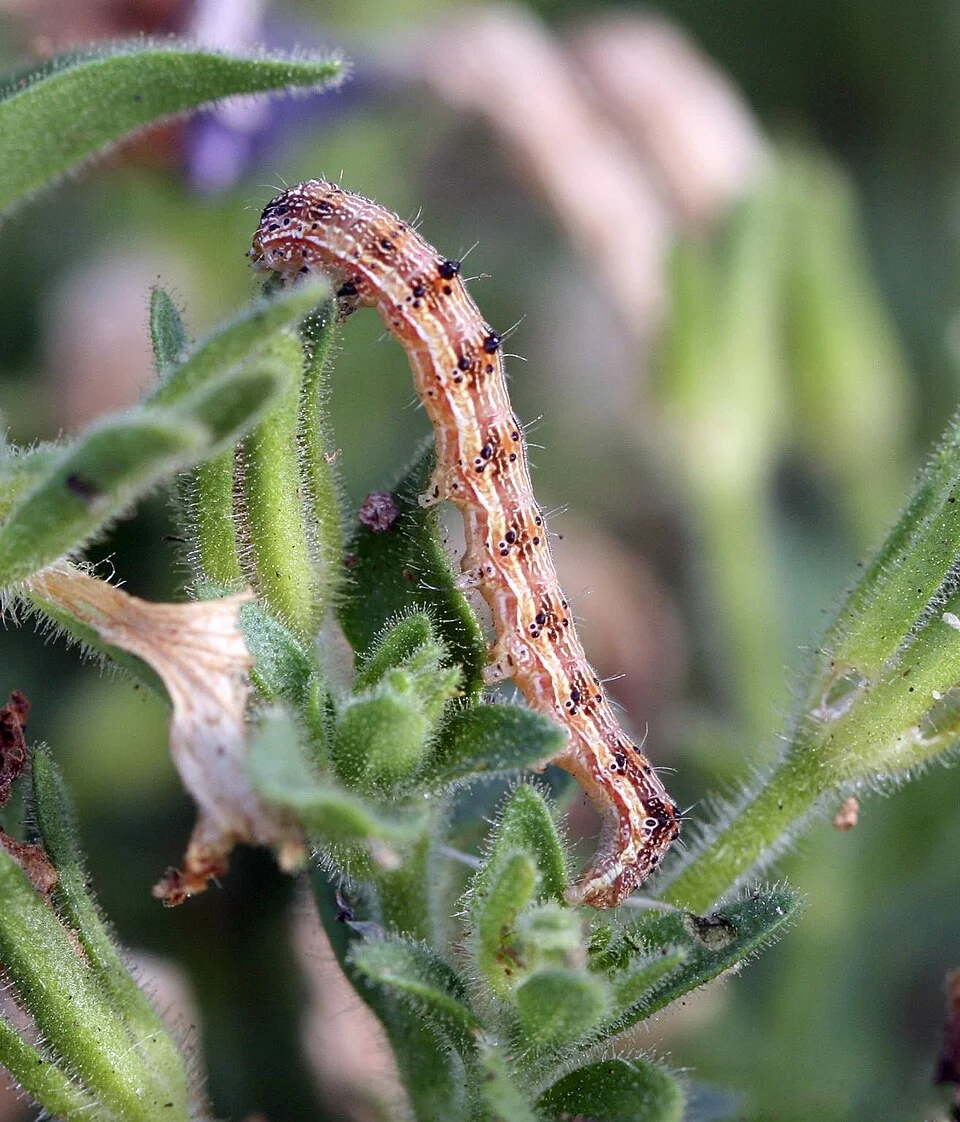
Photo: Whitney Cranshaw, Colorado State University · CC BY 3.0 us
The tobacco budworm is the caterpillar (young feeding stage) of a small, night-flying moth, and a close cousin of the cotton bollworm and tomato fruitworm. The moth lays its eggs one at a time on the tender growing tips, buds and flowers; the caterpillars that hatch first chew the soft new growth, then bore inside buds, flowers, tomatoes, peppers and cotton bolls, where they feed hidden from view. It attacks tobacco, cotton, tomato, pepper and beans, thrives in warm weather (about 20-32 degrees C), and is infamous for shrugging off older insecticides - so it is a pest you beat by prevention and early action, not by spraying late.
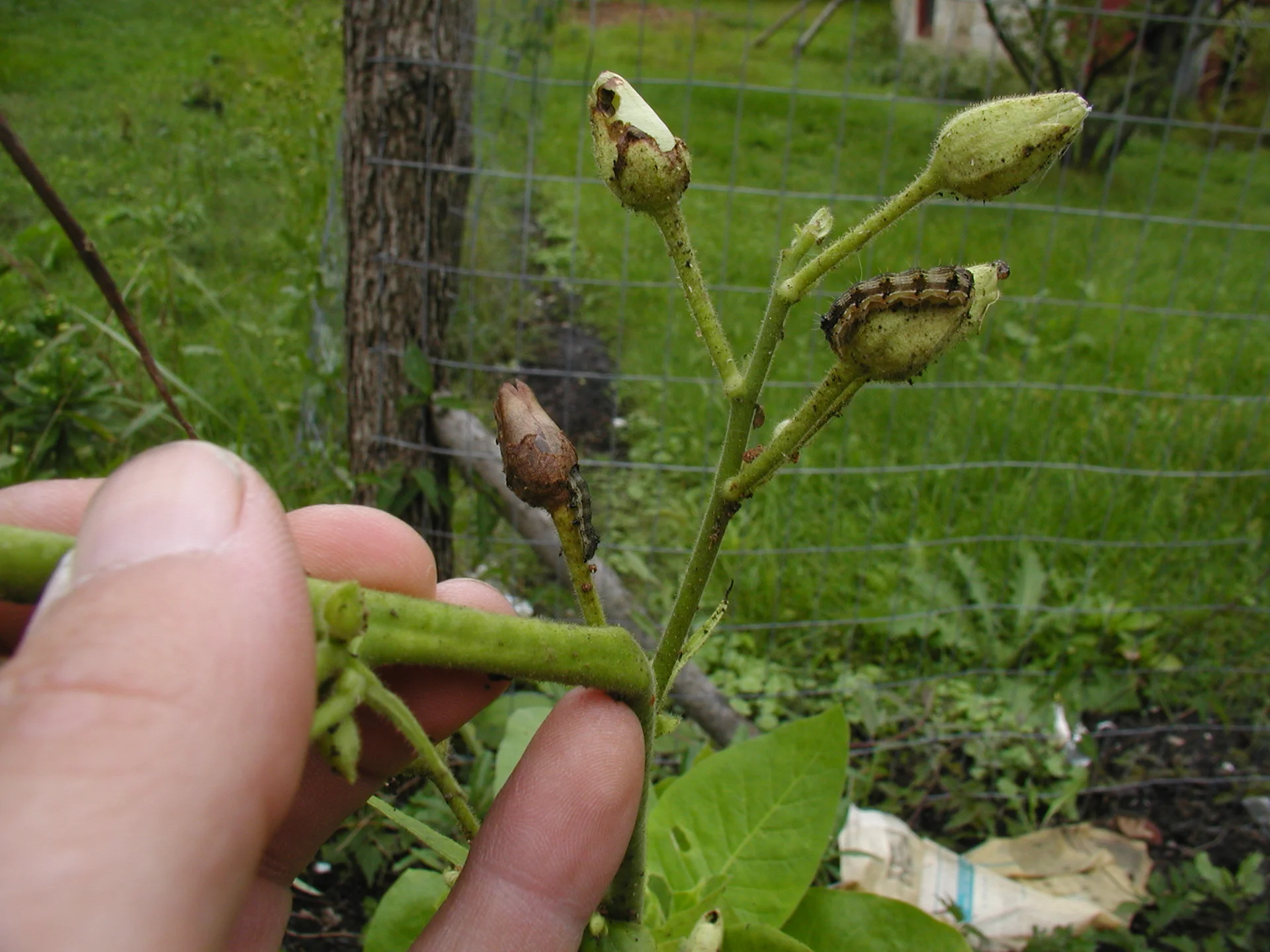
User:SB_Johnny · CC BY-SA 3.0 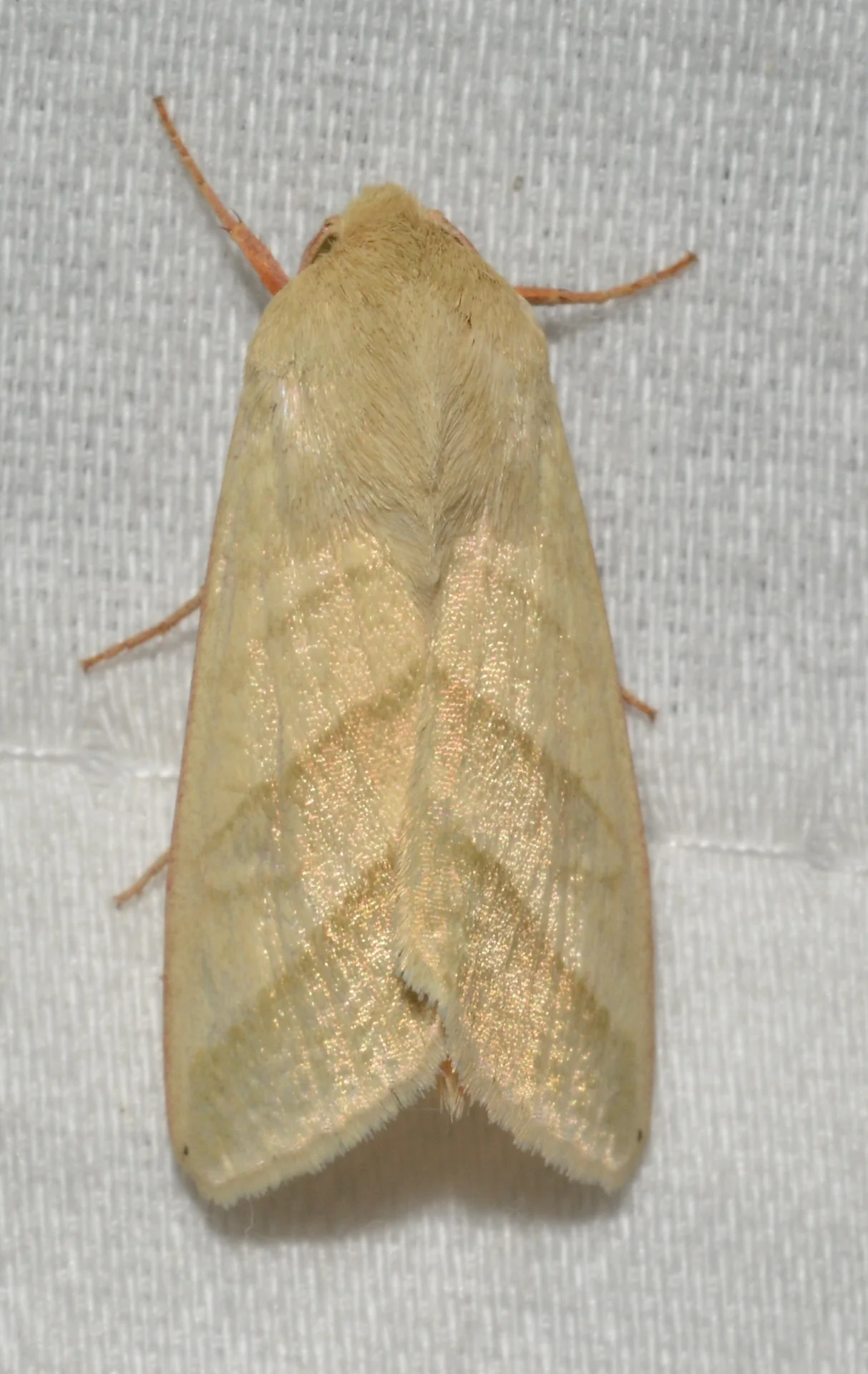
Andy Reago & Chrissy McClarren · CC BY 2.0
Why it matters
Tobacco budworm goes straight for the parts you sell - the buds, flowers, fruit and cotton bolls - and a bad attack can wipe out up to half your crop (50%). The real danger is that the young caterpillar soon bores inside a bud, boll or fruit, where no spray can reach it, and this pest has already beaten many older poisons, so it is very hard to kill once it is established. Your one good chance is to catch it early, while the eggs and tiny caterpillars are still out in the open on the growing tips.
When to act
Treat when eggs and young larvae reach the crop threshold, for example when several plants in a sample carry fresh larvae in buds or terminals before caterpillars bore into protected fruit and bolls.
This guidance is general, compiled from published agronomic references including FAO and CABI. Thresholds and timing shift with your crop, your variety and the season.
In much of the region a spray is simply called mushonga — medicine. But a chemical group you cannot name is one you cannot rotate, and a product you did not write down has no pre-harvest interval you can observe. Mushonga, and other farming words →
The full tobacco budworm field guide
Identify it
The first thing you see is the damage
The tender growing tips, buds and young leaves at the top of the plant look chewed and ragged, with small holes. Soon comes the giveaway sign: a round hole bored into a flower bud, a tomato or pepper, or a cotton boll, usually plugged with frass - the caterpillar's droppings, which look like damp sawdust - at the entrance.
Buds and flowers flare open and drop off
, and bored fruit and bolls rot or hollow out from the inside. Because the caterpillar hides inside, you will often see the damage before you ever see the pest itself.
The caterpillar
is up to about 4 cm long - the length of your little finger - but its colour is not fixed: it can be green, cream, pink, tan or reddish-brown, always with pale stripes running lengthwise down each side. Its head is brownish, and the body feels rough and prickly, covered in tiny bumps and spines, when you rub it between your fingers. Look for it tucked head-first into a bud, a flower, or the hole it has bored.
The eggs
are laid one at a time (not in fuzzy clusters), tiny and dome-shaped with fine ridges, whitish then turning brown, dotted on and around the top growing tips, buds and flowers.
Telling it apart from look-alikes
the tobacco budworm looks almost exactly like the cotton bollworm / tomato fruitworm and behaves the same way - the good news is the control below works for both, so do not lose sleep over which one it is. What matters is to separate these borers from surface leaf-eaters: armyworms and loopers chew leaves from the outside and never drill into buds or fruit, and a looper is smooth and 'loops' or inches as it crawls. If you see a clean hole bored into a bud, boll or fruit with frass at the mouth, it is the budworm type - not a leaf-eater.
Scout for it
Start scouting as the plant begins to form buds and squares
and keep going right through flowering and early fruit- and boll-set - this is exactly when the moth lays eggs on the tender tips and when the caterpillars can ruin the parts you sell. A 'square' is the young flower bud of cotton. Scout harder in warm weather (around 20-32 degrees C) and whenever earlier or neighbouring fields are already flowering.
Walk a big "W" across the whole field twice a week, so you cover the four corners and the middle - not just the edge nearest the path. Make about 10 stops, and check 10 plants at each stop (100 plants in all).
At every plant, look at the top of the plant - the growing tips, the flower buds and squares, the open flowers, and any young fruit or bolls. Search for single eggs, tiny caterpillars on the tender new growth, and fresh bore-holes with moist frass. Gently part the growing tip and turn the buds over; the pest hides where two surfaces meet.
Fresh, moist frass and a wet hole mean a caterpillar is still there and feeding — hunt it out
Old, dry frass with no caterpillar is a past attack; do not spray for that.
Hang a pheromone trap - a trap baited with the scent of the female moth, which lures and catches the male moths - to tell you when the moths start flying. When the catches climb, scout harder and time any spray to egg-hatch, before the caterpillars bore in.
Act when you find fresh eggs or small caterpillars (or fresh bore-holes) on about 1 in every 10 plants (10%)
- just a handful of plants in your sample. Keep this trigger low: once the caterpillars bore inside buds, bolls and fruit, no spray can reach them, so it is far better to act a little early than a day too late.
Control it
Prevent it first. Plant early and all at once
, ideally together with your neighbours, so your buds, flowers and fruit form and firm up before moth numbers build to their peak later in the season. A budworm that arrives to find hard, setting fruit does far less harm than one that arrives to soft new buds.
Break the pest's cycle after harvest
As soon as you finish picking, pull up and destroy the old stalks, host weeds and 'volunteers' (self-sown plants that sprout on their own from last season's dropped seed) - on tobacco, cotton, tomato, pepper and beans alike - because the budworm keeps breeding on any of these between crops. Harvest promptly and do not leave a ragged, flowering field standing.
Protect the budworm's natural enemies
Tiny parasitic wasps, predatory bugs and lacewings attack its eggs and young caterpillars for free. Do not wipe them out with broad, harsh poisons sprayed 'just in case' - they are your first line of defence.
Act early, while the caterpillars are still small and out in the open. Spray Bt
- Bacillus thuringiensis, a natural bacterium that sickens only caterpillars and is safe for you, for bees and for the helpful insects - onto the tips and buds in the cool of the day, timed to egg-hatch. A natural caterpillar virus (NPV) works the same way. Pick off and crush any caterpillars and egg-dotted tips you spot. Remember: Bt and NPV only reach caterpillars that are still exposed - they are useless once the pest has bored inside.
Only if scouting still hits the threshold and Bt is not holding, use a spinosad-based insecticide as a last resort
Spinosad is a contact-and-stomach poison - it must land on the caterpillar or be eaten by it - so it too only works before the pest bores in; time it to egg-hatch and small caterpillars. Safety: cover your skin, eyes, nose and mouth; spray in the cool of morning or evening with the wind behind you; keep it off food, off drinking and washing water, and away from children and animals; spinosad kills bees while it is still wet, so spray late in the day and never onto open flowers the bees are working; and respect the pre-harvest interval (PHI - the number of days you must wait between your last spray and picking or eating the crop; read the label). Wash yourself, your clothes and the sprayer afterwards.
Guard against resistance — this pest is famous for beating poisons
The tobacco budworm has already survived many older insecticides, so never spray the same chemical group twice in a row: rotate to a different group (the 'mode of action' - the way the poison kills) each time, and lean on Bt and the cultural steps above so you do not wear out spinosad as well. Spraying needlessly, or spraying when the caterpillars are already inside, only speeds up resistance and kills your helpful insects.
If it keeps spreading
when fresh bore-holes and dropped buds keep appearing after you spray, the caterpillars are already inside the buds, bolls and fruit where nothing can reach them - stop wasting spray on them. Instead, keep picking off and destroying every bored, rotting bud, fruit and boll (with the caterpillar still in it) to cut off the next generation, protect the clean fruit that is left, and bring your harvest forward if the crop is nearly ready. When a block is too far gone - most of the fruit already bored and rotting - cut your losses: clear and destroy it quickly, then pull and burn or bury every residue and volunteer so the budworm cannot carry over into your next crop.
Catch tobacco budworm before it costs you the harvest
This guide is the general answer. Divisi works out yours — the week to scout your own field for tobacco budworm, and what to do the day you find it.


Crops it affects
Plan the crops it attacks
-
 When to plant Common bean in Dilolo
 -
 When to plant Cotton in Kalemie
 -
 When to plant Tobacco in Opobo/Nkoro
 -
 When to plant Tomato in Goma
All planting calendars, country by country
Get Insights by email
A short digest of new Divisi articles. No email on quiet weeks.
Frequently asked questions
How do I identify tobacco budworm?
The first thing you see is the damage. The tender growing tips, buds and young leaves at the top of the plant look chewed and ragged, with small holes. Soon comes the giveaway sign: a round hole bored into a flower bud, a tomato or pepper, or a cotton boll, usually plugged with frass - the caterpillar's droppings, which look like damp sawdust - at the entrance.
When should I take action against tobacco budworm?
Treat when eggs and young larvae reach the crop threshold, for example when several plants in a sample carry fresh larvae in buds or terminals before caterpillars bore into protected fruit and bolls.
How do I control tobacco budworm?
Prevent it first. Plant early and all at once. , ideally together with your neighbours, so your buds, flowers and fruit form and firm up before moth numbers build to their peak later in the season. A budworm that arrives to find hard, setting fruit does far less harm than one that arrives to soft new buds.
Which crops are attacked by tobacco budworm?
Among the crops covered here: Common bean, Cotton, Tobacco, Tomato.