 Divisi
Alternaria leaf blight
Alternaria spp. · Fungal
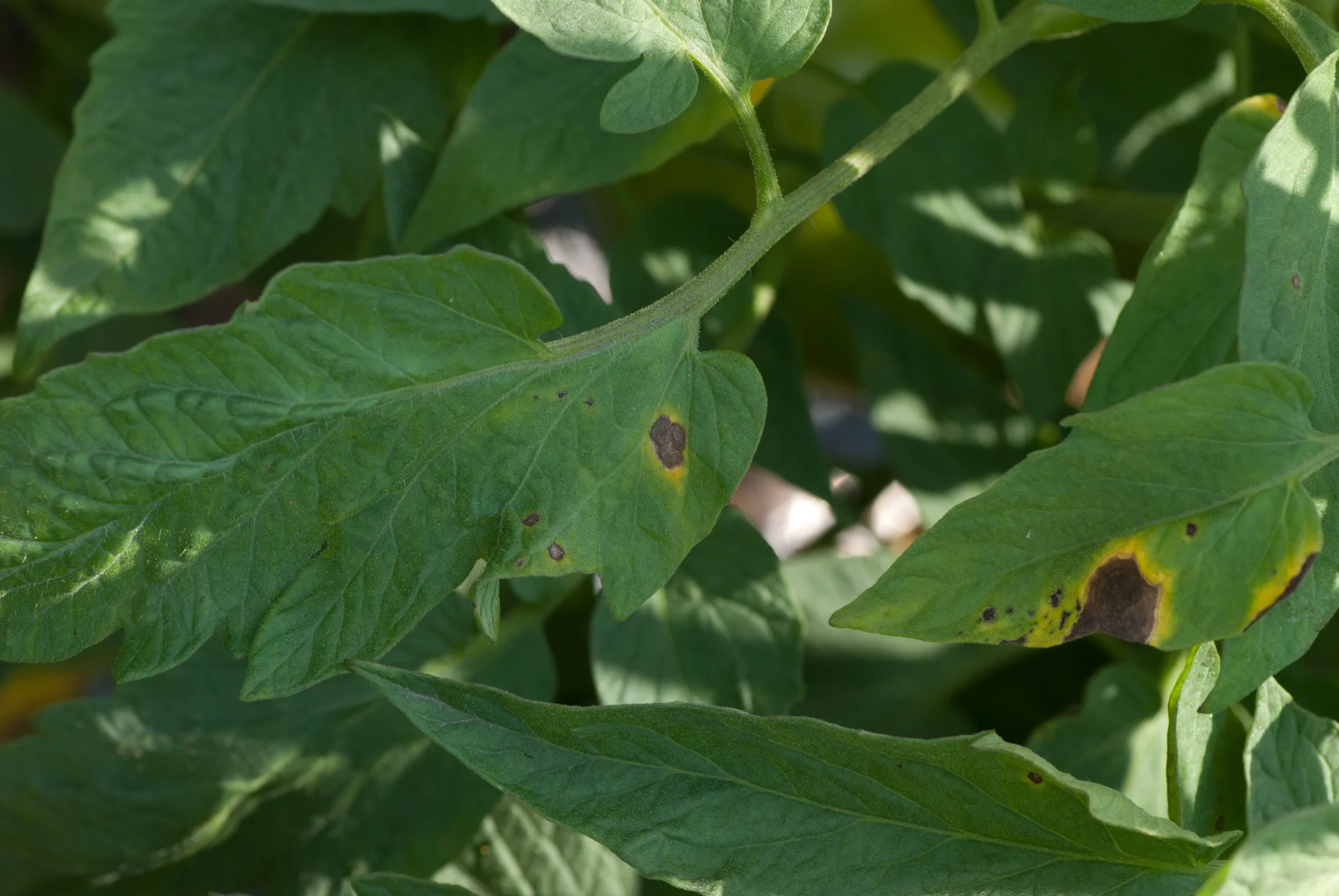
Photo: Dwight Sipler · CC BY 2.0
Alternaria leaf blight (also called early blight on tomato and potato) is a common fungal leaf disease — caused by Alternaria moulds — that attacks tomato, potato, cabbage, carrot, onion, sunflower and sweet potato. It lives on old crop debris, volunteer plants and seed, and its spores ride wind, rain-splash and irrigation onto wet leaves, where warm, muggy weather lets them infect. It shows as dark target-ring spots that start on the oldest, lowest leaves and climb up the plant as the crop ages.
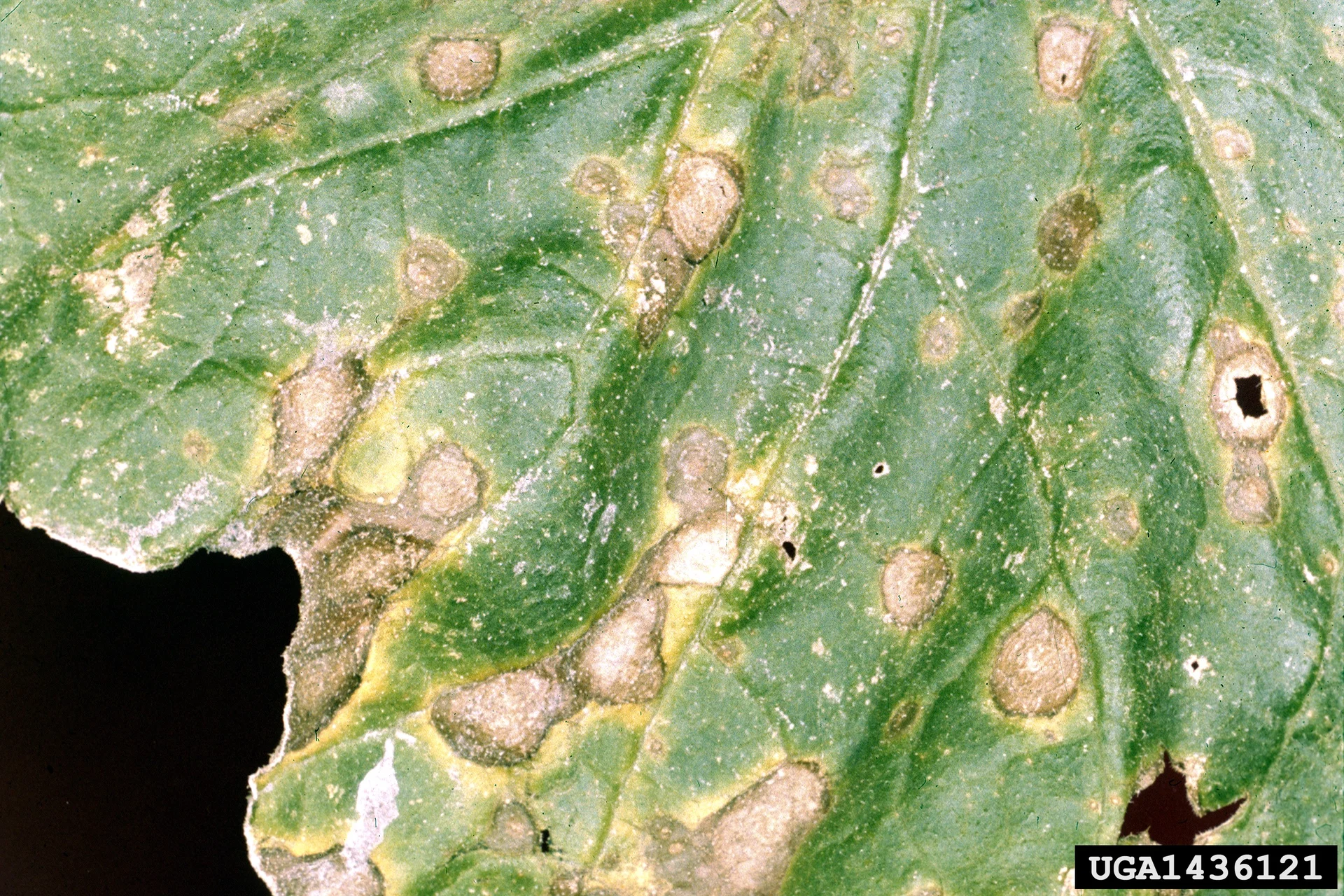
Clemson University - USDA Cooperative Extension Slide Series · CC BY 3.0 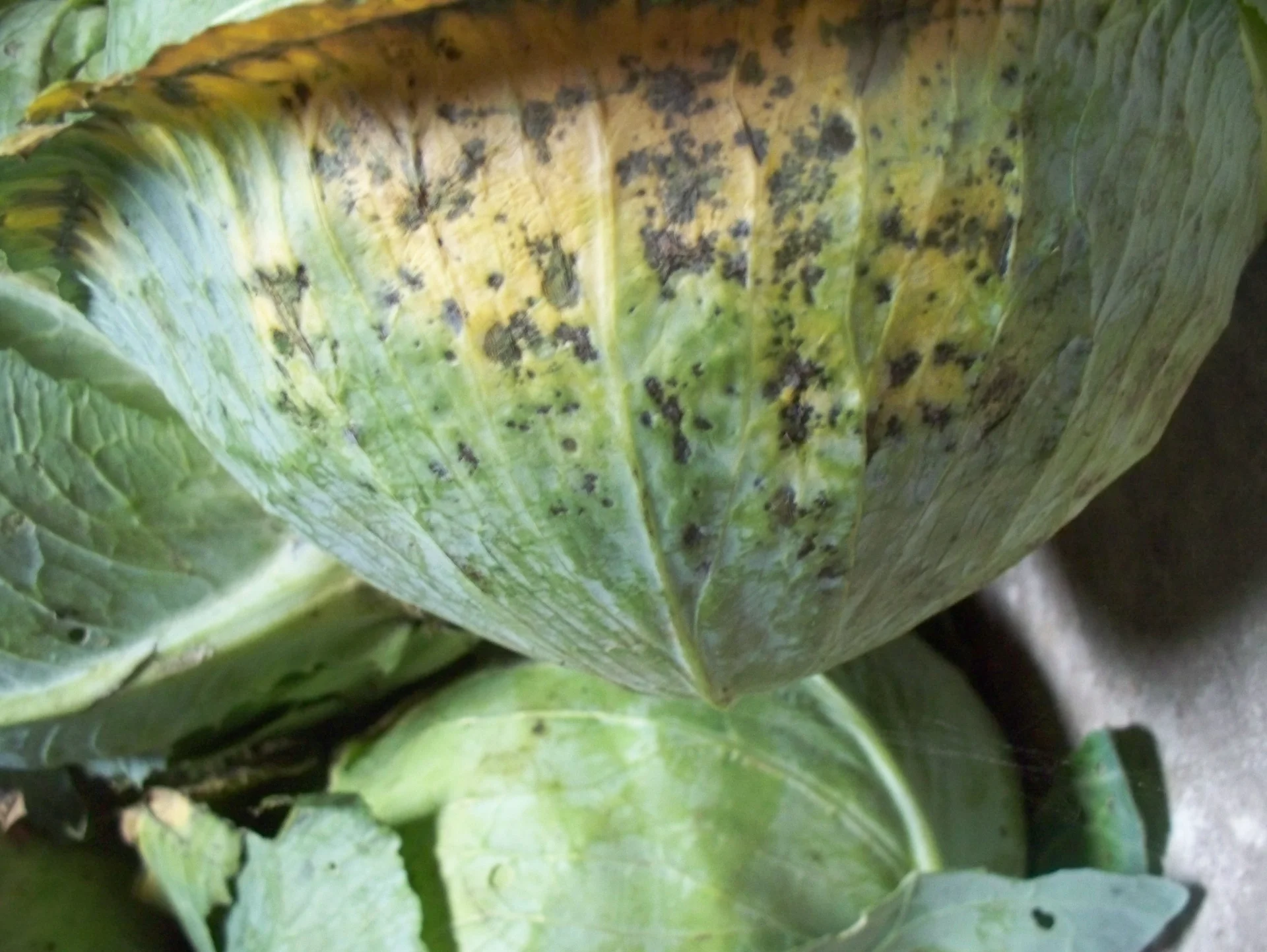
Agronom (Wikimedia Commons) · CC BY-SA 3.0
Why it matters
Alternaria leaf blight is a fungus — a tiny mould, not an insect — that eats away the leaves of tomato, potato, cabbage, carrot, onion, sunflower and sweet potato. In a warm, wet season a bad attack can strip a plant almost bare and take up to half your crop (50%). It is hard to stop once it takes hold: every spot makes new spores that rain and wind carry up the plant, and a spray can only protect the healthy leaves that are left — it cannot heal a leaf that is already spotted. Fewer leaves means smaller, sun-scalded fruit and tubers, so catching it early, on the bottom leaves, is everything.
When to act
Begin control when the first target-like spots appear on lower leaves, especially in warm humid weather.
This guidance is general, compiled from published agronomic references including FAO and CABI. Thresholds and timing shift with your crop, your variety and the season.
In much of the region a spray is simply called mushonga — medicine. But a chemical group you cannot name is one you cannot rotate, and a product you did not write down has no pre-harvest interval you can observe. Mushonga, and other farming words →
The full Alternaria leaf blight field guide
Identify it
Where it starts
look on the oldest, lowest leaves first — the ones nearest the ground. The first sign is scattered dark brown to black specks, no bigger than a pinhead, often showing up after a spell of warm, wet, muggy weather.
The tell-tale sign
each speck grows into a "target" or bull's-eye spot — a dark brown patch with rings inside it, one circle around another, like the rings in a cut tree stump or an archery target. A yellow halo usually rings each spot. This ringed pattern is what tells Alternaria apart from almost everything else.
As it spreads
the spots join up, the whole leaf turns yellow, then dry, brown and papery, and drops off. The blight climbs up the plant leaf by leaf, leaving bare stems. On the crop itself you may see dark, sunken, leathery patches — at the stem end of tomatoes, on potato and sweet-potato skins — or browning, dying tips on carrot and onion tops.
Don't confuse it
with late blight, which makes greasy, water-soaked grey-green blotches with soft white mould on the leaf underside and rots fast — with no dry rings. Nor with Septoria leaf spot, whose small spots have pale grey centres dotted with tiny black specks but no target rings. Plain lower-leaf yellowing with no dark ringed spots is usually just age or hunger, not blight.
Scout for it
Start once the canopy is filling out and check every week — most closely from mid-season into late season
, when plants are older, carrying fruit or bulking tubers, and easiest to infect. Look hardest after rain, a heavy dew, or a run of warm muggy days — this fungus needs the leaves to stay wet for six hours or more to get in.
Walk a big "W" across the field so you cover all four corners and the middle, not just the edge nearest the path. Make about 10 stops along the way.
At each stop, bend down and turn over the lowest, oldest leaves of a few plants — this is where blight always shows first. You are hunting for the dark target-ring spots with a yellow halo.
Even a single plant with target-ring spots on its lower leaves is your signal to act
— you do not wait for a big count. Especially in warm, humid weather, those first rings mean spores are already forming, so begin control straight away, before it climbs the plant.
Control it
Start with a tougher plant (your best non-spray defence)
where you can get them, grow varieties bred to resist or tolerate blight, and avoid the ones you know break down badly in a wet season. A resistant plant slows the disease right from the start.
Keep the fungus out and the leaves dry
plant clean or treated seed, and rotate — do not put tomato, potato, cabbage, carrot, onion, sunflower or sweet potato on the same ground for 2–3 years, because the fungus survives on last season's debris. Space and stake plants so air moves through and leaves dry quickly, water at the base early in the day (never overhead in the evening), and mulch the soil to stop rain splashing spores up onto the lowest leaves.
Clear away its hiding places
pull out and burn or bury old infected leaves, fallen debris and volunteer plants, and feed the crop well — a hungry, stressed plant catches blight far more easily than a strong one.
Act at the first spot
the moment you find those first target rings, pick off and remove the few spotted lower leaves and start protecting the healthy ones. Remember a spray guards clean leaves — it cannot cure a spotted one — so the earlier you start, the more of the plant you save.
Only if it keeps coming, a protectant spray (mancozeb)
protectant means it coats the leaf surface and stops new spores taking hold, but does not travel inside the plant — so you must cover every leaf, top and underside, spray again every 7–10 days in wet weather and after rain (new leaves grow and rain washes the cover off), and begin at the first spots, not once the plant is half-bare.
Protect yourself when you spray
cover your skin, eyes, nose and mouth, spray in the cool of the morning or evening with the wind behind you, and keep the spray off food crops, off drinking water, and away from children and bees. Respect the pre-harvest interval — the number of days you must wait between the last spray and picking — shown on the pack, and wash yourself and your clothes afterwards. Do not lean on one product alone: rotate to a fungicide from a different group so the fungus never gets used to it.
If it keeps spreading
tighten your spray timing, make sure you are wetting the undersides of the leaves, and pull out the worst-hit plants to slow it down. But when the plants are already mostly brown and bare, stop spending on sprays — it is too late to save those leaves. Instead harvest what you can early, then pull out and burn or bury the whole crop and rotate to a non-host next season so you are not feeding the same fungus again.
Catch Alternaria leaf blight before it costs you the harvest
This guide is the general answer. Divisi works out yours — the week to scout your own field for Alternaria leaf blight, and what to do the day you find it.


Crops it affects
Plan the crops it attacks
-
 When to plant Carrot in Plahn Nyarn
 -
 When to plant Onion in Sandoa
 -
 When to plant Sunflower in Nakasongola
 -
 When to plant Sweet potato in Bailundo
 -
 When to plant Tomato in Goma
 -
 When to plant Cabbage in Les Eucalyptus
All planting calendars, country by country
Get Insights by email
A short digest of new Divisi articles. No email on quiet weeks.
Frequently asked questions
How do I identify Alternaria leaf blight?
Where it starts. look on the oldest, lowest leaves first — the ones nearest the ground. The first sign is scattered dark brown to black specks, no bigger than a pinhead, often showing up after a spell of warm, wet, muggy weather.
When should I take action against Alternaria leaf blight?
Begin control when the first target-like spots appear on lower leaves, especially in warm humid weather.
How do I control Alternaria leaf blight?
Start with a tougher plant (your best non-spray defence). where you can get them, grow varieties bred to resist or tolerate blight, and avoid the ones you know break down badly in a wet season. A resistant plant slows the disease right from the start.
Which crops are attacked by Alternaria leaf blight?
Among the crops covered here: Cabbage, Carrot, Onion, Sunflower, Sweet potato, Tomato.