 Divisi
How to grow carrot
Daucus carota subsp. sativus · Apiaceae
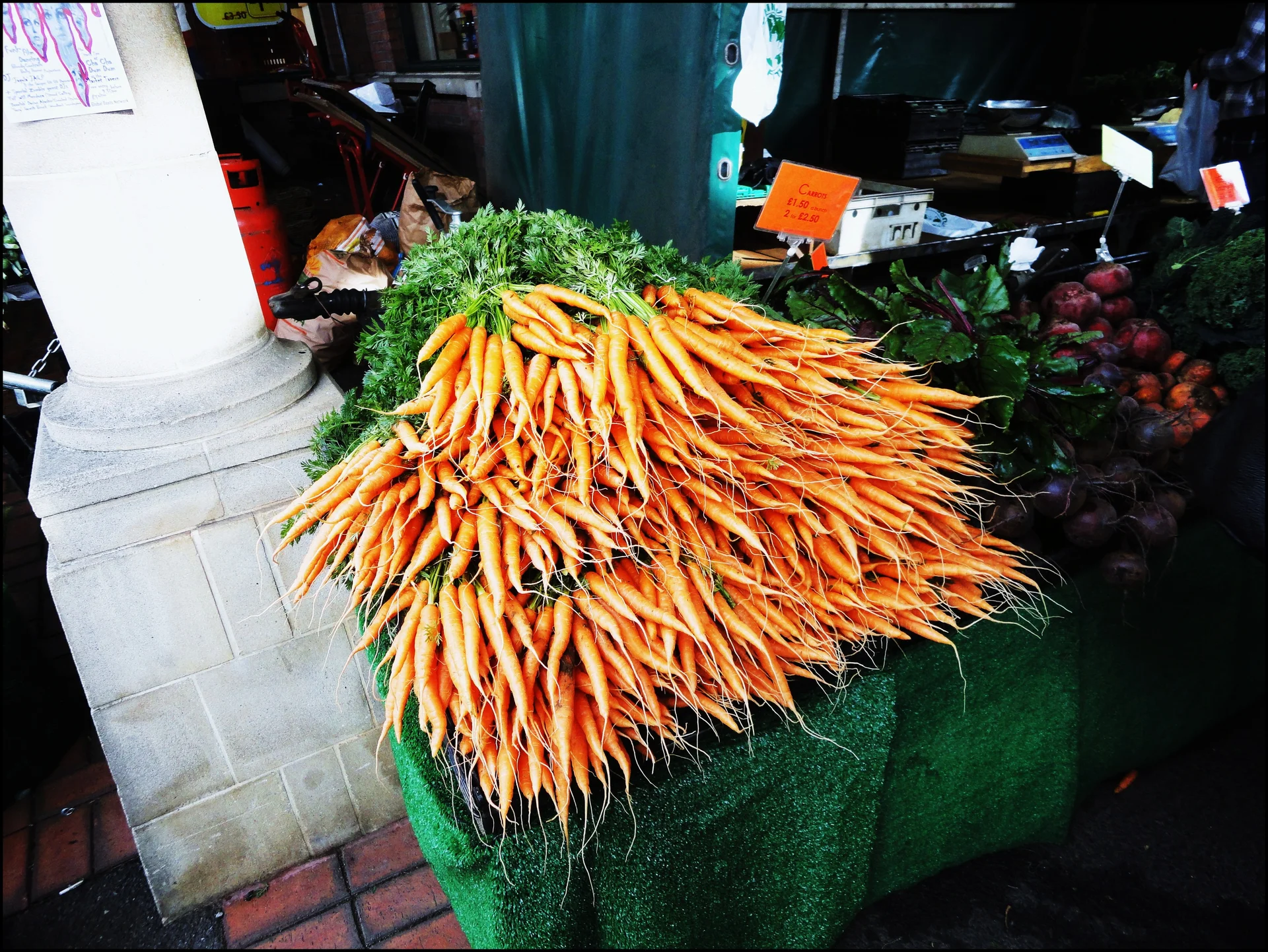
Photo: BazzaDaRambler · CC BY 2.0
The carrot is a cool-season root crop grown for its sweet, crunchy taproot — the long root you pull from the ground. You sow the tiny seed straight where it will grow: a carrot cannot be moved, because disturbing the young root makes it fork and twist. Almost everything a carrot becomes is decided underground, and three things decide it — a deep, loose, stone-free bed (hit a stone or a hard layer and the root forks), steady, even watering (let it go dry then flood it and the root splits), and a light hand with feeding (no fresh manure, and only a little nitrogen, or you get hairy, forked, leafy plants instead of clean roots). Get those three right and the rest is patience: carrots are slow to sprout and slow to fill, but a careful hand is rewarded with roots that store for months.

Harald Ulver · CC BY-SA 4.0 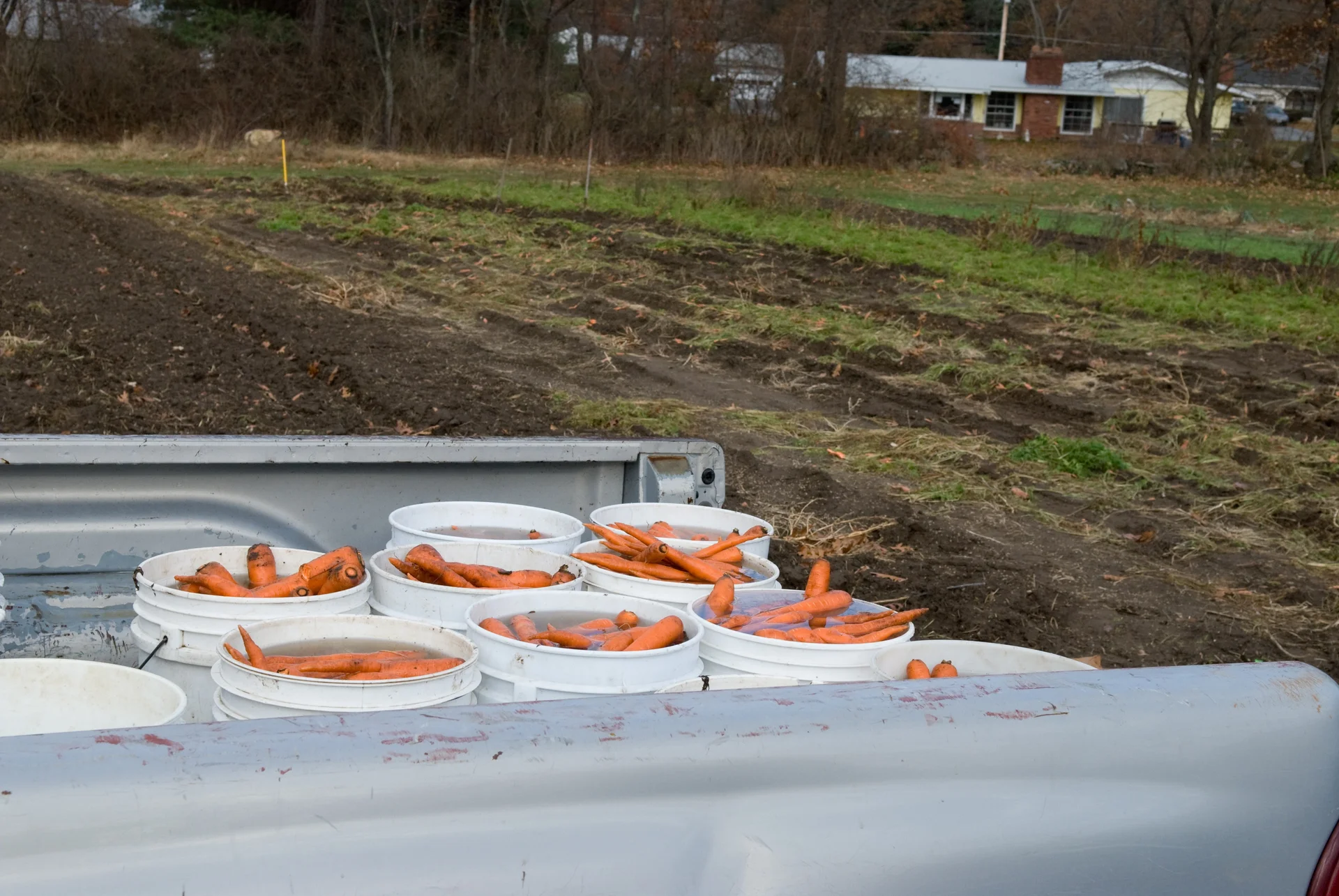
Dwight Sipler · CC BY 2.0
- Days to maturity
- 90–130 days
- Row spacing
- 20 cm
- Plant spacing in the row
- 4 cm
- Sowing depth
- 1–2 cm
These are general figures for the crop, compiled from published agronomic references including FAO and CABI. The right choice for your field depends on your soil, rainfall and the yield you are aiming for.
Will carrot actually do well on your field? Check your own field against every crop in the catalogue — no signup. Run the crop check →
Also known as
- Afrikaans
- wortel
- Amharic
- ካሮት (karot)
- French
- carotte
- Hausa
- karas
- Portuguese
- cenoura
- Shona
- karoti
- Swahili
- karoti
Working in buckets, bags or paces? The farming glossary turns the measures growers actually use into kilograms and hectares — what a 20 litre bucket of each crop really weighs, and how to size a field by walking it — alongside the Shona, Swahili, Ndebele and Yoruba words used in the field. Open the glossary →
Growing carrot, stage by stage
Your carrot season, step by step — from working the soil deep, loose and stone-free, through slow-to-sprout shallow sowing, early thinning and steady, even watering, to a gentle lift and a same-day cool that keeps the roots for months.
Get the bed deep, loose and stone-free
Everything a carrot becomes is decided by the bed you make now. A root grows long and smooth only through deep, loose, stone-free soil — hit a stone, a clod or a hard layer and it forks or twists into a shape no one will buy. So the biggest job of the whole season is right here: dig deep, break every clod, pick out every stone, and feed the soil only with well-rotted compost — never fresh manure. This is also when you buy fresh seed and the phosphorus (P) and potassium (K) your carrots will live on.
Plan the field / rotation Recommended
Carrot's worst enemies — cavity spot, root-knot nematode and carrot fly — build up in the soil wherever carrots and their close relatives grew recently. Picking a field that has had a long rest from that family starves those pests out before you even sow, and no spray later works half as well.
Plan this 3–4 months before you sow, right down to about a month before. Pick a field where no carrot, parsnip, celery, parsley or coriander has grown for at least 3 years — they all feed the same soil pests, so a long gap breaks the cycle.
Favour land that grew a cereal or a legume last (like maize or beans) — these leave the soil clean of carrot pests and in good heart.
Choose deep, light, stone-free ground — a sandy loam is best. Avoid heavy clay, shallow soil, or land full of stones and old roots, where the roots fork and stub.
Keep off any field that had fresh manure recently, and off low, wet spots — both bring the forking, hairiness and root rots carrots hate. Jot down what grew in each field each year, so you can plan the 3-year break without guessing.
- Tip:
Fresh manure on carrot ground — it makes roots hairy and forked and draws carrot fly. Use only well-rotted compost.
- Do:
Keep a simple year-by-year note of what grew in each field, so the 3-year break is easy to plan without guessing.
Buy seed & basal (P + K) Critical
Fresh seed, and the right phosphorus (P) and potassium (K) in the ground before you sow, set the crop up for smooth, sweet, well-coloured roots. Carrot seed is tiny and short-lived — old seed sprouts poorly and leaves gaps in the row — so buy fresh, and buy early before the best varieties sell out.
In the last 3 weeks before sowing, buy fresh, certified carrot seed from a registered dealer — a sealed, labelled packet with this season's date. Carrot seed loses its life fast, so old or loose seed comes up thin and patchy.
Buy the variety, seed rate and fertiliser your recommendation gives for your field. Carrot lives mostly on potassium (K) and phosphorus (P) and wants only a little nitrogen (N) — too much N forks the roots and grows leaf instead of carrot.
If your recommendation includes a little boron (B), buy that too. Carrots are one of the few crops that often need it, and a boron shortage leaves the roots cracked, corky and brown in the middle.
Store seed and fertiliser dry, off the floor, and away from food, water and children. Keep the label and receipt in case the seed turns out poor.
- Do:
Buy seed in a sealed, dated packet — carrot seed more than a year or two old comes up thin and full of gaps.
- Tip:
Buying extra nitrogen to 'push' the crop — heavy N gives you leafy tops and forked, hairy roots, not clean carrots.
- Watch out:
Keep fertiliser bone dry — damp fertiliser sets hard like a rock and won't spread.
Deep-plough + harrow to a fine, stone-free bed Critical
A carrot can only grow as straight and long as the soil is loose. Any stone, clod or hard layer in its path makes it fork, twist or stub. Digging deep and breaking the bed fine is the single biggest thing you do all season for the shape and size of your roots.
In the month before sowing, dig or plough deep — about 20–30 cm, a full spade blade and a little more — and break through any hard layer (a 'pan') underneath, so the root can drive straight down.
Then rake the top down to a fine, crumbly surface (a 'tilth') — break every clod to about pea size. The tiny seed can't push through big clods, and clods leave air pockets that fork the roots.
Pick out stones, old roots and hard clods as you go — anything solid in the top 25 cm (about a spade's depth) becomes a forked or split carrot.
Finish with a level, lightly firmed surface — firm enough that your footprint barely dents it — so the tiny seed sits snug against moist soil and the bed doesn't dry into cracks.
- Do:
Work the soil when it is moist but not wet — digging wet clay smears it into hard clods that fork the roots.
- Watch out:
Break or lift any plough pan (a hard layer about a spade-deep down) — carrots that hit it turn stumpy and forked.
Add well-rotted compost only Recommended
Well-rotted compost feeds the soil gently and helps it hold the even moisture carrots must have. But fresh manure is a disaster for carrots: it makes the roots hairy and forked, and its smell pulls in carrot fly. So compost, yes — fresh manure, never.
Use only well-rotted compost — dark, crumbly, no strong smell. If it still smells of dung or you can see straw, it is not ready; keep it off the carrot bed.
Spread a light, even layer and work it into the top few centimetres — a thin skin over the bed, not a heap. Carrots want steady, gentle ground, not rich ground.
Do this in the 1–2 weeks before you sow, once the bed is dug fine, so it settles evenly into the soil.
- Tip:
Fresh or strawy manure on the carrot bed — it forks the roots, makes them hairy, and draws carrot fly. Rot it down fully first, or use it on a different crop.
- Watch out:
Wash your hands after handling compost or manure.
Sow tiny seed and wait out the slow sprout
Carrot seed is tiny and slow — it takes 1–3 weeks to come up, and unevenly. The whole job now is to sow it shallow into a fine, firm, moist bed, then never let the surface dry out until the seedlings are through. A crust or a dry spell now kills the sprout you can't yet see and leaves a gap you can never fill.
Sow shallow Critical
Carrot seed is barely bigger than dust, so it must go in shallow (1–2 cm) or it never reaches the light. Sown too deep, into clods, or into a drying bed, it simply doesn't come up — and every gap is a carrot lost. Even, shallow sowing into a moist bed is what gives you a full row.
Sow into a fine, firm, moist bed. Mark shallow rows about a hand-span apart (≈20 cm) — a little closer or wider (15–30 cm) is fine — and keep them straight so weeding and thinning are easy.
Sow shallow — about 1–2 cm, no deeper than a fingernail — and cover with just a fine scratch of soil. Deep seed rots before it reaches the surface.
Sow thinly and evenly along the row. The seed is tiny, so mix it first with a handful of dry sand — it spreads more evenly and saves you heavy thinning later.
Firm the soil down gently over the seed with the back of a rake or your hand, so the seed touches moist earth.
Water gently straight away with a fine rose, and from now keep the top 3–4 cm always moist — the sprout is slow (1–3 weeks), so the bed must never dry out (see the watering task).
- Do:
Mix the fine seed with dry sand before sowing — it spreads more evenly and cuts the thinning work.
- Tip:
Sowing deep to 'reach moisture' — carrot seed below 2 cm mostly never comes up. Keep it shallow and keep the surface wet instead.
- Watch out:
If a hard crust forms after rain or sun, break it very gently and re-wet — the weak sprout can't push through a crust. Re-sow any patch still bare after 3 weeks.
Scout (damping-off, cutworms) Recommended
In the first three weeks the young stand is fragile. Damping-off can rot seedlings off at the soil line and cutworms can cut them down overnight — both leave bare gaps. Catching them early is the only way to save the stand and know where to re-sow.
From about a week after sowing, walk the rows twice a week and look closely at the seedlings and the spaces between them.
Damping-off (a seedling rot): look for seedlings that have toppled over, pinched and dark-wet where the thread-thin stem meets the soil, and small bare patches where seedlings rotted before they even showed. It spreads in wet, crusted, over-watered beds.
Cutworms: look for seedlings cut clean off at ground level, lying wilted on the soil (worst overnight). Scratch the soil a few centimetres around a cut plant to find the fat, grey, curled-up caterpillar.
Note the bare gaps as you go. While the crop is only a week or two old and the soil is still moist, you can re-sow the worst patches with seed — do it now, before the row ages.
- Do:
Re-sow bad patches early, with seed — a carrot's taproot forks if it is ever lifted and moved, so transplanting seedlings doesn't work.
- Watch out:
Damping-off feeds on too much water and a crusted, airless surface — water lightly and often, not heavily, and don't let the bed cake.
Water to keep the top 3–4 cm moist Critical
Carrot's slow 1–3 week sprouting is the make-or-break moment. If the top few centimetres dry out even once while the seed is sprouting, the sprout dies and you get gaps. Light, frequent watering to keep the surface always moist is the single most important thing now.
From sowing until the seedlings are up (about 3 weeks), keep the top 3–4 cm of soil always moist — damp down to about your first finger-joint.
Water little and often — every 1–2 days, more in heat — with a fine rose or gentle spray, never a hard splash that washes the seed out or beats the surface into a crust.
Check by touch: if the top 3–4 cm is starting to dry, water again. The bed should feel like a wrung-out cloth — never dust-dry, never sodden.
Water in the cool of morning or evening, so less is lost to the sun and the surface stays damp longer.
- Do:
Use a fine rose or spray — a gentle, frequent sprinkle keeps the surface moist without crusting it or washing the tiny seed away.
- Tip:
Heavy, occasional flooding — it crusts the bed, drowns the sprouting seed, and feeds damping-off. Little and often wins.
- Watch out:
A thin mulch of light grass or straw over the row holds moisture between waterings — pull it off gently as the seedlings push through.
Thin early and keep it clean
The young carrot is a poor fighter — it can't shade out weeds, and crowded seedlings starve each other into thin, twisted roots. So the two jobs now decide your root size: thin early to give each carrot room, and weed early before weeds take the light and water. A moderate feed of nitrogen helps the tops — but only a little, or it forks the roots.
Scout (leaf blight, carrot fly, aphids) Critical
Now the leaves are the engine feeding the swelling root, so leaf pests and diseases cost you directly. Leaf blights scorch the tops, carrot fly grubs tunnel the roots, and aphids suck the leaves and can spread virus. Twice-weekly checks catch them while they are still small.
From 3 weeks after sowing through about 6 weeks, walk the crop twice a week, looking over the leaves and pulling a test root or two to check underground.
Alternaria leaf blight: look for dark brown-to-black spots with a yellow halo, starting at the edges of the older, outer leaves; badly hit tops look scorched and blackened.
Cercospora leaf blight: look for smaller grey-tan spots with a dark ring, more on the younger leaves and the leaf-stalks.
Carrot fly: look for tops that turn reddish-bronze, stunted and wilty; pull a test root and check for rusty-brown tunnels and scars just under the skin.
Aphids: turn a few leaves over and look for colonies of tiny soft green or grey insects, sticky shiny honeydew (their sugary droppings), and ants running up the plants.
Note what you see and where, and act at the first clear sign — open the matching pest or disease guide. A carrot can't outgrow damage the way a taller crop can.
- Tip:
Thinning or weeding late — carrot is a poor competitor and never catches up once weeds or crowding have set the roots small.
- Do:
Pull a couple of test roots each visit — carrot fly and forking hide underground where the leaves still look fine.
Thin to 3–5 cm in-row Critical
Crowded carrots strangle each other into thin, twisted, useless roots. Thinning to one carrot every 3–5 cm, early, is what sizes the roots — worth 10–25% of your crop. Leave it late and the roots have already set small; you can't fix it afterwards.
Thin about 3–4 weeks after sowing, once the seedlings are a few centimetres tall and you can handle them — the earlier the better.
Pull out the extra seedlings so the ones left stand one every 3–5 cm — about a finger-joint apart along the row.
Thin when the soil is moist, and firm the soil back around the roots you keep, so no gap is left open for carrot fly to lay its eggs.
Thin in the cool of the evening and carry the thinnings right away — the smell of bruised carrot leaf is exactly what draws carrot fly to your crop.
- Do:
Unsure? Thin in two passes — a first quick thin, then a second down to the final 3–5 cm — rather than leaving it crowded too long.
- Tip:
Leaving thinnings lying on the bed — their scent calls in carrot fly. Take them right away and firm the soil back.
- Watch out:
Water lightly after thinning to settle the disturbed roots and close the soil around them.
Weed thoroughly Critical
Slow, low carrot seedlings are quickly buried and starved by weeds that steal the light, water and food meant for the crop. Weeding early — while weeds are small — protects 10–30% of your yield; a weedy carrot bed simply never recovers.
Weed early and by hand, from about 3 weeks after sowing, while the weeds are still small and easy to tell from the ferny carrot tops.
Weed shallowly and close to the plants — carrot feeder roots run near the surface, and deep hoeing beside the row cuts them and lets in rot.
As you weed, draw a little soil over any root tops that show green at the shoulder — this stops them going green and bitter, and hides them from carrot fly.
Keep the bed clean until the carrot tops meet over the row and shade the ground; after that the crop holds its own.
- Do:
Weed after watering, when the soil is soft — weeds lift out roots-and-all instead of snapping off and regrowing.
- Tip:
Deep hoeing beside the rows — it slices the shallow feeder roots and wounds the carrots, opening the door to rot.
1st N top-dress Recommended
A moderate feed of nitrogen (N) now helps the tops build the leaf that fills the root. But carrot is not a hungry crop — too much nitrogen grows leafy tops and forked, hairy, split roots instead of one clean carrot. So feed lightly, once, and no more.
About 4–5 weeks after sowing, once you have thinned and weeded, give the moderate amount of nitrogen your recommendation sets — no more (excess forks the roots).
Band it in a thin line along each side of the row, a hand's-width off the plants — not over the tops — so it feeds the roots and doesn't scorch the leaves.
Feed when the soil is moist (after watering or light rain) and water it in, so it reaches the roots instead of gassing off into the air.
Keep fertiliser off the wet leaves — grains that stick will scorch them. Wash your hands afterwards, and keep it away from food, water and children.
- Tip:
Piling on nitrogen to 'push' the crop — heavy N gives ferny tops and forked, hairy, cracked roots, and cuts their storage life.
- Do:
Save the real feeding for potassium at root-swelling (next stage) — that is the nutrient that makes carrots sweet, coloured and long-keeping.
Water to keep steadily moist Recommended
As the young carrot builds its tops and starts its root, it needs steady, even moisture — never bone-dry, never sodden. Even watering now grows an even root; letting it swing between dry and wet sets up the cracking and forking you'll see later.
From 3 to 6 weeks after sowing, water every 3–5 days to keep the soil evenly moist down to the young roots — more often in heat and on sandy soil.
Water deeply enough to wet the root zone, then let the surface dry just a touch before the next watering — steady and even, not a flood then a drought.
Check by pushing a finger in: water when the top few centimetres start to dry, before the plants wilt.
- Do:
Keep the watering even and regular — a steady rhythm now prevents the splitting and forking that a dry-then-wet swing causes.
- Tip:
Letting the bed dry hard and then soaking it — the sudden drink cracks the swelling roots.
Swell the root — steady water, potassium, no splits
Now the taproot swells and colours — this is where your carrots are made. Two things set the quality: steady, even moisture (a sudden drink after dryness splits the roots) and potassium (K), which builds colour, sweetness and storage life. Hold the water even, feed potassium, and keep nitrogen off — late N delays colour and shortens how long the roots keep.
Scout (leaf blight, carrot fly, splitting) Recommended
As the roots swell, the damage moves underground and out of sight: cavity spot pits the skin, root-knot nematode knots and forks the roots, and carrot fly grubs tunnel in. Splitting and bolting can strike too. A weekly test-pull is the only way to catch what the leaves won't show you.
From 6 weeks after sowing, walk the crop once a week and pull a few whole roots from different spots to check them — the leaves look fine long after the root is spoiled.
Cavity spot: look for small, sunken, oval grey-brown pits across the root skin — worse in wet, cool, poorly drained soil.
Root-knot nematode (a tiny soil worm): look for knobbly swellings and galls on the roots, and forked, hairy, stunted carrots in yellowish patches of weak plants.
Carrot fly: keep checking pulled roots for rusty-brown tunnels just under the skin, and tops that look reddish and stunted.
Splitting: look for lengthwise cracks in the roots — the sign of a sudden drink after the soil went dry. Bolting: look for a flower stalk shooting up from the centre; that root turns woody and bitter — pull and use those ones early.
- Watch out:
A sudden drink after dryness splits the roots — hold the moisture steady and even, especially in hot spells.
- Do:
If cavity spot or nematode shows up, note that field — a longer rotation off the carrot family next time is the real fix; there is no spray for them here.
Potassium top-dress Recommended
Potassium (K) is the carrot's main food — far more than nitrogen. As the root swells, potassium builds its colour, sweetness and long storage life. Feeding it now, as the roots start to fill, is what turns a pale, bland carrot into a bright, sweet one that keeps for months.
Feed potassium about 6–8 weeks after sowing, just as the roots begin to swell — the amount your recommendation sets.
Band it in a thin line along each side of the row, a hand's-width off the plants, and water it in on moist soil.
Keep nitrogen off now — late nitrogen delays colouring and shortens storage life. Potassium (and any boron (B) your recommendation gives) is the feed that counts at this stage.
Keep fertiliser off the leaves and out of any cracks in the soil; wash your hands afterwards, and keep it away from food, water and children.
- Do:
Time the potassium to the start of root-swelling — that is when the carrot uses it to set colour, sugar and keeping quality.
- Watch out:
Wash your hands after handling fertiliser, and keep it away from food, water and children.
Water deep & even Critical
This is carrot's thirstiest, most fragile stage. Steady, even, deep watering keeps the swelling roots smooth and whole; a dry spell followed by a big drink splits them open. Even moisture now is worth 10–30% of a clean, saleable crop.
From 6 weeks after sowing through root-swelling, water deeply and evenly every 4–6 days, wetting the soil right down into the root zone (carrot roots reach about 75 cm deep).
Aim for a steady rhythm — soil that stays evenly moist, never swinging from dust-dry to soaked.
In a hot, dry spell, water a little more often rather than one big flood — the flood after dryness is exactly what cracks the roots.
Ease back only near harvest (see the last light watering task before you lift).
- Watch out:
Splitting = a sudden drink after dryness. If the bed has dried out, bring the moisture back gradually over a couple of waterings, not in one soaking.
- Do:
Mulch between the rows to hold the moisture even and steady between waterings.
Check the roots are ready
The roots are near full size and colour. Before you lift, you check maturity — a carrot pulled too early is small and wastes the crop; left too long it can crack, go woody or bolt. A quick test-pull tells you the roots are firm, full-length and fully coloured, so you lift at the right moment.
Check root maturity Recommended
Lifting at the right moment protects everything you've grown. Too early and the roots are small; too late and they can crack, turn woody or bolt (throw up a flower stalk that leaves the root woody and bitter). A simple test-pull tells you the shoulders have reached full size and colour — the green light to harvest.
From about 90 days (3 months) after sowing, pull a few sample roots from different parts of the bed to judge them.
Check the shoulder (the top of the root at soil level): it should be full-sized, about 20–30 mm across — roughly a thumb's width — and the whole root a firm, full, even colour right down.
The root should feel firm and full-length when pulled — not thin, stumpy or soft.
When most sample roots pass, the crop is mature — go ahead and lift (see the harvest tasks).
If the sample roots are still small, pale or thin → don't lift yet. Keep the moisture steady and even, and test-pull again in 1–2 weeks until the shoulders reach full size and colour.
- Do:
Judge by a few test-pulls, not by the tops — leafy tops can look ready while the roots are still small.
- Watch out:
Don't leave a mature crop sitting too long in warm, drying soil — the roots can crack, go woody or bolt.
Lift the roots gently
Now you get the crop out of the ground without wounding it — because every nick and bruise becomes a rot in storage. Give a last light watering so the soil lifts easily, then loosen the roots and hand-pull on a day when the soil is moist but not wet, handling them like eggs.
Last light irrigation before lifting Recommended
Lifting carrots from hard, dry ground snaps and bruises them, and the wounds rot in store. A last light watering about a week before you lift softens the soil so the roots slide out whole — without soaking the bed, which would cake and split them.
About a week before you plan to lift (roughly 15 weeks after sowing), give the bed one last light watering — just enough to soften the soil, not to flood it.
Let the surface drain back to moist-but-not-wet before you lift — you want soil that crumbles off the roots, not sticky mud.
- Tip:
Lifting a dry, water-stressed crop — the roots snap and bruise. A last light watering about a week before lifting saves them.
- Watch out:
Don't over-water right before lifting — a sudden soaking can split ripe roots and cake them in mud.
Lift the roots Critical
This is the payday — but carrots wound easily, and every wound rots in store. Lifting them loosened and gently, on a day when the soil is moist but not wet, is what gets clean, whole roots into your store or to market. Yanked or nicked roots don't keep.
Lift at about 110–130 days (roughly 3½–4½ months) after sowing, on a day when the soil is moist but not wet.
Loosen first, don't yank: push a fork or spade in beside the row, a little away from the roots, and lever the soil up to free them — pulling hard on dry ground snaps the root and leaves the tip in the ground.
Hand-pull the loosened roots by the tops, shaking off the soil. Handle them gently — bruises, cuts and broken tips all rot in storage.
Lay the lifted roots in the shade, not the hot sun, and go straight on to topping, washing and cooling the same day (see the next stage).
- Do:
Loosen with a fork a hand's-width to the side first — freed roots pull out whole; forced roots break and the broken tip rots in the ground.
- Tip:
Lifting when the soil is wet and sticky — the roots come up caked in mud and bruise. Wait for moist-but-not-wet.
- Watch out:
Keep the lifted roots out of the sun — heat and wilting soften them fast.
Top, wash and cool the same day
The roots are out — now don't lose them to rot. Carrots keep for months only if you get the field heat out fast and handle them gently: break off the leaves (they pull water from the root), wash off the soil, grade out the damaged ones, and cool them the same day. Wounds and warmth are what let soft rot in.
Top, wash, grade & cool Recommended
Leaves left on a lifted carrot pull the moisture out and it goes limp; field heat and wounds let soft rot turn a root to slime. Topping, washing, grading and cooling the same day is what keeps carrots firm and saleable — done right, they hold for up to 6 months.
Top them: break or twist off the leaves close to the crown as soon as you lift — leaves left on draw water out of the root and it wilts.
Wash the soil off with clean water, changing the water often so you are not just re-coating them in mud.
Grade as you go: set aside any root that is cut, bruised, split, forked or soft — these rot first and will spoil the sound ones beside them. Use or sell the damaged ones quickly.
Soft-rot check: throw out any root with a soft, wet, slimy, foul-smelling patch (usually starting at a wound) — it spreads to its neighbours in the store.
Cool them the same day, out of the sun. Kept cool and damp (around 2–3 °C, very humid — 90–95%), sound carrots hold for up to 6 months; left warm, they soften in days.
- Do:
Top, wash, grade and cool the same day you lift — every hour of field heat cuts the storage life.
- Tip:
Storing wounded, unwashed or warm roots — each one is a soft-rot start. Grade the damaged ones out and use them first.
- Watch out:
Handle gently right to the end — a bruise made while washing or packing rots just like one made while lifting.
Pests and diseases that attack carrot
-
 Alternaria leaf blight
 -
 Bacterial soft rot
 -
 Carrot fly
 - Carrot leaf blight
-
 Cavity spot
 -
 Plant-parasitic nematodes
 -
 Root-knot nematode
Where to sell carrot
Markets that trade this crop — what each one sells it by, when supply peaks there, and the currency used.
-
 Joburg Market
-
 Wakulima Market
-
 Atkilt Tera
-
 Marché de Foumbot
-
 Marché de Thiaroye
-
 Nakuru Market
-
 Tshwane Market
-
 Windhoek Fresh Produce Market
Grow carrot with a plan, not a guess
This guide is the general answer. Divisi works out yours — the week to plant carrot on your soil and your rainfall, and each job dated for your field.


When to plant carrot, country by country
- When to plant carrot in Algeria
- When to plant carrot in Angola
- When to plant carrot in Benin
- When to plant carrot in Botswana
- When to plant carrot in Burkina Faso
- When to plant carrot in Burundi
- When to plant carrot in Cabo Verde
- When to plant carrot in Cameroon
- When to plant carrot in Comores
- When to plant carrot in Congo
- When to plant carrot in Côte d'Ivoire
- When to plant carrot in Egypt
- When to plant carrot in Eritrea
- When to plant carrot in Eswatini
- When to plant carrot in Ethiopia
- When to plant carrot in Gabon
- When to plant carrot in Gambia
- When to plant carrot in Ghana
- When to plant carrot in Guinea Ecuatorial
- When to plant carrot in Guinea-Bissau
- When to plant carrot in Guinée
- When to plant carrot in Kenya
- When to plant carrot in Lesotho
- When to plant carrot in Liberia
- When to plant carrot in Libya
- When to plant carrot in Madagascar
- When to plant carrot in Malawi
- When to plant carrot in Mali
- When to plant carrot in Mauritanie
- When to plant carrot in Mauritius
- When to plant carrot in Morocco
- When to plant carrot in Moçambique
- When to plant carrot in Namibia
- When to plant carrot in Niger
- When to plant carrot in Nigeria
- When to plant carrot in Rwanda
- When to plant carrot in République centrafricaine
- When to plant carrot in République démocratique du Congo
- When to plant carrot in Sao Tome and Principe
- When to plant carrot in Seychelles
- When to plant carrot in Sierra Leone
- When to plant carrot in Somalia
- When to plant carrot in South Africa
- When to plant carrot in South Sudan
- When to plant carrot in Sudan
- When to plant carrot in Sénégal
- When to plant carrot in Tchad
- When to plant carrot in Togo
- When to plant carrot in Tunisie
- When to plant carrot in Uganda
- When to plant carrot in United Republic of Tanzania
- When to plant carrot in Zambia
- When to plant carrot in Zimbabwe
Where carrot scores best
Districts where Divisi's engine currently rates this crop highest, ranked by fit.
-
 Plahn Nyarn
 -
 Lomela
 -
 Ilaje
Ilaje -
 Baney
Baney -
 Naivasha
 -
 Louetsi-Wano
 -
 Bailundo
 -
 Lekana
 -
 Kisoro
 -
 Vallée-du-Ntem
 -
 Kambia
 -
 Karongi
Get Insights by email
A short digest of new Divisi articles. No email on quiet weeks.
Frequently asked questions
How do I grow carrot?
How to grow carrot: 90–130 days to maturity, 20 cm rows, 1–2 cm deep. Also called wortel, ካሮት (karot), carotte, karas, cenoura, karoti.
What is wortel in English?
Wortel is the Afrikaans name for carrot.
What is ካሮት (karot) in English?
ካሮት (karot) is the Amharic name for carrot.
What is carotte in English?
Carotte is the French name for carrot.
What is karas in English?
Karas is the Hausa name for carrot.
What is cenoura in English?
Cenoura is the Portuguese name for carrot.
What is karoti in English?
Karoti is the Shona and Swahili name for carrot.
How long does carrot take to grow?
Carrot takes about 90–130 days from sowing to maturity, though the exact length varies with variety, temperature and how the season runs.
What spacing should I use for carrot?
Space carrot rows about 20 cm apart, with roughly 4 cm between plants within the row.
How deep should carrot be planted?
Sow carrot at about 1–2 cm deep. Shallower risks drying out; deeper wastes seed energy before the shoot reaches light.
What pests and diseases attack carrot?
The ones covered in this guide are Alternaria leaf blight, Bacterial soft rot, Carrot fly. Each has its own page explaining how to identify, check for and control it.