 Divisi
Bacterial soft rot
Pectobacterium carotovorum · Bacterial
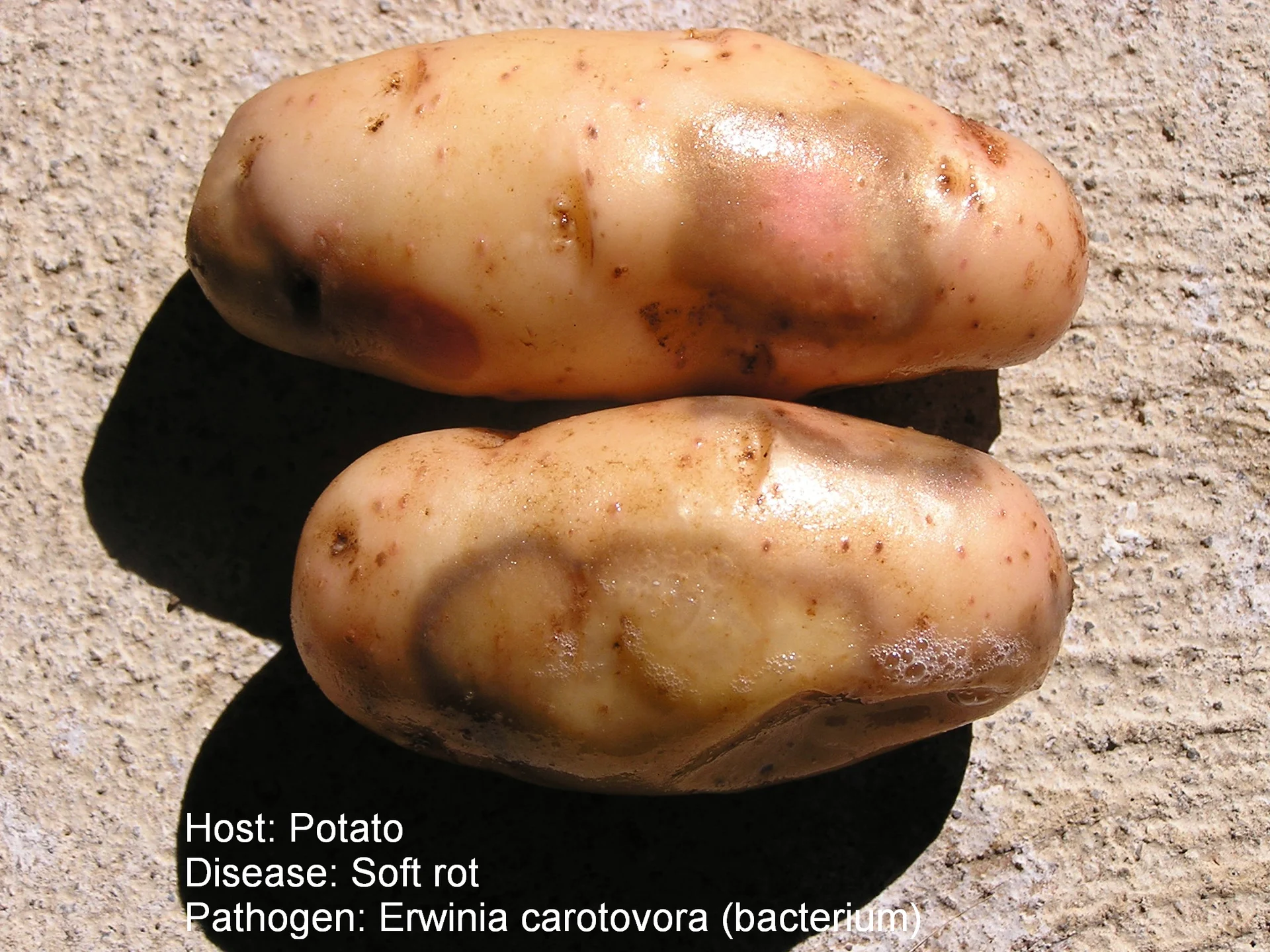
Photo: Scot Nelson · CC0
Bacterial soft rot (Pectobacterium carotovorum) is a soil- and water-borne bacterial disease of fleshy crops — potato, sweet-potato, carrot, onion, cabbage and tomato. The bacteria cannot break through healthy skin; they slip in through wounds, bruises, insect holes and natural openings, then release enzymes that dissolve the tissue and turn firm flesh into a wet, stinking mush. It moves in irrigation water, on dirty knives and crates, on insects and in bruised produce, and is worst in warm, wet, airless conditions — in a waterlogged field or a hot, closed store.
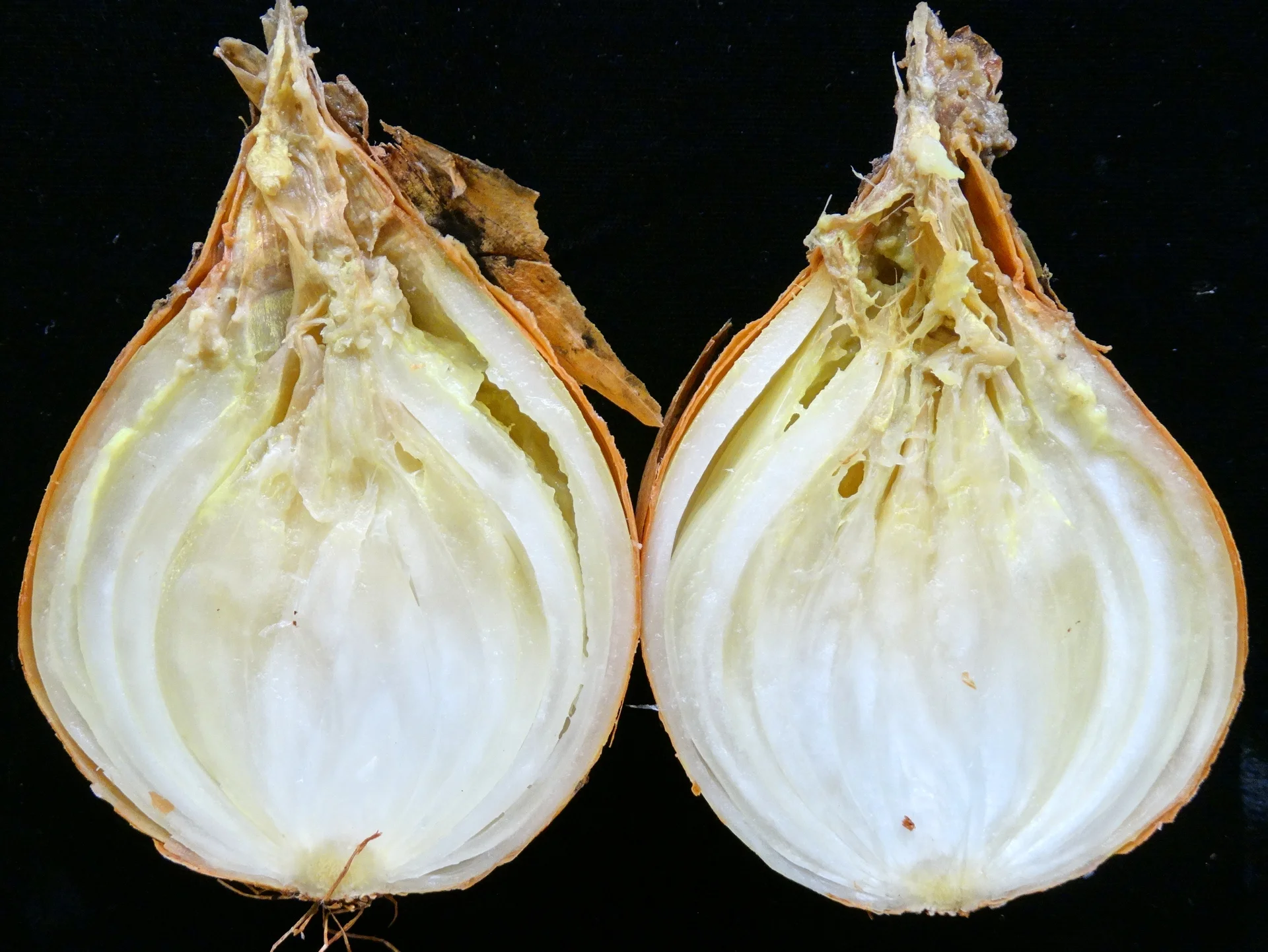
Scot Nelson · CC0 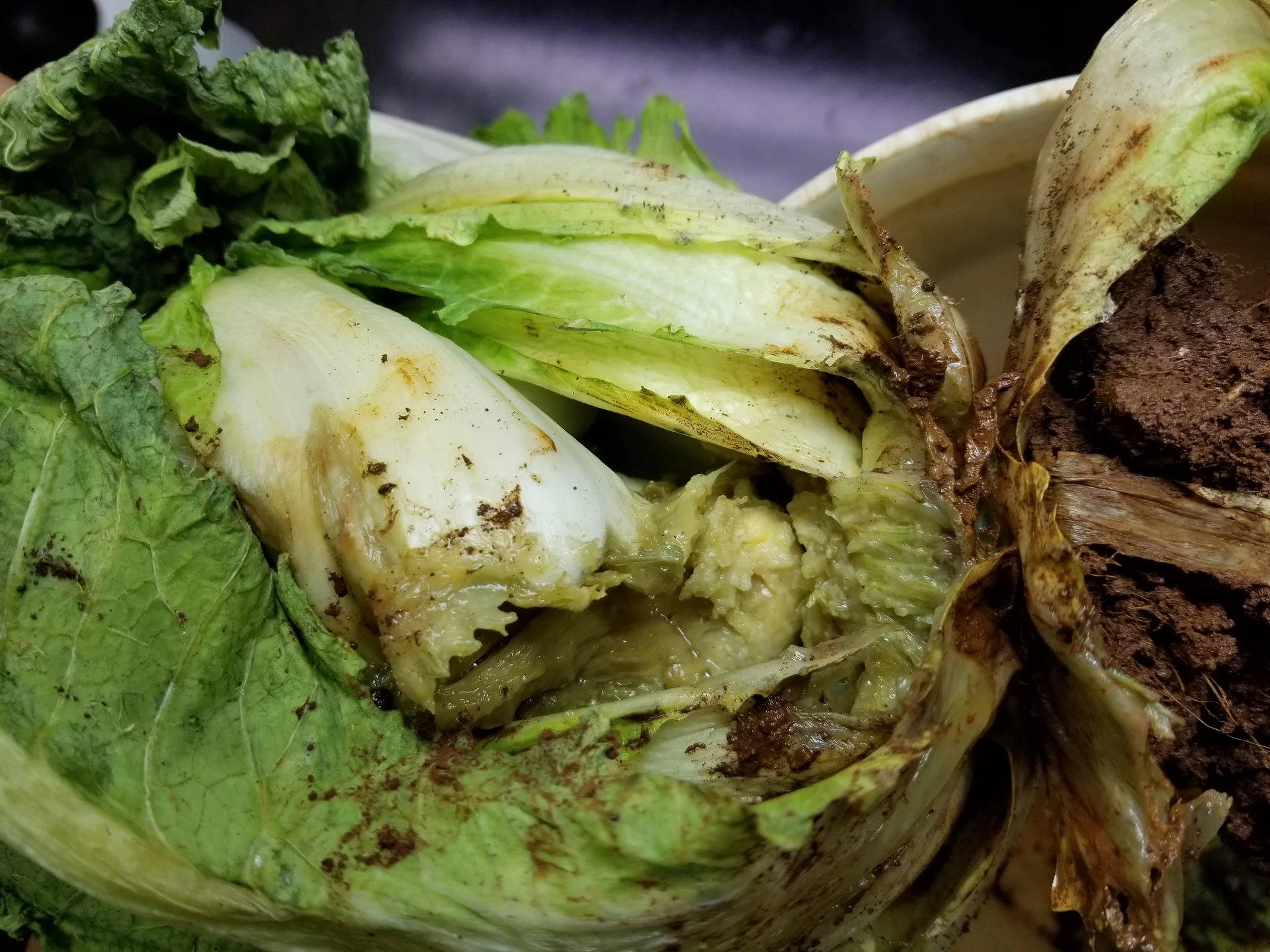
Scot Nelson · CC0
Why it matters
Soft rot is a silent store-killer. Once it starts, it can rot away up to half your harvest (50%) — and worst of all it keeps working after you have lifted the crop, so a field that looked fine turns into a slimy, stinking heap in the store within days. One rotten potato, onion or cabbage touching its neighbours passes it on, so the loss spreads on its own. There is no spray that cures it: once the flesh has gone to mush it is finished, so everything depends on stopping it before it starts — keeping the crop unbruised, dry and cool.
When to act
First soft mushy lesions on tubers, roots or heads, especially after rain or in store; act on sanitation and drying immediately.
This guidance is general, compiled from published agronomic references including FAO and CABI. Thresholds and timing shift with your crop, your variety and the season.
In much of the region a spray is simply called mushonga — medicine. But a chemical group you cannot name is one you cannot rotate, and a product you did not write down has no pre-harvest interval you can observe. Mushonga, and other farming words →
The full Bacterial soft rot field guide
Identify it
The damage you see first
a soft, watery, mushy patch on a potato, sweet-potato, carrot, onion, cabbage head or tomato that gives way when you press it — like a rotten tomato. The flesh collapses into a wet, slimy, cream-to-tan mush and often carries a strong, foul, sickening smell that is easy to recognise once you have met it.
How it spreads
the rot has a clear, sharp edge between the mush and the still-firm flesh, and it moves fast — a small soft spot can swallow a whole tuber or a whole cabbage head in a day or two, especially in a warm store. On onions it often starts at the neck; on cabbage it hollows out the heart; on tubers and carrots it works in from a bruise or cut.
Where it takes hold
look at any bruise, crack, insect hole or knife cut — soft rot cannot enter clean, unbroken skin, so damage points are where it always begins.
Don't confuse it
with dry rots and fungal rots, which stay firm, dry, sunken and often mouldy and do NOT go slimy or smell foul. Soft rot is the wet, mushy, bad-smelling one that turns to slime; if it is dry, dusty or hard, it is something else.
Scout for it
When to look hardest
soft rot hits during root and bulb filling (mid-season) and at maturity and storage (late-season) — so start checking once your tubers, roots, bulbs or heads are swelling, and keep checking right through harvest and in the store.
After every rain, and after any waterlogging,
walk the field and check plants in the low, wet patches first — standing water on wounded crop is what the bacteria love.
Walk a large "W" across the field so you cover all four corners and the middle, not just the edge by the path. At about 10 stops, lift or feel a few roots, tubers or bulbs — press gently for soft, watery spots and sniff for the foul smell, paying special attention to any that are bruised or insect-damaged.
In the store, check every few days
dig into the pile and feel for soft, wet, warm or smelly spots. Warmth and a bad smell rising from a heap means rot is already working inside.
Your action number
the moment you find the first soft, mushy, smelly patch — even 1 rotting root, tuber or head in the field or the store — act now. Do not wait for a count: one rotten unit will infect the ones it touches, so early action on sanitation and drying is everything.
Control it
Prevent it
-
handle gently and keep dry (the strongest defence):
the bacteria need a wound and free water, so give them neither. Harvest in dry weather, avoid bruising and cutting when you lift and carry, let the crop cure and dry before you store it, improve field drainage and never over-irrigate, and store the crop cool, dry and well ventilated — never in a hot, closed, damp heap. Control the insects that chew entry wounds, since every hole is a doorway.
-
keep everything clean:
rotate away from soft-rot crops (potato, carrot, onion, cabbage, tomato, sweet-potato) so the soil load drops, plant only clean, disease-free seed and planting material, and disinfect your knives, crates and store between batches so you are not carrying the bacteria from a rotten load to a healthy one.
Act early — rogue out and separate:
as soon as you find a rotting root, tuber or head, remove it and any touching neighbours and carry them right out of the field or store — do not leave rotten produce in the pile or drop it on the field, as it seeds the next infection. Bury or burn the rotten ones well away from the crop.
Chemical is a weak last resort — copper:
a copper spray (a protectant — it only coats the surface, it does not travel inside the plant or cure a rot already started) gives only partial help. For soft rot, clean handling, drying and sanitation matter far more than any chemical. If you do use copper: cover your skin, eyes, nose and mouth, spray in the cool of the day with the wind at your back, keep it off food, water sources, children and bees, respect the pre-harvest interval (the number of days that must pass between spraying and eating or selling — read the label), and wash yourself and your tools afterwards.
If it keeps spreading → cut your losses fast
Once a store is going down, sort out and use or sell the sound produce immediately, throw out everything soft or smelly, and open up the store to dry, cool air to slow the rest. There is no cure for flesh that has already turned to mush — the only win left is saving what is still firm and stopping it reaching the rest.
Catch Bacterial soft rot before it costs you the harvest
This guide is the general answer. Divisi works out yours — the week to scout your own field for Bacterial soft rot, and what to do the day you find it.


Crops it affects
Plan the crops it attacks
-
 When to plant Carrot in Plahn Nyarn
 -
 When to plant Onion in Sandoa
 -
 When to plant Sweet potato in Bailundo
 -
 When to plant Tomato in Goma
 -
 When to plant Cabbage in Les Eucalyptus
All planting calendars, country by country
Get Insights by email
A short digest of new Divisi articles. No email on quiet weeks.
Frequently asked questions
How do I identify Bacterial soft rot?
The damage you see first. a soft, watery, mushy patch on a potato, sweet-potato, carrot, onion, cabbage head or tomato that gives way when you press it — like a rotten tomato. The flesh collapses into a wet, slimy, cream-to-tan mush and often carries a strong, foul, sickening smell that is easy to recognise once you have met it.
When should I take action against Bacterial soft rot?
First soft mushy lesions on tubers, roots or heads, especially after rain or in store; act on sanitation and drying immediately.
How do I control Bacterial soft rot?
Prevent it — handle gently and keep dry (the strongest defence):. the bacteria need a wound and free water, so give them neither. Harvest in dry weather, avoid bruising and cutting when you lift and carry, let the crop cure and dry before you store it, improve field drainage and never over-irrigate, and store the crop cool, dry and well ventilated — never in a hot, closed, damp heap. Control the insects that chew entry wounds, since every hole is a doorway.
Which crops are attacked by Bacterial soft rot?
Among the crops covered here: Cabbage, Carrot, Onion, Sweet potato, Tomato.