 Divisi
Plant-parasitic nematodes
· Nematode
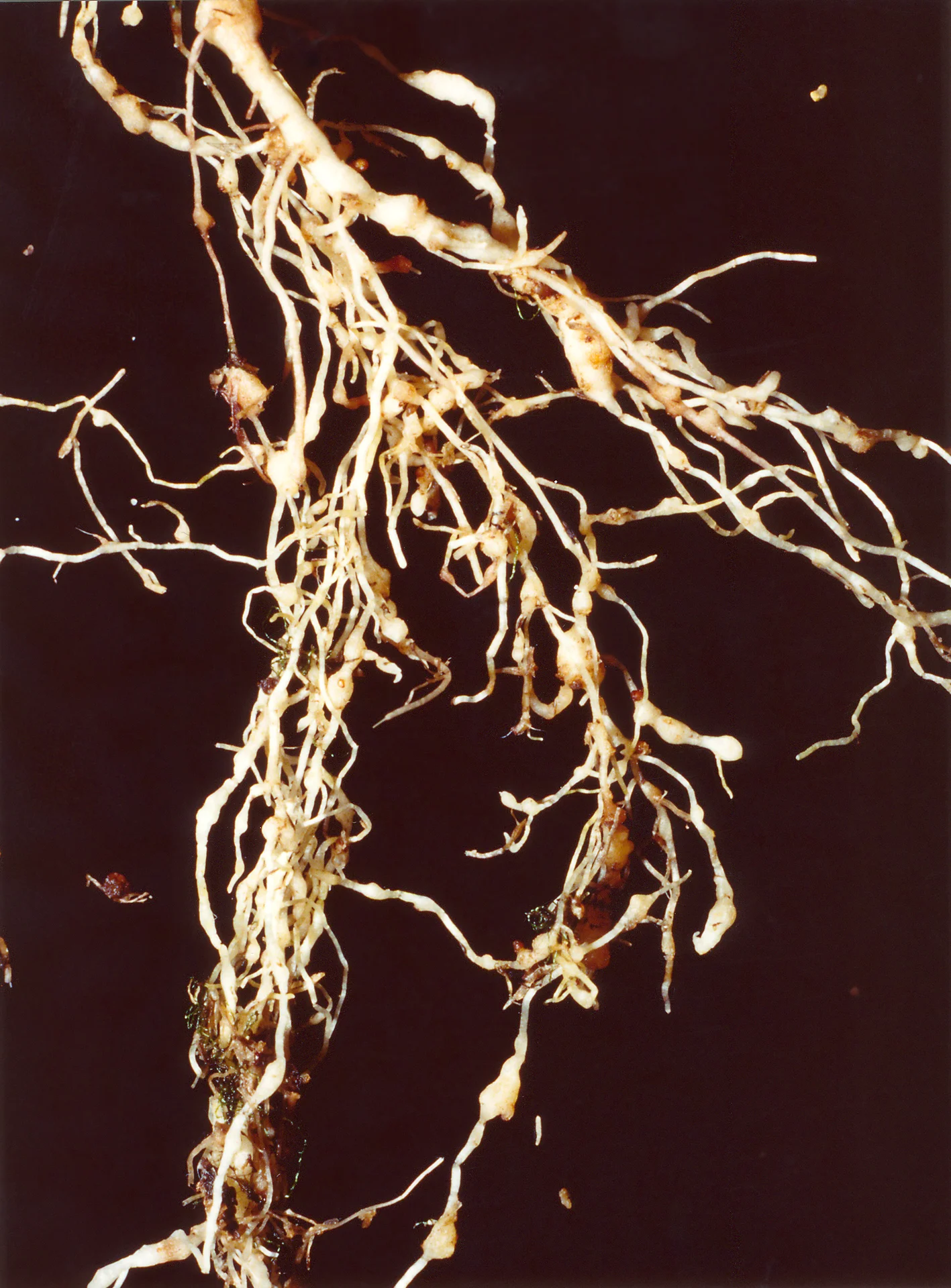
Photo: CSIRO · CC BY 3.0
Plant-parasitic nematodes are microscopic, thread-like roundworms that live in the soil and feed on plant roots. Root-knot types swell the roots into knots and beads; lesion, cyst and burrowing types cause dark rots, forking and dieback. Either way they choke the roots' ability to draw up water and food, stunt the plant, and open the door to soil fungi and rots. They survive in the soil and in infected seedlings and suckers for years.
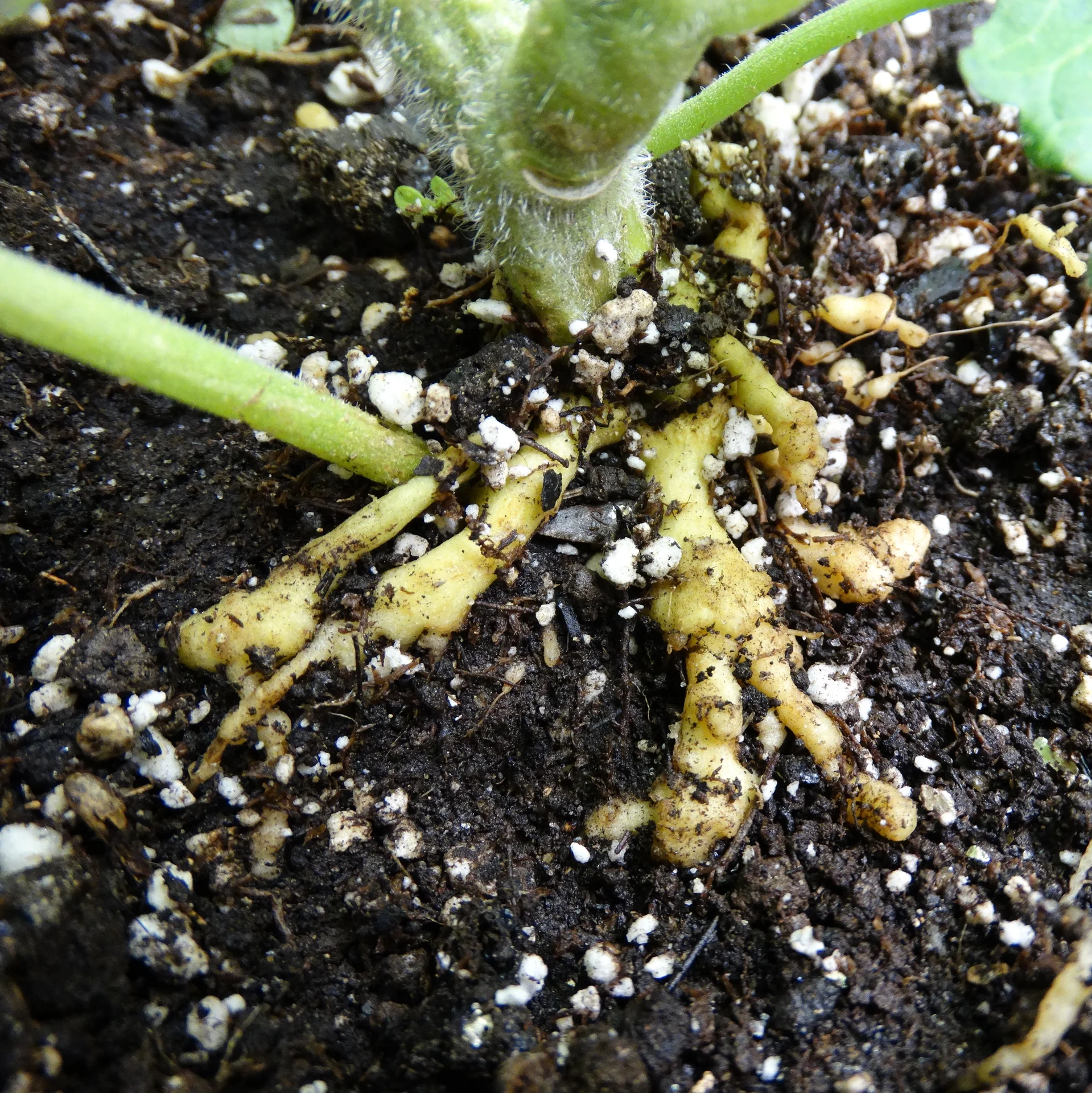
Plant pests and diseases · CC0 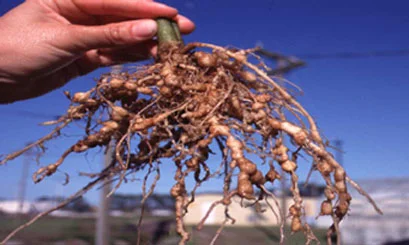
Public domain · Public domain
Why it matters
Nematodes are worms too small to see that attack your crop's roots underground, so the plant slowly starves even when you feed and water it well. A bad infestation can cost you up to half your harvest of tomato, potato, carrot, banana or okra. The worst part is that they hide in the soil and in infected seedlings for years — once a field is infested you cannot simply spray them away, you have to keep clean land clean and starve the worms down over several seasons. That is why spotting the sick patches early, and never carrying soil or seedlings from a bad field to a clean one, matters so much.
When to act
Patches of stunted, wilting plants with galled or lesioned roots on lifting a sample; a history of nematode damage in the field.
This guidance is general, compiled from published agronomic references including FAO and CABI. Thresholds and timing shift with your crop, your variety and the season.
In much of the region a spray is simply called mushonga — medicine. But a chemical group you cannot name is one you cannot rotate, and a product you did not write down has no pre-harvest interval you can observe. Mushonga, and other farming words →
The full Plant-parasitic nematodes field guide
Identify it
What you notice first (above ground)
irregular patches of the field — not the whole field, and never neat along the rows — where plants are stunted, pale or yellow and wilt in the midday heat even when the soil is still wet. Early on they perk up again in the cool of evening; later they stop recovering at all. The give-away: these plants stay hungry-looking even after you add fertiliser, because the damaged roots can no longer drink it up. The same bad patches come back in the same spot season after season.
The real proof is in the roots — the worm itself is invisible
A single nematode is thinner than a hair and shorter than a pinhead, so you will never see one with your eyes; you read it from the roots instead. Dig up a poor plant and wash the soil off. Root-knot type (common on tomato, potato and okra): the roots are swollen into knots, beads and galls — like a string of tiny beads or swollen knuckles, from millet-grain to marble size, with pimples on potato tubers. Lesion, cyst and burrowing types: dark sunken spots, forked or stubby roots, hairy side-roots and rotting — carrots come up forked and whiskery and unsellable, and bananas grow reddish-black rotten roots and topple over in wind.
Don't confuse the galls with the good nodules on beans and groundnuts
Helpful legume nodules rub off easily between your fingers and are pink inside — they feed the plant. Nematode galls are part of the root itself, swollen from the inside, and will not rub off.
Don't confuse it with plain thirst, hunger or termites, either
Thirsty plants across the whole field recover fully after rain or watering; nematode patches stay stunted and wilt again even in wet soil. A fertiliser shortage shows up evenly over the field and greens up after feeding; nematode patches are patchy and ignore fertiliser. Termites and grubs chew the roots clean away, while nematode roots are still there but swollen, galled or lesioned — not eaten off.
Scout for it
When and where to look
start while the crop is young — from transplanting or emergence and on through the weeks of fast leafy growth and flowering, because young roots are hit hardest and that is your window to react. Whenever you spot a patch lagging behind the rest, walk a big "W" shape across the field so you cross all four corners and the middle — not just the edge by the path — and flag every short, pale or wilting patch.
How to check — you must DIG, not pull
In each poor patch, dig up (never yank) 3 to 5 of the worst-looking plants, and dig 2 healthy plants from a good part of the field to compare against. Yanking snaps the fine feeder roots and you lose the very evidence you need. Gently shake or wash the soil off the roots, then look closely for knots and beads, dark lesions, forking, and stubby or rotting roots.
The number that means ACT
if even 1 in every 5 poor plants you lift has knotted, galled or lesioned roots, treat the WHOLE field as infested and act now — this season to limit the loss, and above all to plan next season's rotation and clean seed. And remember the field's history: a field that has shown this damage before is infested for years, so assume it and prevent from the day you plant. Where a lab is within reach, send a soil-and-root sample for a nematode assay (a lab count of the worms in a scoop of your soil) to confirm it and grade how bad it is.
Always read the roots at harvest
When you lift or pull any plant at the end of the season, turn the roots over and look them over — this is the clearest read of all on galling and rot, and it tells you whether this ground is safe to plant the same crop again or must be rotated to something else next season.
Control it
Prevent first
-
plant a resistant variety (your single strongest move)
Where you can buy them, plant nematode-resistant varieties or rootstocks, such as root-knot-resistant tomato lines. "Resistant" means the plant has been bred to fight the worm off by itself — you spray nothing, the seed does the work. Of everything here this is the most reliable protection you have, so ask your seed supplier for it by name.
-
rotate the sick land away from the crops the worm loves
For two or more seasons, keep tomato, potato, carrot, okra and banana OFF the infested ground and grow a non-host in their place — a crop the nematode cannot feed on, such as a cereal (maize or sorghum) — or an antagonistic crop like marigold, whose roots actively starve and poison the worms. With nothing to feed on, the nematodes left in the soil die back.
-
keep clean ground clean and feed the soil
Plant only clean, certified nematode-free seedlings and suckers (officially inspected clean); never move soil, tools, irrigation water or seedlings from a bad patch onto clean land — that careless carry is how most fields get infested in the first place. Dig in plenty of compost or well-rotted manure to build up the tiny soil life that naturally preys on nematodes. Before you replant a badly infested bed, solarise it — cover the wet soil with clear plastic sheeting through the hottest months to cook the top layer — or rest it in clean fallow (left bare, with no host crop growing).
Act — bring in a living biocontrol helper
Work a biocontrol product into the soil exactly as its label directs — these are living nematode-eaters such as a nematode-trapping fungus or a beneficial soil bacterium — and dig in nematode-suppressing green manures (a crop like marigold grown and then turned back into the soil while still green). Safety: follow the label exactly; store it cool and out of the sun because it is a living organism that dies in heat; keep it off food and away from children; and wash your hands after handling. It is gentle on you, on bees and on your soil life, but it works slowly and best alongside the prevention above — not on its own.
Know this: there is no quick chemical rescue — don't waste money chasing one
Once nematodes are in the soil around a growing crop, there is no safe, simple spray a smallholder can pour on to kill them. The harsh soil fumigants the big farms once used are dangerous, restricted and not for hand use — leave them alone. Your money and effort are far better spent on the resistant seed, rotation, sanitation and biocontrol above; that really is where the win is.
If it keeps spreading, cut your losses the smart way
Rope off the worst patches and work them last, so you don't carry worms out on your tools and boots. Pull and burn the badly galled plants together with their roots — do NOT compost them, the roots are packed with eggs. Take that ground out of tomato, potato, carrot, okra and banana for 2 to 3 seasons (put it under cereals, grass, clean fallow or solarising) and grow your prized crops on clean ground meanwhile. Keep adding organic matter every season. A badly infested field is beaten down over several seasons, not cleared in one — but with resistant seed, rotation and clean planting it does come back into use.
Catch Plant-parasitic nematodes before it costs you the harvest
This guide is the general answer. Divisi works out yours — the week to scout your own field for Plant-parasitic nematodes, and what to do the day you find it.


Crops it affects
Plan the crops it attacks
-
 When to plant Carrot in Plahn Nyarn
 -
 When to plant Enset in Nyarugenge
 -
 When to plant Okra in Kouroussa
 -
 When to plant Pineapple in Bukoba
 -
 When to plant Tomato in Goma
All planting calendars, country by country
Get Insights by email
A short digest of new Divisi articles. No email on quiet weeks.
Frequently asked questions
How do I identify Plant-parasitic nematodes?
What you notice first (above ground). irregular patches of the field — not the whole field, and never neat along the rows — where plants are stunted, pale or yellow and wilt in the midday heat even when the soil is still wet. Early on they perk up again in the cool of evening; later they stop recovering at all. The give-away: these plants stay hungry-looking even after you add fertiliser, because the damaged roots can no longer drink it up. The same bad patches come back in the same spot season after season.
When should I take action against Plant-parasitic nematodes?
Patches of stunted, wilting plants with galled or lesioned roots on lifting a sample; a history of nematode damage in the field.
How do I control Plant-parasitic nematodes?
Prevent first — plant a resistant variety (your single strongest move). Where you can buy them, plant nematode-resistant varieties or rootstocks, such as root-knot-resistant tomato lines. "Resistant" means the plant has been bred to fight the worm off by itself — you spray nothing, the seed does the work. Of everything here this is the most reliable protection you have, so ask your seed supplier for it by name.
Which crops are attacked by Plant-parasitic nematodes?
Among the crops covered here: Carrot, Enset, Okra, Pineapple, Tomato.