 Divisi
Bacterial blight
Xanthomonas spp. · Bacterial
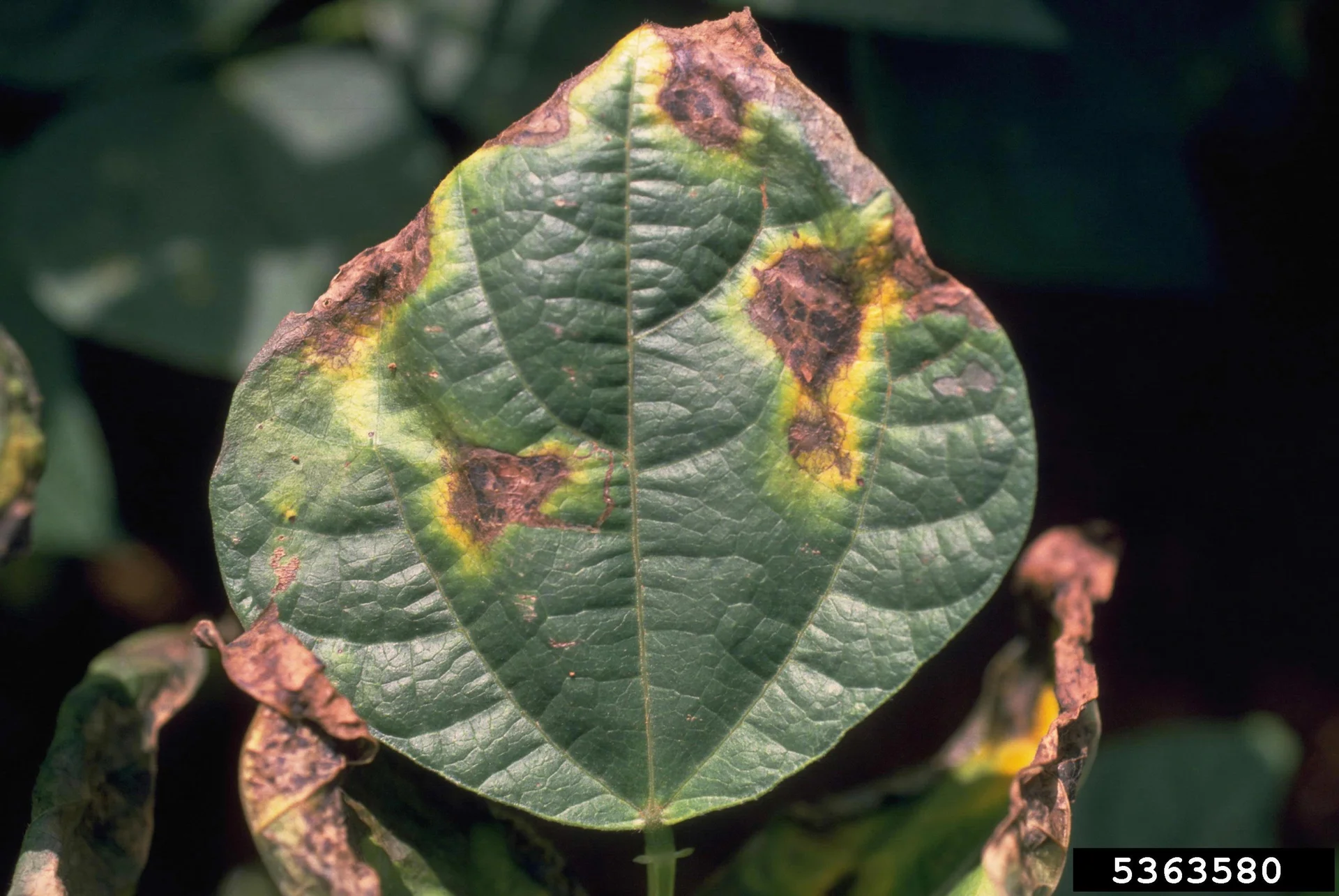
Photo: Howard F. Schwartz, Colorado State University, Bugwood.org · CC BY 3.0
Bacterial blight is a disease caused by Xanthomonas bacteria that attacks the leaves, stems and pods of beans, cowpea, cassava, rice and cotton. The germs ride inside the seed and splash from plant to plant in rain and irrigation water, slipping in through tiny wounds and the leaf's natural pores. In warm, wet, humid weather they multiply fast — and once they are inside a plant there is no cure, so the whole fight is about keeping the clean plants clean.
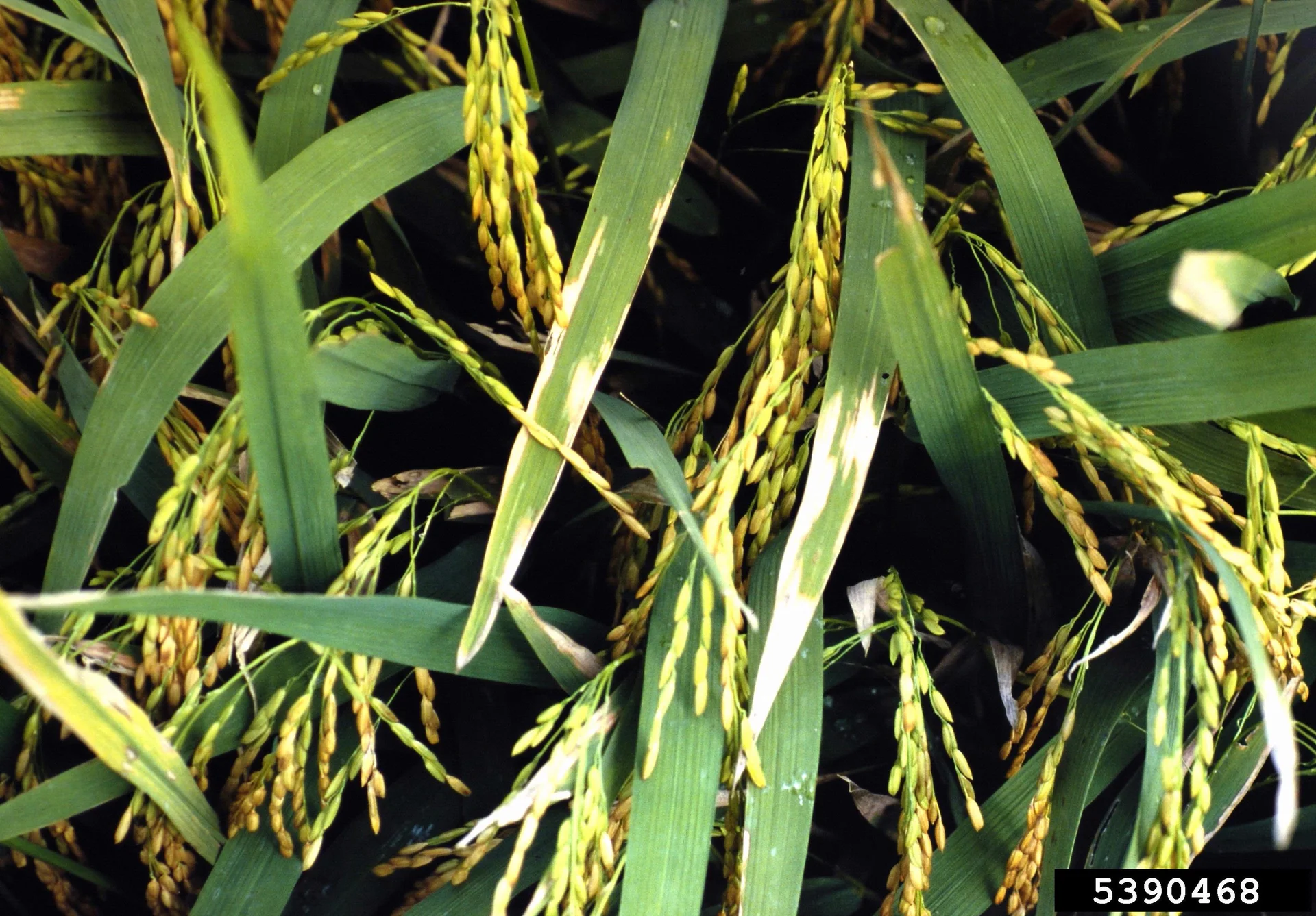
Donald Groth, Louisiana State University AgCenter, Bugwood.org · CC BY 3.0 us 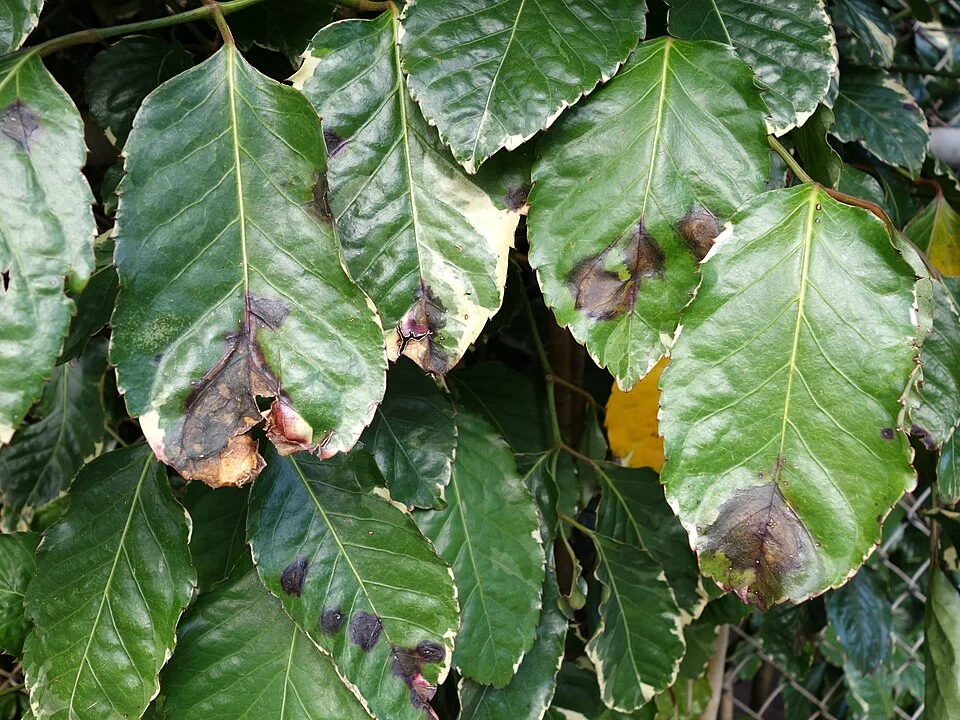
Scot Nelson · CC0
Why it matters
Bacterial blight can strip up to 70% — more than half your crop — in a warm, wet season, killing the leaves so the plant can no longer fill its pods or grain. The hard part is that once the germ is inside a plant, no spray can cure it — everything you do is to protect the healthy plants that are left. Worse, the germ travels inside the seed, so grain saved from a sick crop plants the disease straight back into next season. Catching the very first greasy spots early, and keeping your seed and field clean, is the whole game.
When to act
Act at the first water-soaked lesions during warm wet weather, as no cure exists once the bacterium is established; focus on protection and sanitation.
This guidance is general, compiled from published agronomic references including FAO and CABI. Thresholds and timing shift with your crop, your variety and the season.
In much of the region a spray is simply called mushonga — medicine. But a chemical group you cannot name is one you cannot rotate, and a product you did not write down has no pre-harvest interval you can observe. Mushonga, and other farming words →
The full Bacterial blight field guide
Identify it
The first sign
small water-soaked spots on the leaves — patches that look wet, greasy and see-through, as if a drop of oil or water is sitting under the skin of the leaf. Hold the leaf up to the sun: these spots glow translucent (light passes through them) with a greasy edge — that shine is the tell-tale of bacterial blight.
As it spreads
the wet spots dry into brown or tan dead patches ringed by a bright yellow halo (a yellow ring around each spot). Spots join up until whole leaf edges look brown and scorched, as if burnt by fire, and badly hit leaves wilt and hang. On humid mornings you may see bacterial ooze — milky or yellow slime leaking from the spots that dries to a shiny, varnish-like crust on leaves, stems or pods.
On your crop
on beans and cowpea, look for greasy, water-soaked 'grease-spot' blotches on the pods and reddish-brown streaks on the stems; on rice, yellow-to-straw lesions that run down from the leaf tip along the edges in wavy lines, leaving leaves rolled and dried; on cassava, angular water-soaked leaf spots with gum oozing from the stems and wilting, dying shoot-tips (dead 'candle' tips); on cotton, angular spots and black, sunken streaks on the stems ('black-arm') with rotting bolls.
Don't confuse it
with fungal leaf spots or rust: fungus spots are usually dry from the start, with a firm edge and often fuzzy mould, powder, or tiny black dots in them, and rust rubs off as orange powder on your finger. Bacterial blight is wet and greasy, glows see-through in the light, wears a yellow ring, and oozes slime — it never grows fuzz or powder. Wind or fertiliser scorch also browns leaf edges, but it hits many plants evenly all at once, with no spots, no yellow ring and no ooze.
Scout for it
When to look
start once the crop is in active leafy growth (the development stage) and keep checking through flowering, podding or heading, and grain-fill (mid- to late-season) — the stages this disease attacks. Above all, walk the field within a day or two after every rain, storm or overhead watering while the weather is warm and humid, because that is when the germ explodes.
How to walk it
cross the field in a big 'W' shape so you cover all four corners and the middle, not just the row beside the path. Make about 10 stops, and at each stop check 10 plants up close.
What to check
turn leaves over and study the undersides and the leaf edges first (spots often start there), then run your eye down the stems, and the pods, heads or bolls. Hold a suspect leaf up to the sunlight — if the spots glow greasy and see-through with a yellow ring, it is bacterial blight, not fungus.
Your trigger — act on the very first spots:
as few as 1 plant in your whole walk carrying fresh water-soaked spots during warm, wet weather means act now. Because there is no cure once the germ is inside, you do not wait for a big count to build up the way you would for caterpillars — the first fresh spots are the signal to start protecting and cleaning up.
Control it
Prevent it first — plant clean, plant resistant:
where a resistant or tolerant variety exists for your crop, grow it — this is your strongest and cheapest protection. Always plant certified disease-free seed, and never save seed from a field that had blight — the germ travels inside the grain and re-plants the disease straight into next season.
Keep the germ out and starve it
rotate your land — don't plant the same crop, or another host such as beans, cowpea, cassava, rice or cotton, on that plot for 2–3 seasons, so old germs left in the soil and stubble die out. Avoid overhead irrigation (it splashes germs from plant to plant); water at the base of the plants instead. After harvest, plough in, remove or burn all infected leaves and stalks so nothing carries the germ over.
Act the moment you see it — sanitation:
as soon as you find the first spots, pull out and carry off (rogue) the worst-hit plants in a bag — don't drop them between the rows. Turn off overhead irrigation at once. And stay out of the crop while it is wet — walking, weeding or handling wet plants carries the germ on your hands, tools and clothes from sick plants to healthy ones. Work only when the leaves are dry, and wash your hands and tools afterwards.
Last resort — copper spray (a protectant, not a cure):
a copper-based bactericide is the only spray for this disease, and it only protects — it coats the surface to stop NEW infections landing but cannot cure the spots already inside the plant — so it helps only if you start before, or right at, the first spots and repeat through wet weather. Protect yourself: cover skin, eyes, nose and mouth (long sleeves, gloves, a cloth over your face); spray in the cool of the day with the wind at your back so it blows away from you; keep it off food, off drinking water and ponds, and away from children, animals and bees; wait the number of days printed on the label between spraying and harvest (the pre-harvest interval); then wash your body, clothes and sprayer.
Don't let copper stop working
germs can grow resistant — spray the same copper over and over and the few germs that survive breed until the spray no longer bites. So never lean on copper alone; build your defence on clean seed, resistant varieties and sanitation, and use copper only as a protective back-up. Too much copper can also scorch your own leaves and build up in the soil, so don't over-apply.
If it keeps spreading
step up the roguing, keep overhead irrigation off, and stay out of the wet crop. When it's too late to save the field — remember there is no cure — cut your losses: harvest the healthy plants early, before the disease reaches them; keep no seed at all from that field for planting; and clear and destroy every bit of debris after harvest, then rotate to a non-host crop next season to break the cycle.
Catch Bacterial blight before it costs you the harvest
This guide is the general answer. Divisi works out yours — the week to scout your own field for Bacterial blight, and what to do the day you find it.


Crops it affects
Plan the crops it attacks
-
 When to plant Cassava in Banalia
 -
 When to plant Common bean in Dilolo
 -
 When to plant Cotton in Kalemie
 -
 When to plant Cowpea in Bangui-Rapides
 -
 When to plant Rice in Mbama
All planting calendars, country by country
Get Insights by email
A short digest of new Divisi articles. No email on quiet weeks.
Frequently asked questions
How do I identify Bacterial blight?
The first sign. small water-soaked spots on the leaves — patches that look wet, greasy and see-through, as if a drop of oil or water is sitting under the skin of the leaf. Hold the leaf up to the sun: these spots glow translucent (light passes through them) with a greasy edge — that shine is the tell-tale of bacterial blight.
When should I take action against Bacterial blight?
Act at the first water-soaked lesions during warm wet weather, as no cure exists once the bacterium is established; focus on protection and sanitation.
How do I control Bacterial blight?
Prevent it first — plant clean, plant resistant:. where a resistant or tolerant variety exists for your crop, grow it — this is your strongest and cheapest protection. Always plant certified disease-free seed, and never save seed from a field that had blight — the germ travels inside the grain and re-plants the disease straight into next season.
Which crops are attacked by Bacterial blight?
Among the crops covered here: Cassava, Common bean, Cotton, Cowpea, Rice.