 Divisi
Damping-off
Pythium spp. · Fungal
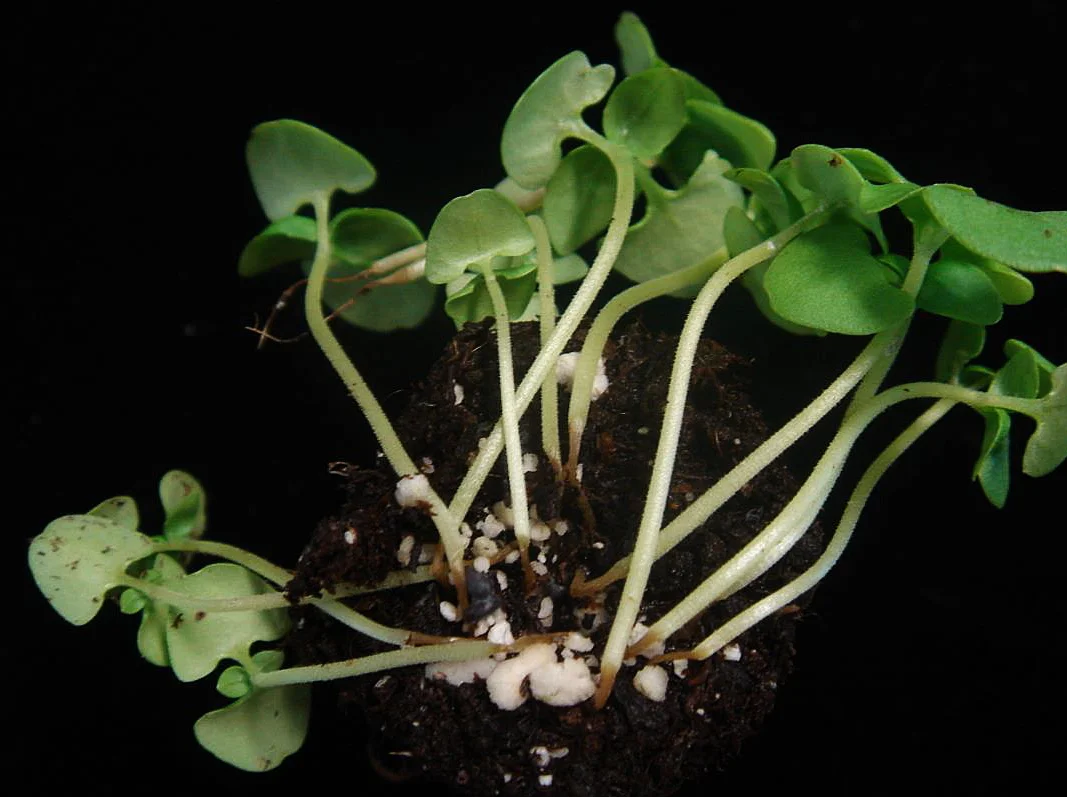
Photo: Gerhard Bedlan (Institut für Pflanzenschutz, BOKU, Tulln, Austria) · CC BY-SA 4.0
Damping-off is a seed and seedling rot caused by soil-borne fungi and water-moulds (Pythium and its relatives) that live in cool, wet, poorly drained nursery soil. It strikes only the youngest plants: it can rot the seed before it ever comes up (pre-emergence) or rot the stem right at the soil line so the standing seedling suddenly topples over (post-emergence). It is a nursery and seedbed disease of tomato, cabbage, onion, beans, tobacco and other vegetable seedlings.
Gerhard Bedlan (Institut für Pflanzenschutz, BOKU, Tulln, Austria) · CC BY-SA 4.0 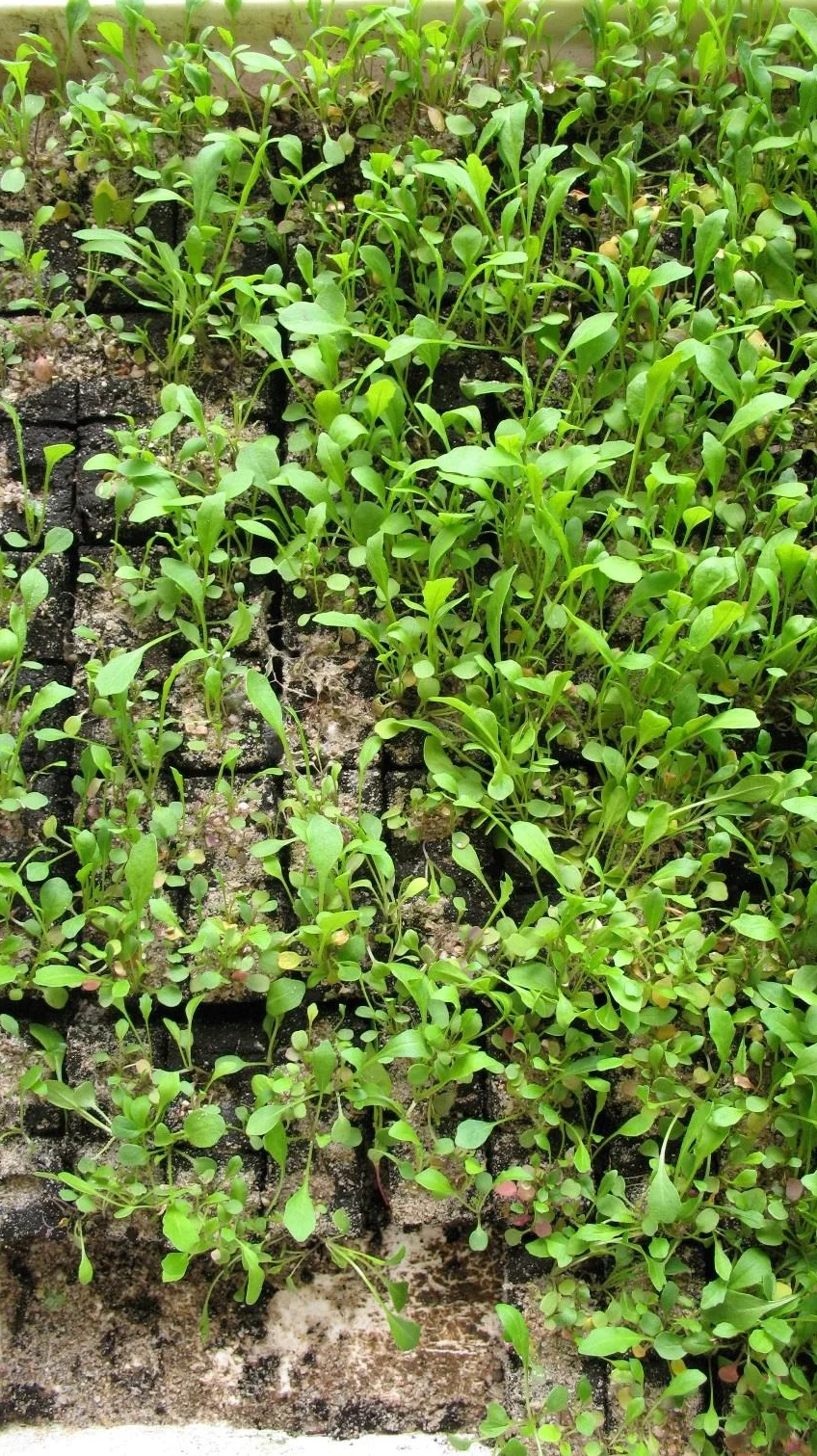
Dr. Jan Hinrichs-Berger, Landwirtschaftliches Technologiezentrum Augustenberg · CC BY 3.0
Why it matters
Damping-off hits your crop at its most helpless moment — the seedbed — and a bad outbreak can wipe out up to 80% of your seedlings before they ever reach the field. It spreads fast through a wet, crowded nursery, jumping from one seedling to the next along the damp soil, so a healthy-looking tray can be half-empty in two or three days. Once the little stems have rotted through there is no cure and no bringing them back: you can only stop it reaching the plants that are still standing. That is why everything here is about preventing it and catching the very first collapsed patch.
When to act
Act preventively; once seedlings collapse in a patch, reduce watering and remove affected trays or seedbed sections immediately.
This guidance is general, compiled from published agronomic references including FAO and CABI. Thresholds and timing shift with your crop, your variety and the season.
In much of the region a spray is simply called mushonga — medicine. But a chemical group you cannot name is one you cannot rotate, and a product you did not write down has no pre-harvest interval you can observe. Mushonga, and other farming words →
The full Damping-off field guide
Identify it
The first thing you see is gaps
Patchy, thin emergence — seed that never comes up, or bare blank spots in a tray or seedbed where the rest of the row came up fine. That missing seed has already rotted underground before breaking the surface.
The classic sign: healthy-looking seedlings that suddenly topple over
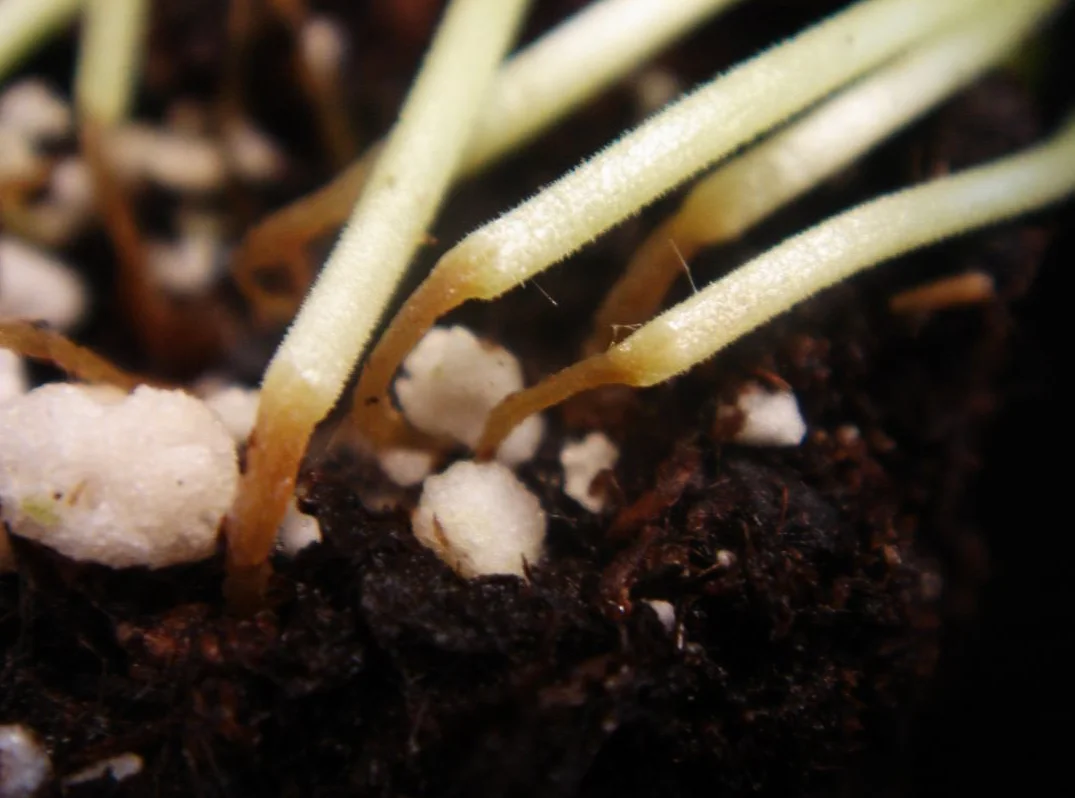
Look right at the soil line — the stem there is thin, pinched-in and water-soaked, like it has been squeezed wet between two fingers. It turns brown or black and the seedling falls flat while its leaves may still look green, as if pushed over.
It spreads outward in a circle
Start with one fallen seedling and each day the bare patch grows wider into the neighbours, because the rot travels through the wet soil. In a very damp nursery you may also see a fine, cobweb-like or cottony white or grey growth on the soil surface or on the rotting stems.
Don't confuse it
with cutworm damage (the stem is cut cleanly through and the seedling lies cut off, not pinched and rotted — and you'll find a fat grey grub in the soil), with drought wilt (the whole seedbed droops evenly and perks up after watering, with firm stems), or with fertiliser/salt burn (leaf tips scorch brown but the stem base stays firm). Damping-off is always a soft, wet, pinched stem at the soil line in a spreading patch.
Scout for it
When
this disease only attacks at the seedling stage, so watch hardest from the day you sow until your seedlings are hardened off and ready to transplant — that is the whole danger window.
How often
check every nursery bed and tray once a day, every day during that window, especially in cool, cloudy, wet spells after heavy watering or rain — the weather this disease loves.
Where and what to check
don't just glance from the path. Kneel and look at the soil line of the seedlings. Walk the bed in a "W" so you cover both edges and the middle, and stop to check the wettest, most crowded, shadiest, poorest-draining corners first — that is where it always starts.
At each stop look for three things
blank gaps in emergence, seedlings toppled over, and stems that are thin, brown and water-soaked where they meet the soil. Gently squeeze a suspect stem — if it is soft and mushy, not firm, that is damping-off.
Your trigger to act — lead with the number: the very first patch
The moment you find even 2 or 3 seedlings collapsed together at the soil line, treat it as an outbreak: act that same day. Do not wait for a count or a percentage — by the time many are down, the patch is already spreading.
Control it
Prevent it first — this is your strongest tool (cultural control works best on this disease)
Sow thinly so seedlings aren't crowded, in raised, well-drained beds or clean sterile media (fresh potting mix or well-cured compost, not old garden soil). Don't sow too deep. Start with clean or treated seed.
Keep the nursery on the dry side
Over-watering is the single biggest cause. Water in the morning so the surface dries by evening, water less rather than more, and never let the bed stay soggy. Open up the nursery for good airflow and light — lift shade cloth in the day and space the trays so air moves between them.
Act early with a biological helper (lower-powered but safe — use it to prevent, not to rescue)
Mix a biofungicide based on beneficial fungi or bacteria (a Trichoderma or Bacillus product — these are living helpers that crowd out and attack the rot) into your seedbed media, or blend in well-cured compost, which carries the same natural protectors. This shields the seedlings that are still standing.
As soon as you find the first collapsed patch
stop watering that bed, remove and destroy the affected trays or the seedbed section together with a margin of soil around them, and let the area dry out and get more air. Removing the wet, infected patch is often what stops the spread.
Chemical — last resort (a fungicide, meaning a chemical that kills the fungus)
If prevention fails and it keeps moving, use treated seed at sowing or drench the seedbed with an approved fungicide effective against water-moulds (for example a metalaxyl-type product for Pythium). Safety: cover your skin, eyes, nose and mouth, mix and spray in the cool of the day with the wind at your back, keep it away from food, drinking water, children and bees, wash yourself and your equipment afterwards, and respect the pre-harvest interval (the number of days the label says you must wait between treating and eating the crop). To stop the fungus becoming immune, rotate to a different chemical group rather than using the same one every time.
If it keeps spreading despite all this
the media or seed is likely contaminated — throw out that batch of seedlings, do not re-sow into the same trays or bed without washing and drying them fully (sun-baking the soil helps), switch to fresh sterile media, and start again with new clean seed. Better to lose one tray now than the whole nursery. When a bed is already mostly collapsed, cut your losses: clear it, dry it out, and resow fresh rather than nursing the survivors.
Catch Damping-off before it costs you the harvest
This guide is the general answer. Divisi works out yours — the week to scout your own field for Damping-off, and what to do the day you find it.


Crops it affects
Plan the crops it attacks
-
 When to plant Niger seed (noug) in Ngoma
 -
 When to plant Onion in Sandoa
 -
 When to plant Tobacco in Opobo/Nkoro
 -
 When to plant Tomato in Goma
 -
 When to plant Cabbage in Les Eucalyptus
All planting calendars, country by country
Get Insights by email
A short digest of new Divisi articles. No email on quiet weeks.
Frequently asked questions
How do I identify Damping-off?
The first thing you see is gaps. Patchy, thin emergence — seed that never comes up, or bare blank spots in a tray or seedbed where the rest of the row came up fine. That missing seed has already rotted underground before breaking the surface.
When should I take action against Damping-off?
Act preventively; once seedlings collapse in a patch, reduce watering and remove affected trays or seedbed sections immediately.
How do I control Damping-off?
Prevent it first — this is your strongest tool (cultural control works best on this disease). Sow thinly so seedlings aren't crowded, in raised, well-drained beds or clean sterile media (fresh potting mix or well-cured compost, not old garden soil). Don't sow too deep. Start with clean or treated seed.
Which crops are attacked by Damping-off?
Among the crops covered here: Cabbage, Niger seed (noug), Onion, Tobacco, Tomato.