 Divisi
Grain-eating birds
Quelea quelea · Bird
Also called Quelea.
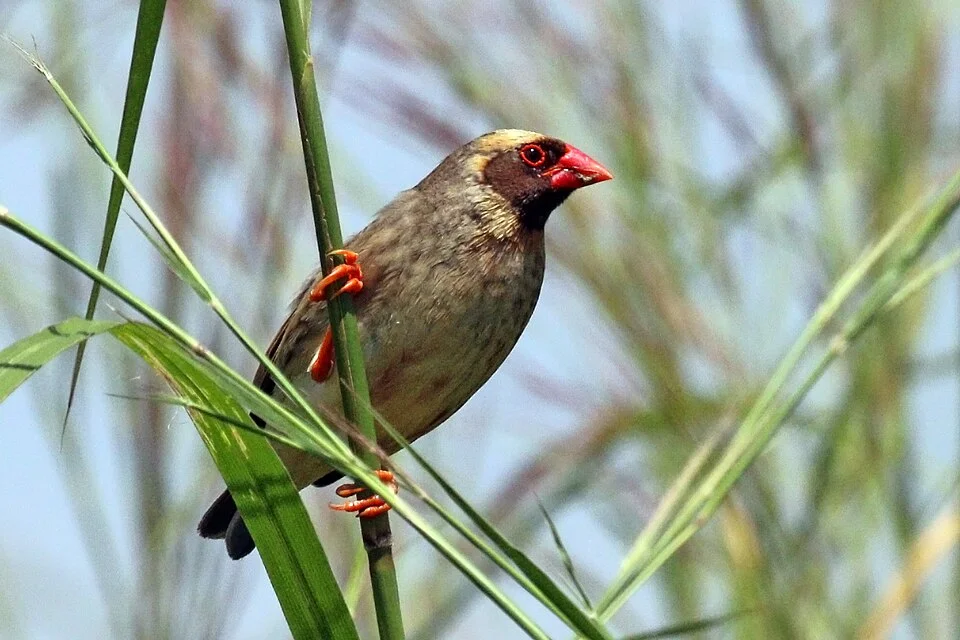
Photo: Charles J. Sharp · CC BY-SA 4.0
Grain-eating birds — above all the red-billed quelea, the most numerous bird on earth — that move in huge, swirling flocks and pour down onto ripening small grains and sunflower. They roost together in their thousands to millions in reedbeds, thornbush or sugar-cane and fly out each day to feed, so the damage lands hardest on the field nearest the roost and along the edges where the flock first touches down.
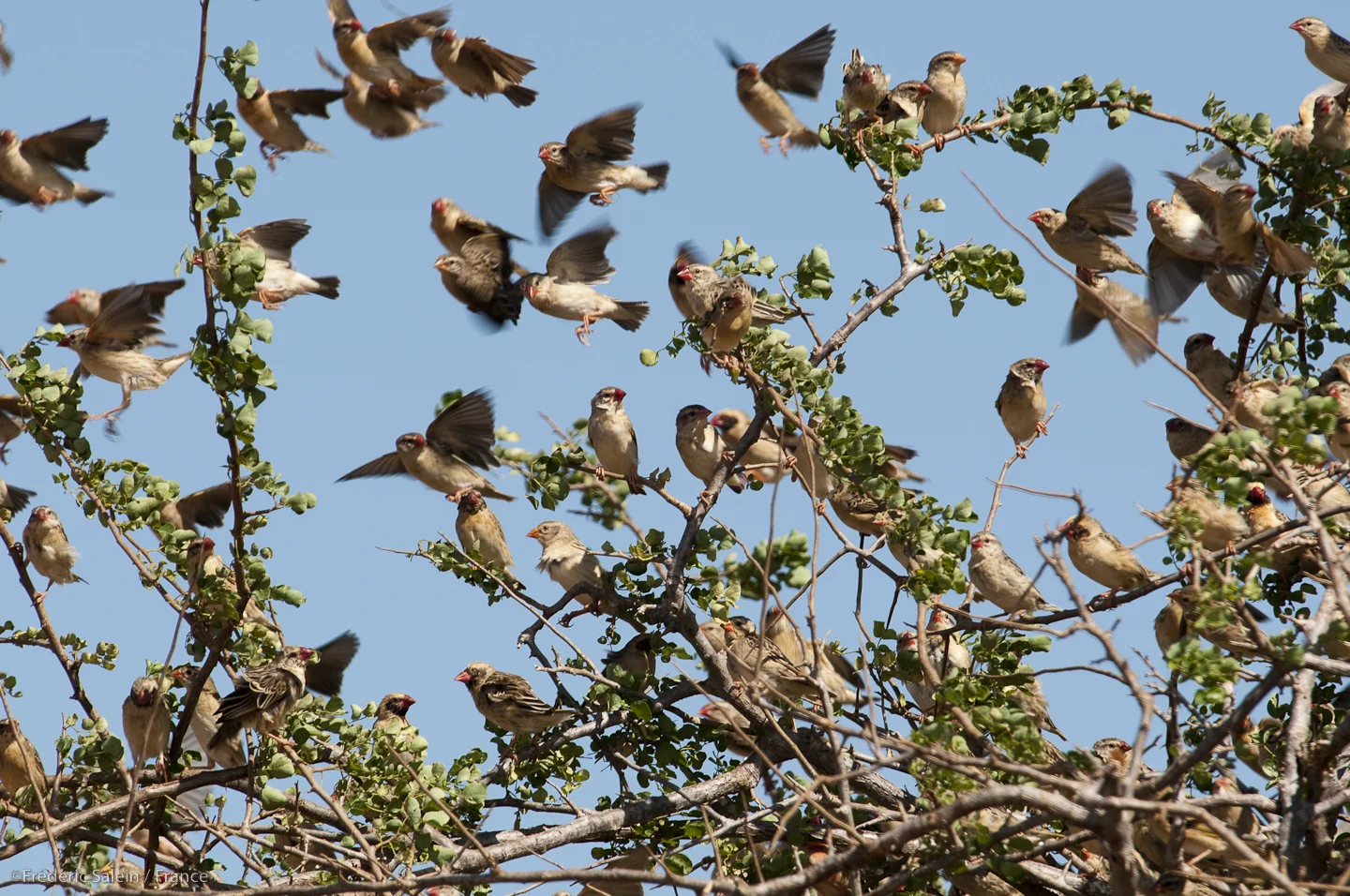
Frédéric SALEIN · CC BY-SA 2.0 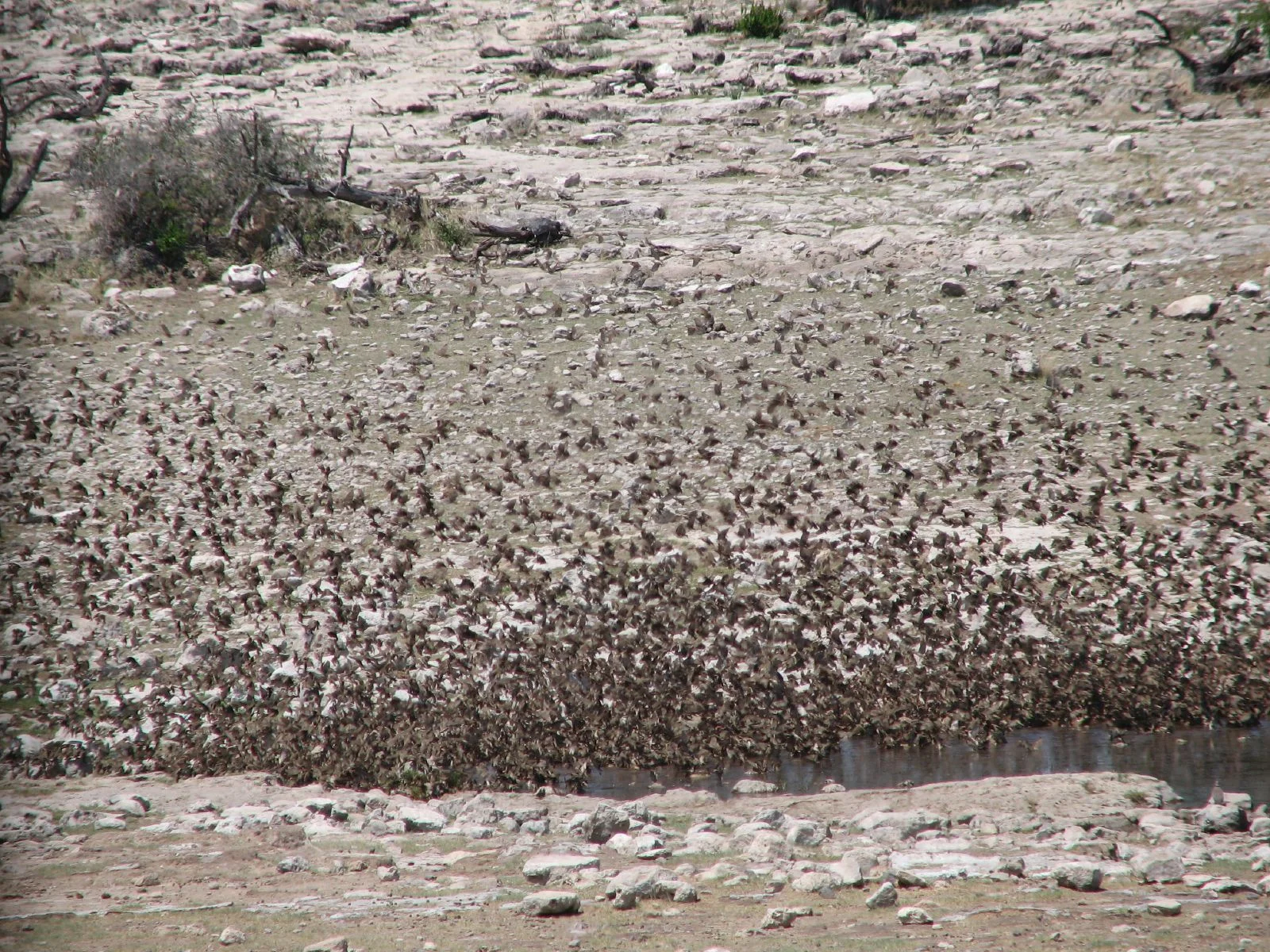
Alastair Rae · CC BY-SA 2.0
Why it matters
Once a flock finds your ripening grain it can strip a field bare in a few days — up to your whole crop (100%) gone, right at the finish line after a full season's work. Small grains like sorghum, millet, rice and wheat are their favourite food, and quelea travel in flocks of thousands — sometimes millions — that hit hardest while the grain is still soft and sweet. It is hard to stop once it starts: a big roost nearby sends birds back every day in growing numbers, and one farmer chasing them off just pushes the flock onto the next field — so beating quelea is a whole-community job, not something you can fix alone.
When to act
Flocks settling on the crop from the milk stage onward, or spilt and stripped heads appearing at field edges.
This guidance is general, compiled from published agronomic references including FAO and CABI. Thresholds and timing shift with your crop, your variety and the season.
In much of the region a spray is simply called mushonga — medicine. But a chemical group you cannot name is one you cannot rotate, and a product you did not write down has no pre-harvest interval you can observe. Mushonga, and other farming words →
The full Grain-eating birds field guide
Identify it
The damage first
heads and seed-tops picked clean — stripped, empty or half-eaten grain heads, loose grain spilt on the ground beneath them, and stalks bent or snapped where heavy flocks perched. It shows up first along the field edge facing the roost and in the field closest to reeds, thornbush or cane.
The bird
the red-billed quelea is small — about the size of a sparrow (a finger-length, around 12 cm) — brown and streaky like a weaver, the male with a bright red beak and a black face mask. You rarely notice one bird: you see thousands at once, a dense flock that wheels and rolls over the field like a cloud of smoke or a swarm of bees and settles all together on the ripe heads.
When they come
flocks feed at dawn and again in the late afternoon, flying in from the same direction each day — and that direction points straight back to their roost (the reedbed, thornbush or cane patch where they gather to sleep in enormous numbers).
Don't confuse them
a few doves or sparrows feed on the ground in small groups and don't clear standing heads — quelea arrive as a swirling cloud and empty the heads while they still stand. Rats also strip heads, but they work at night, leave droppings and gnawed grain, and cut whole heads off at the base — birds work in daylight and leave the bare head-stalk behind. Wind can bend stalks but never carries the grain away.
Scout for it
Watch from the milk stage right through to harvest
The milk stage is the start of grain-filling — squeeze a grain and a milky juice comes out; this is when soft, sweet grain first pulls the flocks in, and the danger runs on through ripening until you cut. Watch hardest at dawn and in the late afternoon, when flocks travel between roost and field.
Walk the edges first — especially the side facing the roost
, because that is where the flock touches down and where the damage begins. Check the seed-heads for stripped or empty grain and scan the ground for fresh spilt grain. Note the flock size and the direction they arrive from and leave to — that line points to the roost you will want dealt with.
The trigger is the first settling flock — not a count
The moment even one flock lands and settles on your milking heads, or you find fresh stripped heads and spilt grain along an edge, they have found your field. Start scaring that same day, and keep at it all day — a flock left to feed undisturbed for even one day strips a great deal and comes back bigger the next.
Control it
Prevent it — don't be the lone ripe field
Plant in one big block together with your neighbours and sow at the same time, so the whole area ripens together and no single field is the only food left standing. Avoid planting late, or off on your own near a roost — a lone late field becomes a magnet. Choose early or even-maturing varieties so your grain is never the last still in the ground.
Grow types birds struggle with
Plant goose-necked sorghum (the ripe head bends over and hangs down, so birds can't perch and feed on it), tight compact heads, and bitter, high-tannin varieties whose taste birds dislike. Where you have the choice, site fields well away from reedbeds, thornbush and cane where quelea roost — damage is always worst closest to the roost.
Scare from the milk stage, and keep them moving
From dawn to dusk have someone in the field making noise — bangers, tins, clappers, shouting, a sling or catapult — so no flock ever settles and feeds in peace. Add moving, shiny scares: reflective tape, hanging foil or old discs, flags and scarecrows — but move and change them often, because birds quickly learn that a scare which never moves is harmless. Over a small plot, a net is the surest guard of all.
Let nature help — and call in help for the big flocks
Don't kill hawks, falcons and other birds of prey: they hunt quelea, so leave a few perch trees for them. When a huge quelea invasion — a roost of many thousands to millions — settles in your area, it is beyond any one farm; report it to your agricultural extension officer or plant-protection authorities so that control at the roost can be coordinated across the whole area. Never spread poison or home-made bait to kill birds yourself — unregistered poisons also kill other birds, wild animals, bees and livestock, and can poison people; leave any roost spraying to trained officials.
If it keeps spreading
one farmer's scaring only shoves the flock onto the next field, so pull the whole community and your extension officer together — guard as one block and get the shared roost dealt with. When a field is nearly stripped and the grain has already gone hard, cut your losses and harvest early: get what is left off the field before the flocks finish it. A slightly early harvest beats handing the birds your whole crop.
Catch Grain-eating birds before it costs you the harvest
This guide is the general answer. Divisi works out yours — the week to scout your own field for Grain-eating birds, and what to do the day you find it.


Crops it affects
Plan the crops it attacks
-
 When to plant Finger millet in Impfondo
 -
 When to plant Pearl millet in Kono
 -
 When to plant Rice in Mbama
 -
 When to plant Sorghum in Maracha
 -
 When to plant Sunflower in Nakasongola
 -
 When to plant Wheat in Hammedi
All planting calendars, country by country
Get Insights by email
A short digest of new Divisi articles. No email on quiet weeks.
Frequently asked questions
How do I identify Grain-eating birds?
The damage first. heads and seed-tops picked clean — stripped, empty or half-eaten grain heads, loose grain spilt on the ground beneath them, and stalks bent or snapped where heavy flocks perched. It shows up first along the field edge facing the roost and in the field closest to reeds, thornbush or cane.
When should I take action against Grain-eating birds?
Flocks settling on the crop from the milk stage onward, or spilt and stripped heads appearing at field edges.
How do I control Grain-eating birds?
Prevent it — don't be the lone ripe field. Plant in one big block together with your neighbours and sow at the same time, so the whole area ripens together and no single field is the only food left standing. Avoid planting late, or off on your own near a roost — a lone late field becomes a magnet. Choose early or even-maturing varieties so your grain is never the last still in the ground.
Which crops are attacked by Grain-eating birds?
Among the crops covered here: Finger millet, Pearl millet, Rice, Sorghum, Sunflower, Wheat.