 Divisi
Leaf-eating caterpillar
· Insect
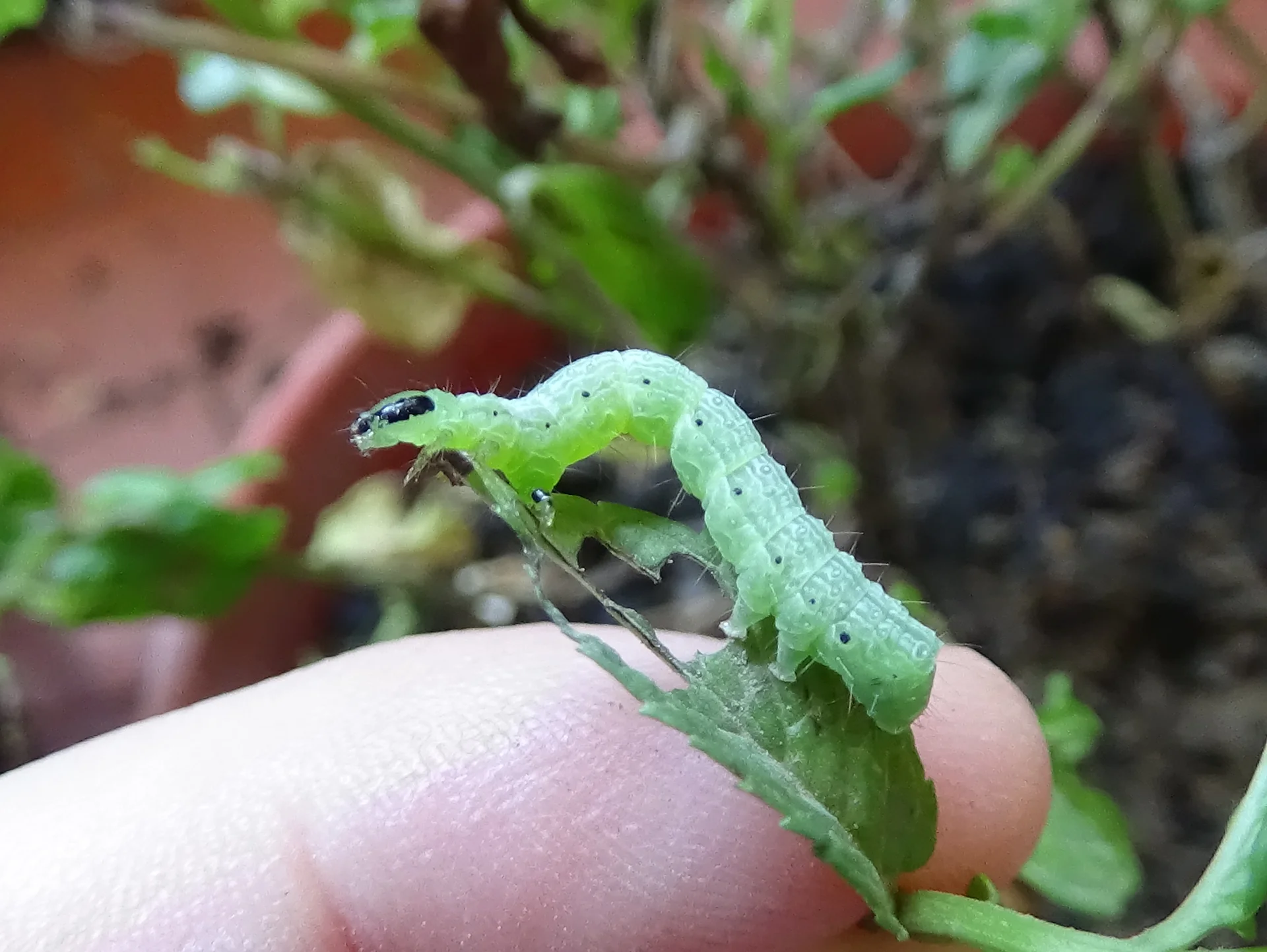
Photo: Lua Eva Blue · CC BY 3.0
The leaf-eating caterpillar is the young stage (the larva) of several night-flying moths and butterflies that chew the leaves of vegetables and field crops — cabbage, tomato, soybean and cotton. The moth lays its eggs in a cluster on one leaf; the tiny caterpillars that hatch feed side by side in a crowd at first, then spread across the plant as they grow, and in a bad year they can strip a plant down to bare stalks and veins. They thrive in warm weather (about 20–32°C) with soft, lush growth, and hide on the underside of leaves or in the litter at the plant base during the heat of the day.
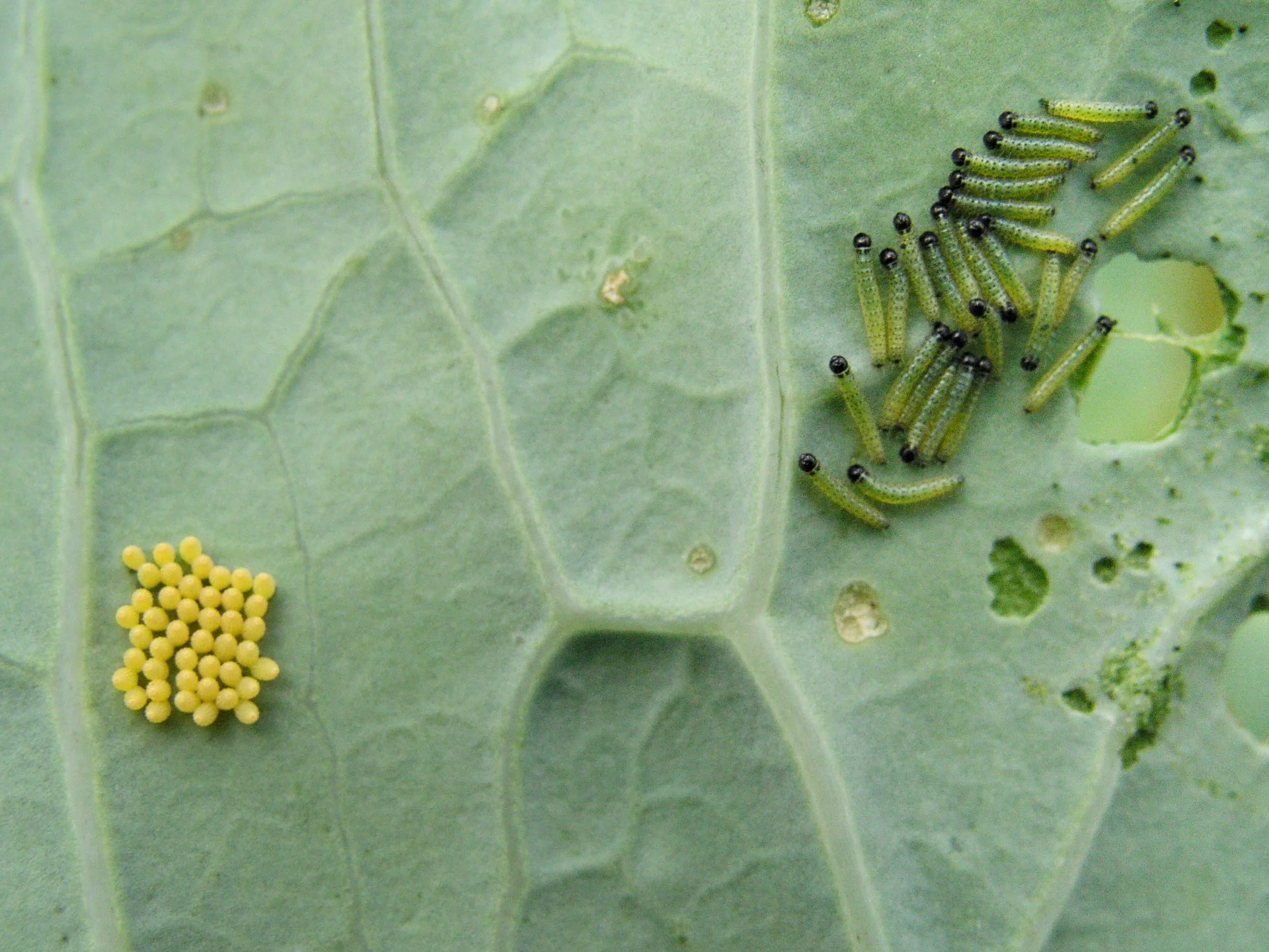
Andy Potter · CC BY-SA 2.0 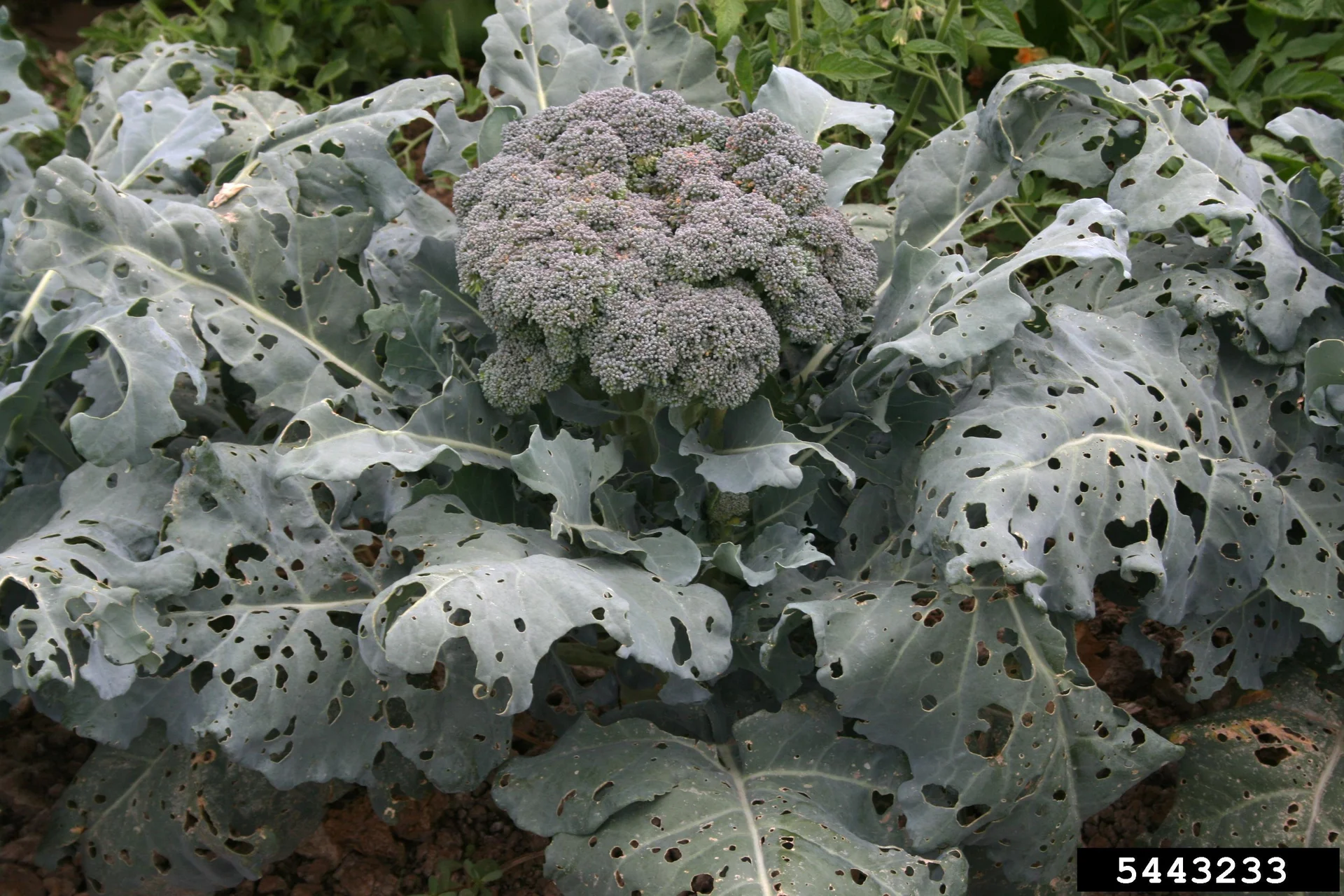
Whitney Cranshaw, Colorado State University, Bugwood.org · CC BY 4.0
Why it matters
When these caterpillars build up they can eat up to half your crop (50%) — and a young plant robbed of its leaves has nothing left to fill its heads, pods or fruit. They are hard to stop once they get going: one moth lays hundreds of eggs in a single patch, the caterpillars hide under the leaves and down at the plant base where you and your spray miss them, and the big ones eat the most while being the hardest to kill. The whole game is to catch them small, and while they are still bunched in their first crowd, before they spread across the field.
When to act
small caterpillars or fresh feeding on 2 in 10 plants, or defoliation approaching 15-20 percent before flowering
This guidance is general, compiled from published agronomic references including FAO and CABI. Thresholds and timing shift with your crop, your variety and the season.
In much of the region a spray is simply called mushonga — medicine. But a chemical group you cannot name is one you cannot rotate, and a product you did not write down has no pre-harvest interval you can observe. Mushonga, and other farming words →
The full leaf-eating caterpillar field guide
Identify it
The first sign — 'window' leaves
Where the tiny new caterpillars feed together they scrape the leaf down to a thin, pale, papery skin — hold it up to the light and it looks lacy, like a little window — because only the soft green flesh is eaten and the tough veins are left behind. It shows up on one or two leaves first, right where the egg cluster hatched.
As they grow — ragged holes
The neat windows turn into ragged holes and chewed edges, eaten from the leaf margin inward, until a badly-hit plant is left as bare stalks and veins. Look on the leaves below and in the leaf joints for dark green or black droppings like coarse pepper — and remember fresh, moist droppings mean a caterpillar is still feeding nearby.
The caterpillar itself
It is a smooth, soft grub — a few millimetres when newly hatched, growing to about 3–4 cm (a finger-joint) long — coloured green, brown or near-black, usually with pale stripes running down each side. Turn the leaves over: they hide on the underside by day, and some drop to the litter at the plant base, doing most of their eating in the cool of early morning, evening and night.
The egg patch
On the underside of a leaf, look for a flat patch of eggs, often covered in a fuzzy buff or brown 'felt' (scales the moth brushes over them for cover). Just after they hatch you will find a tight crowd of tiny caterpillars on that same leaf — the cheapest moment of all to stop the whole family at once.
Tell it apart from look-alikes
Grasshoppers and locusts also chew leaves but leave no caterpillar and no droppings, and they jump away as you reach in. Snails and slugs leave a shiny slime trail and no pepper-like droppings. A single fat green tomato hornworm (with a horn on its tail) or a grey cutworm (that curls into a 'C' and cuts young plants off at the soil line) come one at a time — the leaf-eating caterpillar arrives as a crowd from an egg patch and eats the leaves up top.
Scout for it
When to look
Start checking at the seedling or just-transplanted stage, and keep it up right through the leafy growing stage and into flowering — a young plant with few leaves can least afford to lose any. Look harder in warm weather with soft, lush growth, and in the days after you notice moths flying at dusk.
Walk a big 'W'
Cross the field in the shape of a 'W' so you cover all four corners and the middle — not just the edge by the path where you always glance. Make about 10 stops along the way.
At each stop, check about 10 plants
Turn the leaves over to find egg patches, crowds of tiny caterpillars and daytime hiders; look for lacy 'window' leaves, fresh chewing and fresh moist droppings; and part the growing point (the cabbage heart, the top leaves) and poke the litter at the base where they shelter in the heat of the day.
Act on the numbers
Treat when you find small caterpillars or fresh feeding on 2 in every 10 plants (20%), or when plants have lost roughly 15–20% of their leaves (about one leaf in six) before flowering — whichever comes first. And read the droppings: fresh, moist droppings = a caterpillar still there right now; dry old droppings with no caterpillar is a past attack, so don't spray for that.
Catch the first crowd
One fresh egg patch, or a crowd of newly-hatched caterpillars on a single leaf, is your cheapest early signal — pick and crush that one leaf on the spot, before the crowd spreads across the plant and forces you into a spray.
Control it
Prevent it — starve the moths
After harvest, clear away crop residues and leafy weeds, which shelter the moths and their eggs. Plant early and all at once with your neighbours so the crop is sturdy before moth numbers peak, and on vegetable seedbeds lay a light net or cover (a 'floating row cover') over the young plants so the moths cannot land and lay.
Keep the pest's own enemies alive
Birds, ants and tiny parasitoid wasps — wasps that lay their eggs inside the caterpillars and kill them from within — do a lot of the work for free. So avoid broad, kill-everything sprays that wipe them out and leave you to fight the pest alone.
Act early by hand — this pest's weak spot
Because the young caterpillars feed in a tight crowd on one leaf, you can kill dozens at once by picking and crushing that leaf (or the fuzzy egg patch) early each morning. Drop any strays into a tin of soapy water. Do it while they are still small — it costs nothing and it is the difference-maker.
Spray Bt on the small ones
Bt (Bacillus thuringiensis) is a natural soil bacterium that sickens only caterpillars and is harmless to you, to bees and to the helpful insects. It has to be eaten to work, so wet the surfaces they chew — especially the leaf undersides — and spray in the cool of morning or evening, out of the hot sun (strong sunlight breaks it down). It works well on small caterpillars and poorly on big ones, so time it to a fresh hatch and spray again if new crowds appear.
Chemical — last resort, and only at threshold
If hand-picking and Bt are not holding the pest at 2 in 10 plants, reach for a selective insecticide (one aimed at caterpillars that spares bees and natural enemies) rather than a broad poison, and aim it at the leaf undersides while the caterpillars are still small. Protect yourself: cover skin, eyes, nose and mouth; spray in the cool of the day with the wind at your back so it blows away from you; keep it off food and away from water, children and bees; then wash yourself and your clothes straight after. Respect the pre-harvest interval — the number of days the label tells you to wait between spraying and picking — which matters most on cabbage and tomato you eat directly. And rotate to a different chemical group each time (never the same one over and over), or the caterpillars build resistance and shrug the poison off.
If it keeps spreading — or it's too late
New caterpillars turning up after a spray usually means fresh moths laying or egg patches you missed — go back over the leaf undersides, remove the patches, switch to a different chemical group, and widen your clean-up to nearby weeds and other host crops (cotton, soybean, other vegetables); ask your local extension officer or agro-dealer for the currently recommended product. When it is truly too late — plants stripped at or after flowering — stop spending on sprays: pull and destroy the worst-hit plants with the caterpillars still on them to break the next generation, harvest anything still usable, and protect your next crop by clearing residues and planting early and clean.
Catch leaf-eating caterpillar before it costs you the harvest
This guide is the general answer. Divisi works out yours — the week to scout your own field for leaf-eating caterpillar, and what to do the day you find it.


Crops it affects
Plan the crops it attacks
-
 When to plant Cotton in Kalemie
 -
 When to plant Moringa (drumstick tree) in Mbon
 -
 When to plant Soybean in Dola
 -
 When to plant Tomato in Goma
 -
 When to plant Cabbage in Les Eucalyptus
All planting calendars, country by country
Get Insights by email
A short digest of new Divisi articles. No email on quiet weeks.
Frequently asked questions
How do I identify leaf-eating caterpillar?
The first sign — 'window' leaves. Where the tiny new caterpillars feed together they scrape the leaf down to a thin, pale, papery skin — hold it up to the light and it looks lacy, like a little window — because only the soft green flesh is eaten and the tough veins are left behind. It shows up on one or two leaves first, right where the egg cluster hatched.
When should I take action against leaf-eating caterpillar?
small caterpillars or fresh feeding on 2 in 10 plants, or defoliation approaching 15-20 percent before flowering
How do I control leaf-eating caterpillar?
Prevent it — starve the moths. After harvest, clear away crop residues and leafy weeds, which shelter the moths and their eggs. Plant early and all at once with your neighbours so the crop is sturdy before moth numbers peak, and on vegetable seedbeds lay a light net or cover (a 'floating row cover') over the young plants so the moths cannot land and lay.
Which crops are attacked by leaf-eating caterpillar?
Among the crops covered here: Cabbage, Cotton, Moringa (drumstick tree), Soybean, Tomato.