 Divisi
Shoot borer
· Insect
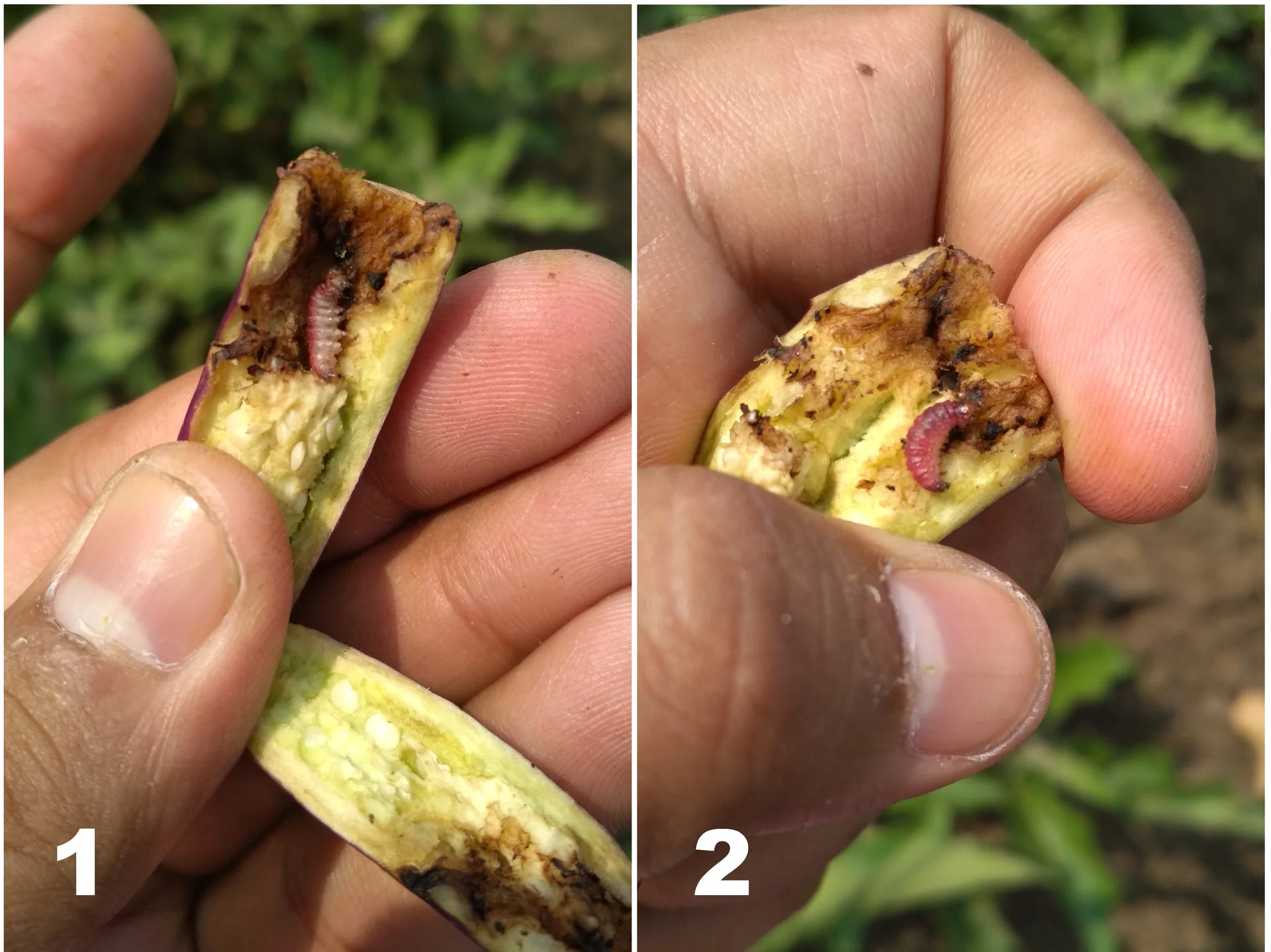
Photo: Chirag85 · CC BY-SA 4.0
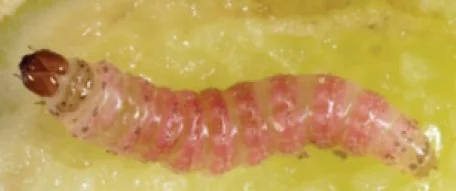
Shoot borer is not one insect but the young stage of several small moths — and, on sweet potato, a fat legless weevil grub — that bore into the soft, growing tips of vegetables like sweet potato, eggplant and okra, and of mango trees. The larva tunnels down inside a tender new shoot and kills the growing point, leaving a wilted, drooping dead-heart; as the plant flowers it moves on into the flower buds and young fruit. It thrives in warm, humid weather wherever the plant keeps pushing out fresh, tender flushes of new growth.
Mally R, Korycinska A, Agassiz DJL, Hall J, Hodgetts J, Nuss M · CC BY 3.0 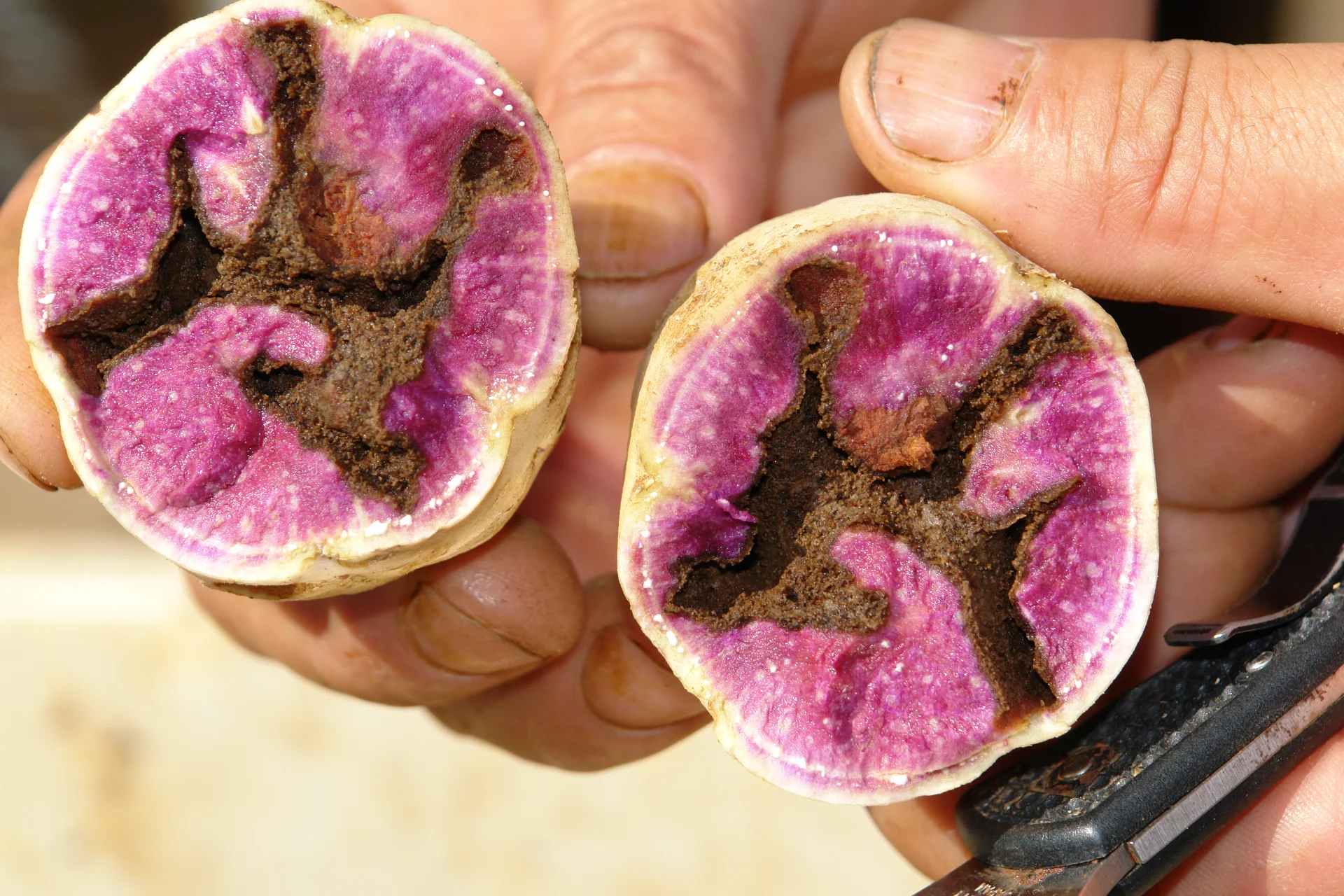
Scot Nelson · CC0
Why it matters
Shoot borer caterpillars tunnel straight into the tender growing tips of your sweet potato, eggplant, okra or mango and kill the growing point, so the shoot wilts and dies — a dead-heart. Then they move on into the flower buds and young fruit, so a heavy attack can cost you up to half your harvest (50%). The hard part is that once a caterpillar is deep inside a shoot or fruit, no spray landing on the outside can reach it — so by the time the damage is easy to see, it is often already too late for that shoot. Your win comes from catching them early, while they are still small on the soft new shoots, and cutting out every wilted tip before they spread.
When to act
wilting or dead shoot tips on more than about 5 percent of plants, or fresh bore holes with frass on tender shoots
This guidance is general, compiled from published agronomic references including FAO and CABI. Thresholds and timing shift with your crop, your variety and the season.
In much of the region a spray is simply called mushonga — medicine. But a chemical group you cannot name is one you cannot rotate, and a product you did not write down has no pre-harvest interval you can observe. Mushonga, and other farming words →
The full Shoot borer field guide
Identify it
The first thing you see is wilting
A soft, young shoot tip at the top of the plant suddenly droops, wilts and dries out. Unlike a thirsty plant, it does NOT perk up again in the cool of the evening or after watering — that dead, hanging tip is called a dead-heart.
Look just below the dead tip for the bore hole
On the tender shoot you will find a tiny entry hole, often plugged with or oozing frass — the moist, sawdust-like droppings the caterpillar pushes out as it eats. Fresh, wet frass means the pest is still inside and feeding right now.
Split the shoot open to see the culprit
Slit a wilted shoot lengthways with a knife or your thumbnail: inside is a hollow, tunnelled stem and a small caterpillar — pale pink, cream or brownish with a dark head, up to the length of your little fingernail (1–2 cm). On sweet potato you may instead find a fat, legless white grub (the larva of a small weevil) inside the vine or root.
Later it moves to the fruit
Once the plant is flowering and fruiting, the same pest bores into flower buds and young fruit, leaving frass-packed holes; the buds drop, and the fruit rots, twists or falls early.
Tell it apart from disease and drought
With wilt disease the whole branch or plant wilts and stays down, but there is no bore hole and no frass, and a cut stem shows browned inner 'water-pipes' rather than a hollow tunnel with a grub. With drought or midday heat the plant flags in the sun but recovers by evening or after watering — a borer dead-heart never comes back to life.
Scout for it
When to look
start as soon as the plant is in active growth and pushing out tender new shoots (the development stage), and keep it up right through flowering and fruiting (mid-season) — these are the two stages the borer attacks. Scout twice a week, and step it up after spells of warm, humid weather (about 22–33°C), which is when the pest breeds fastest.
How to walk the field
cross the field in a big 'W' shape so you cover all four corners and the middle, not just the row nearest the path. Make about 5 stops along the way.
What to check
at each stop, look over 10 plants — about 50 plants in all. On each one, run your eye over the tender growing tips for any drooping or wilting, and look just below a wilted tip for a bore hole with fresh, moist frass.
Confirm it is borer
split open two or three wilted shoots — a hollow tunnel with a caterpillar or grub inside proves it is borer, not disease. Once the crop is flowering, also check a few flower buds and young fruit for frass-packed entry holes.
Act when more than 1 plant in every 20 (about 5%) has a wilting or dead shoot tip
— or the moment you find any fresh, frass-oozing bore hole on a tender shoot. Don't wait: start control the same day, while the caterpillars are still small and near the shoot tips.
Control it
Cut out the dead-hearts — your single strongest move (cultural sanitation)
As soon as you spot a wilted, bored shoot, clip it off (cut a hand's width down into healthy stem) and burn or bury it away from the field. The caterpillar is still inside, so you kill it before it can move on to the next shoot or into the fruit. Do this every few days from the very first sign — staying on top of it is the most effective thing you can do, and it costs you nothing but your time.
Start clean and break the cycle (prevention)
Plant clean, pest-free planting material — on sweet potato, take vine cuttings only from healthy plants, never from an infested field. Rotate your plot so you don't grow the same host crop in the same spot season after season, and after harvest pull out and destroy every old plant, vine and left-over shoot so the borer has nothing to carry over on. Where you can get them, plant tolerant varieties.
Protect your free helpers (biological control)
Tiny parasitic wasps — 'parasitoids', insects whose young grow inside the borer's own eggs and caterpillars and kill them — plus predators and ants do a lot of this work for free. Don't blanket-spray broad poisons that wipe them out. Where you can get them, hang pheromone traps (lures that give off the scent of the female moth to catch the males) to track the pest and pull down the numbers of egg-laying adults.
Chemical, only as a last resort — and pick the right kind
Because the caterpillar hides inside the shoot, an ordinary surface (contact) spray cannot reach it. Use a systemic insecticide — one the plant draws up into its own sap, so the poison travels to where the hidden larva is feeding — and aim it at the young larvae on the tender shoot tips before they tunnel deep. Safety: spray in the cool of the morning or evening with the wind at your back; cover your skin, eyes, nose and mouth; keep the spray off your food, water, children and bees; and wash yourself and your clothes straight after. Respect the pre-harvest interval — the set number of days you must wait between your last spray and picking, so no poison is left on the fruit you eat or sell (this matters a lot on crops you pick again and again). And rotate to a different chemical group each spray round — using the same one over and over lets the survivors breed until the poison stops working (that is resistance).
If it keeps spreading → tighten up, then cut your losses
First tighten sanitation: clip and destroy every affected shoot every few days, and make sure any spray goes on as a systemic at the tender-flush stage, not once the larvae are already deep inside. When a plant is riddled with dead-hearts and holed fruit it will not recover — it just becomes a breeding nest, so pull it out whole and destroy it to save the rest of the crop. At the end of the season, destroy every crop residue so nothing carries the borer into your next planting.
Catch Shoot borer before it costs you the harvest
This guide is the general answer. Divisi works out yours — the week to scout your own field for Shoot borer, and what to do the day you find it.


Crops it affects
Plan the crops it attacks
-
 When to plant Eggplant in Kiuaba-N'Zoji (Cuaba Nzogo)
 -
 When to plant Ginger in Kalangala
 -
 When to plant Mango in South Imenti
 -
 When to plant Okra in Kouroussa
 -
 When to plant Sweet potato in Bailundo
 -
 When to plant Turmeric in Cuango
All planting calendars, country by country
Get Insights by email
A short digest of new Divisi articles. No email on quiet weeks.
Frequently asked questions
How do I identify Shoot borer?
The first thing you see is wilting. A soft, young shoot tip at the top of the plant suddenly droops, wilts and dries out. Unlike a thirsty plant, it does NOT perk up again in the cool of the evening or after watering — that dead, hanging tip is called a dead-heart.
When should I take action against Shoot borer?
wilting or dead shoot tips on more than about 5 percent of plants, or fresh bore holes with frass on tender shoots
How do I control Shoot borer?
Cut out the dead-hearts — your single strongest move (cultural sanitation). As soon as you spot a wilted, bored shoot, clip it off (cut a hand's width down into healthy stem) and burn or bury it away from the field. The caterpillar is still inside, so you kill it before it can move on to the next shoot or into the fruit. Do this every few days from the very first sign — staying on top of it is the most effective thing you can do, and it costs you nothing but your time.
Which crops are attacked by Shoot borer?
Among the crops covered here: Eggplant, Ginger, Mango, Okra, Sweet potato, Turmeric.