 Divisi
Termites
Macrotermes · Insect
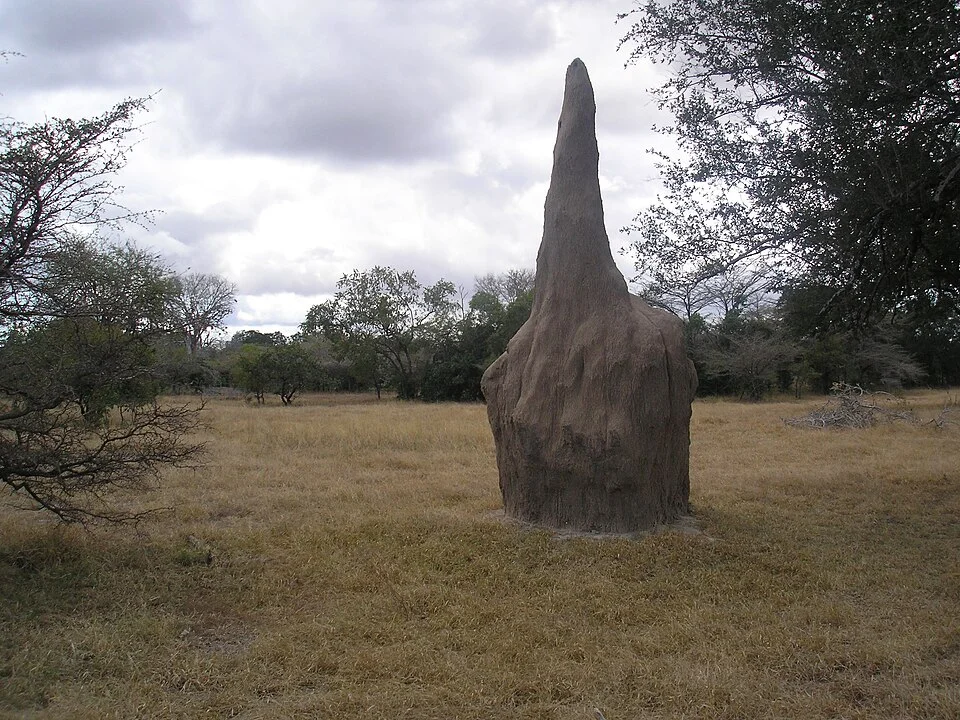
Photo: Awinch1001 · CC0
Termites are small, soil-dwelling social insects that live in huge underground colonies, many topped by hard earth mounds. Blind worker termites travel out from the nest through hidden tunnels and covered mud runways, feeding on roots, the stem base and any dead plant material. The fungus-growing kinds (Macrotermes) are the most damaging to African field crops, and they do the most harm to drought-stressed plants and to mature or toppled crops left standing in the field.
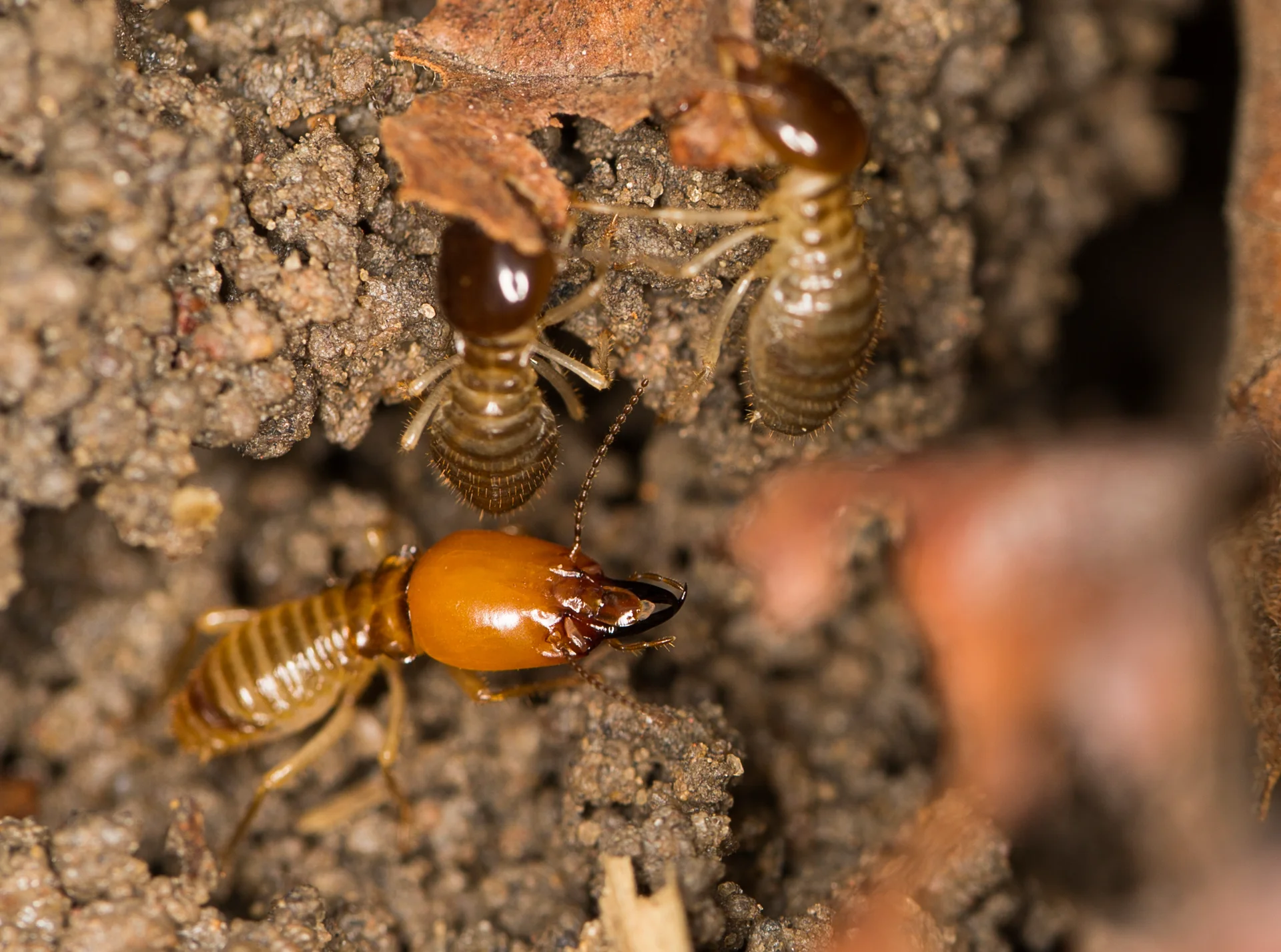
ETF89 · CC BY-SA 4.0 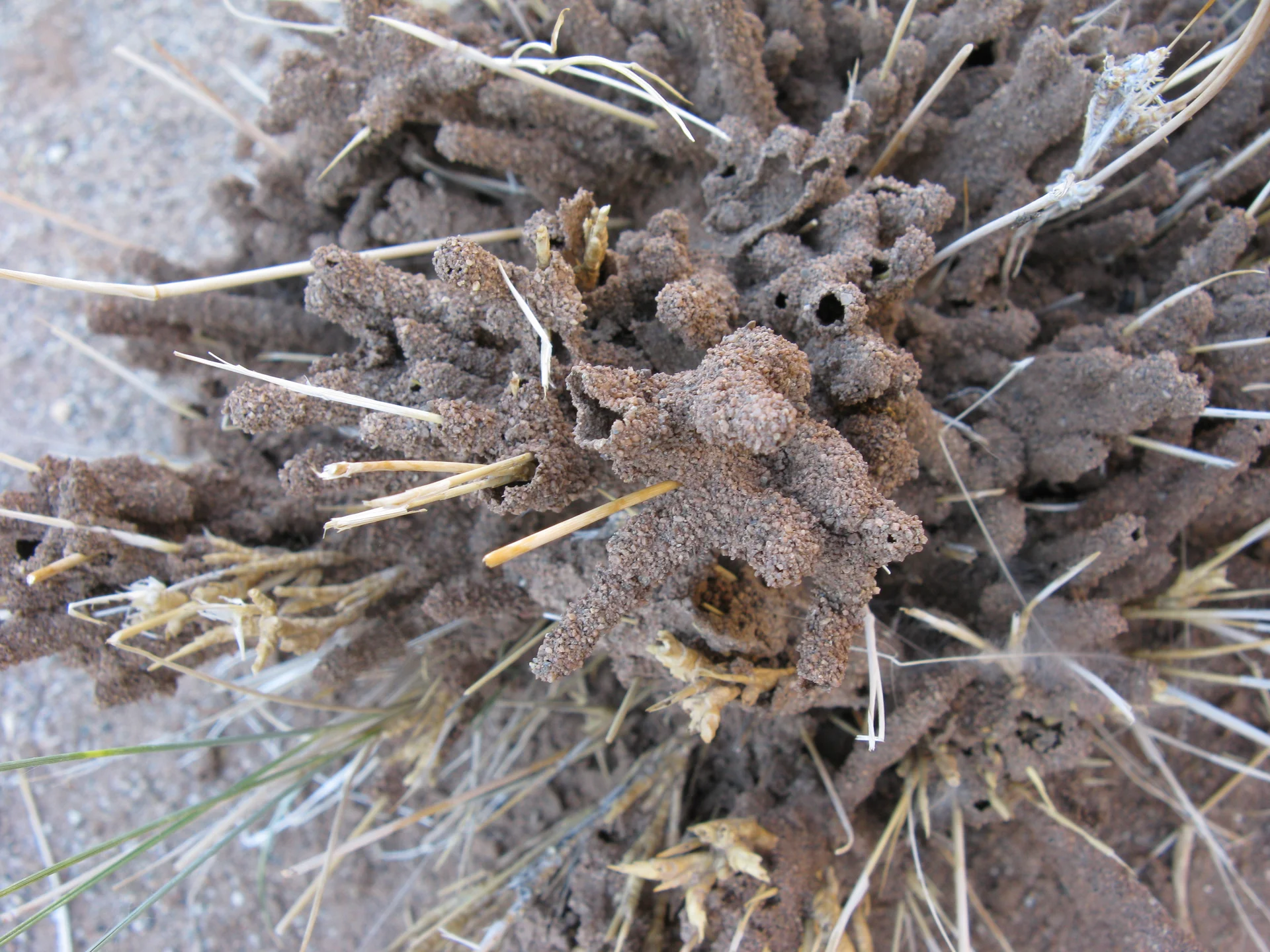
JonRichfield · CC BY-SA 3.0
Why it matters
Termites are quiet thieves that work below ground until, in a bad year, they take more than half your crop — up to 60%. Because they chew the roots and hollow out the stem base out of sight, the first thing you often see is a healthy-looking plant that suddenly wilts, or a whole patch of seedlings that simply vanishes. They strike hardest exactly when your crop can least afford it — in a dry spell, on thirsty drought-stressed plants, and on a mature crop still waiting to be harvested. And the real problem is a hidden colony, sometimes a queen buried deep in a mound, so you can never fix it by treating one plant: once termites are established they keep coming back, and the only real win is keeping the crop strong and stopping them before they spread.
When to act
Act when seedlings are being cut, lodging climbs, or fresh soil sheeting and runways appear on stems, particularly under drought when standing crops are attacked.
This guidance is general, compiled from published agronomic references including FAO and CABI. Thresholds and timing shift with your crop, your variety and the season.
In much of the region a spray is simply called mushonga — medicine. But a chemical group you cannot name is one you cannot rotate, and a product you did not write down has no pre-harvest interval you can observe. Mushonga, and other farming words →
The full termites field guide
Identify it
The first sign
is usually plants that wilt and die for no clear reason, or whole gaps in the row where seedlings were cut off at ground level soon after they came up. Older plants may suddenly topple over (this falling-over is called lodging) because the stem base has been eaten hollow and ring-barked — chewed all the way round.
The give-away sign
— the one thing no other pest leaves — is soil sheeting: a thin skin or plaster of mud stuck onto the stem, stubble or fallen cobs, with narrow earthen runways (little covered mud tunnels) running up the plant. Peel it back with your thumb and the termites are hiding underneath, away from the light.
The termites themselves
are small, soft and creamy-white, and look like tiny pale ants — each about the size of a rice grain or smaller. The bigger soldiers have hard orange-brown heads with dark pincers. They live below ground and inside the runways and mounds, so you only see them when you break open a runway, a rotten stump, or the soil at a dying plant's base — then they hurry away from daylight.
Tell them apart
a true ant has a pinched-in waist and is usually dark and hard, while a termite has a straight, soft, pale body. The winged flying termites that swarm after the first rains — the ones people gather to eat — are the very same insect leaving to start new nests. Cutworms also cut seedlings, but a cutworm is a fat grey caterpillar that curls into a 'C' when you dig beside the plant in the morning, and it leaves no mud sheeting or runways — soil sheeting on the stem always means termites.
Scout for it
Check at the three times termites strike: right after emergence while seedlings are establishing (cut seedlings and gaps), through the middle of the season, and as the crop matures toward harvest (toppling plants, hollow stems). Step up your walks during any dry spell or drought — that is when termites leave the dead wood and start attacking your living, standing crop.
Walk a big 'W' across the field so you cover all four corners and the middle, not just the edge by the path. Make about 10 stops; at each one, check plants at the stem base and root zone — look for wilting, toppled or cut plants, and for fresh mud soil sheeting or runways climbing the stems and stubble.
At any wilting or dying plant, dig around the base and roots with your hand or a hoe: if the damage is fresh you will find the pale workers still there, and the roots and stem tunnelled and hollow. Note where termite mounds stand in and around the field — those are the colonies feeding the attack.
Act now
if you find about 1 or more plants in every 10 freshly cut, wilting, or toppling from termite tunnelling — or any fresh soil sheeting and runways climbing your standing, living plants, especially in a dry spell. Fresh, moist runways with workers underneath mean an active attack; old, empty, crumbling mud is a past one — don't act for that alone.
Control it
Prevent it — keep the crop strong and never thirsty
Termites hit drought-stressed plants hardest, so plant on time into moist soil, feed the crop well, and water or irrigate whenever you can so plants never wilt from thirst. A fast, even, vigorous stand shrugs termites off; a weak, stressed one invites them in.
Starve and break the colonies
Clear away the crop residues, old stumps, stubble and dead wood that termite colonies feed on. Dig out and destroy the mounds in and around the field — if you find and kill the pale, swollen queen deep inside, the whole colony dies with her. And harvest promptly: never leave a mature or toppled crop standing in the field, where termites move straight in.
Grow a tough variety
Choose vigorous, drought-tolerant, quick-establishing varieties — they get their roots down and pass the risky stages before termites can set them back.
Act early with an insect-killing fungus
Treat the soil and the mounds with an entomopathogen — a natural fungus (such as Metarhizium or Beauveria) that infects and kills termites. And protect the ants and other natural enemies that already hunt termites: avoid blanket poisons that wipe them out. Even when mixing a natural product, cover your skin, nose and eyes, work in the cool of the day, keep it off food and water, and wash well afterwards.
Last resort — treated seed or a soil drench
In fields with a bad termite history, plant seed coated with an approved seed treatment (a poison coating put on the seed before planting), or drench — soak — the planting furrow and the mounds with an approved soil insecticide. Treated seed is poison: never eat it or feed it to animals, keep it away from children, and mark the bag clearly. When spraying or drenching, cover your skin, nose and eyes, work in the cool of the day with the wind behind you, keep it off food, water, children and bees, respect the pre-harvest interval (the number of days you must wait between treating and harvesting), and wash well after. Rotate to a different chemical group each season so the termites don't build up resistance — stop being killed by it.
If it keeps spreading — go for the colony; if it's too late — cut your losses
If runways keep climbing and plants keep toppling despite treatment, hunt down and destroy the mound and queen feeding the attack rather than dosing plant by plant. Where a mature crop is already lodging and being hollowed out, harvest everything still standing at once before more topples, then clear away all the residue and start the next season clean — on-time planting, a tough variety, and treated seed — so you don't feed the same colonies all over again.
Catch termites before it costs you the harvest
This guide is the general answer. Divisi works out yours — the week to scout your own field for termites, and what to do the day you find it.


Crops it affects
Plan the crops it attacks
-
 When to plant Cassava in Banalia
 -
 When to plant Groundnut in Songo
 -
 When to plant Maize in Mougalaba
 -
 When to plant Sorghum in Maracha
 -
 When to plant Sugarcane in Douigni
 -
 When to plant Wheat in Hammedi
All planting calendars, country by country
Get Insights by email
A short digest of new Divisi articles. No email on quiet weeks.
Frequently asked questions
How do I identify termites?
The first sign. is usually plants that wilt and die for no clear reason, or whole gaps in the row where seedlings were cut off at ground level soon after they came up. Older plants may suddenly topple over (this falling-over is called lodging) because the stem base has been eaten hollow and ring-barked — chewed all the way round.
When should I take action against termites?
Act when seedlings are being cut, lodging climbs, or fresh soil sheeting and runways appear on stems, particularly under drought when standing crops are attacked.
How do I control termites?
Prevent it — keep the crop strong and never thirsty. Termites hit drought-stressed plants hardest, so plant on time into moist soil, feed the crop well, and water or irrigate whenever you can so plants never wilt from thirst. A fast, even, vigorous stand shrugs termites off; a weak, stressed one invites them in.
Which crops are attacked by termites?
Among the crops covered here: Cassava, Groundnut, Maize, Sorghum, Sugarcane, Wheat.