 Divisi
Thrips
Thrips tabaci · Insect
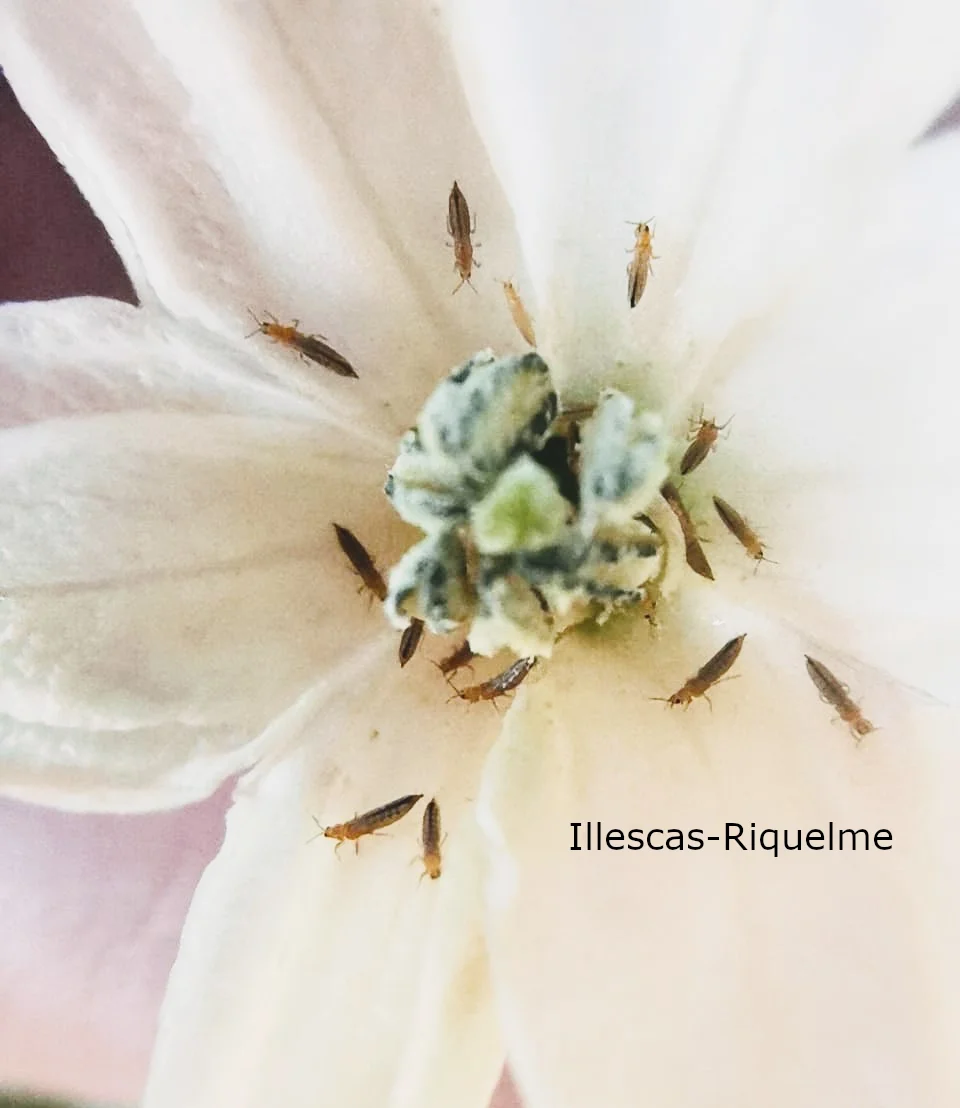
Photo: Carlos Patricio Illescas Riquelme (iNaturalist) · CC BY-SA 4.0
Thrips are minute, slender insects — most less than 2 mm long — that rasp open the surface of leaves, flowers and fruit and suck out the sap, leaving a tell-tale silvery scarring flecked with tiny black droppings. They breed explosively in hot, dry weather, throwing one overlapping generation after another, and hide deep in leaf folds, onion sheaths and flowers where sprays struggle to reach. Their worst harm is not the feeding itself but the plant viruses (such as tomato spotted wilt) that several thrips carry and inject as they feed — damage that no chemical can undo.
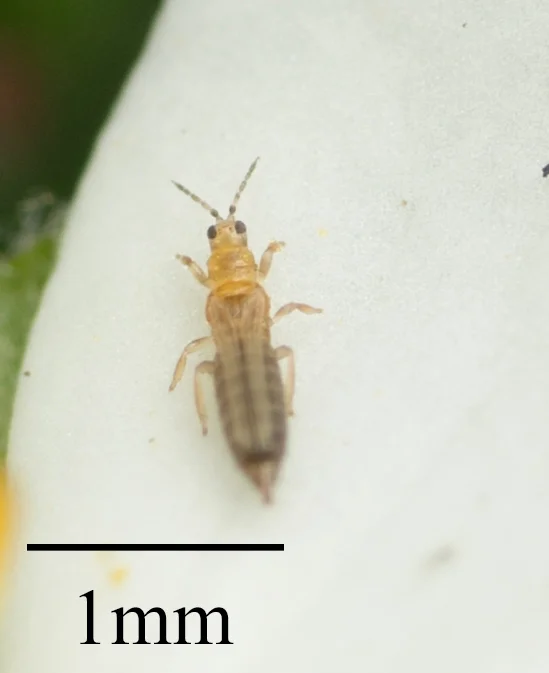
Jesse Rorabaugh (iNaturalist) · CC0 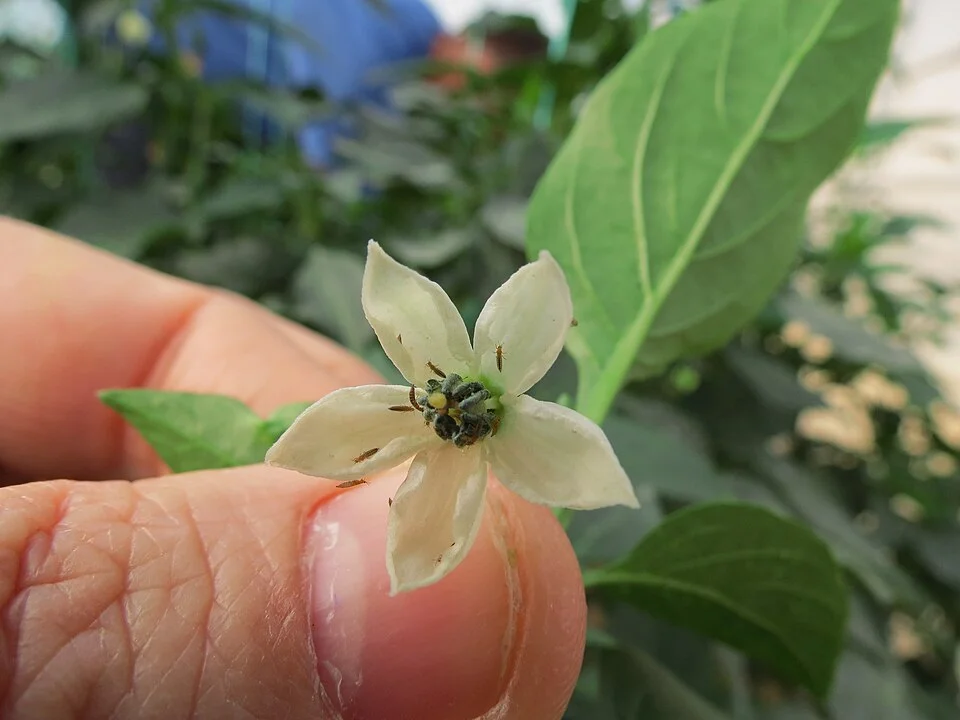
Metin GÜLEŞCİ · CC BY 4.0
Why it matters
Thrips are almost too small to see, yet they can strip away up to 60% of your harvest — over half the crop. A little of that is the silvery scarring they rasp into leaves, flowers and fruit; most of it is the viruses they inject as they feed (like tomato spotted wilt), and no spray can cure a plant once it is infected. They explode in numbers in hot, dry weather, hiding deep in leaf folds, onion sheaths and flowers where sprays never reach, and they grow resistant to chemicals fast. That is why, once they are established, they are so hard to beat — and why keeping them out and catching them early matters far more than spraying late.
When to act
On onion treat at roughly one thrips per leaf on average during bulbing; on other crops act when silvering spreads or when thrips are found in flowers of virus-susceptible crops such as tomato and pepper.
This guidance is general, compiled from published agronomic references including FAO and CABI. Thresholds and timing shift with your crop, your variety and the season.
In much of the region a spray is simply called mushonga — medicine. But a chemical group you cannot name is one you cannot rotate, and a product you did not write down has no pre-harvest interval you can observe. Mushonga, and other farming words →
The full thrips field guide
Identify it
The damage first
look for silvery, whitish streaks and patches on the leaves, as if the green has been scraped away and the surface has turned to tin foil. Scattered over that silvering are tiny black specks — the thrips' droppings — and those specks are the tell that a living insect, not the sun or wind, did the damage.
New growth and flowers
the youngest leaves push out curled, twisted, puckered and stunted; flowers and fruit come out scarred, streaked and deformed. On onion the leaves silver, twist and bend over, and the bulb stays small.
The insect itself
thrips are slivers smaller than 2 mm — no bigger than this comma — pale yellow to straw-brown, so thin they look like a tiny moving splinter or a dash of thread. The young (larvae) are even smaller, pale cream and wingless. They wriggle and scurry fast when disturbed and hide from the sun in the tightest folds of the plant — leaf bases, onion sheaths, the growing point and deep inside flowers.
Don't confuse it
spider mites also silver the leaves, but they leave fine cobwebbing and the mites are round moving dots, not slender slivers — and mites leave no black specks. Silvering from sun, wind or dust has no live insects and no droppings at all. If the pale patches carry black specks and thin, wriggling slivers, it is thrips.
The virus warning
where thrips have fed you may also see ring-shaped spots, blotches, wilting and badly distorted growth — these are the viruses thrips spread (such as tomato spotted wilt), and they often cost you more than the feeding does. A plant showing these cannot be cured; treat it as a source that will infect its neighbours.
Scout for it
When to look
start early and keep looking right through the tender stages — from seedling and early growth, through the fast-growing stage, into bulbing (onion) or flowering and fruit-set (tomato, pepper, bean, cabbage, cotton). Step up your checks in hot, dry, dusty spells, because that is exactly when thrips numbers explode.
How to walk the field
twice a week, walk a big "W" across the field so you cover the four corners and the middle — not just the edge by the path. Make about 10 stops along the way.
Where to look at each stop
thrips hide from the sun, so search the hidden folds. Pull apart the newest leaves and the growing point, check the leaf bases and undersides, and on onion run your fingers down inside the leaf sheaths and count what you find. On tomato, pepper and bean, open the flowers and look right inside.
A simple trick to flush them out
hold a sheet of white paper or a dark cloth under a leaf or flower and tap the plant sharply — the thrips drop onto it and you can watch the tiny pale slivers move. Blue sticky traps hung at crop height catch the flying adults and warn you when a fresh wave arrives.
When to act
-
onion:
at bulbing, count the thrips on the leaves of your sample plants. When they average about one thrips on each leaf — so a plant with 8–10 leaves carries roughly 8–10 thrips — you are at threshold. Act now.
-
tomato, pepper and the other crops:
because these can catch virus, don't wait for big numbers. Act as soon as you find thrips inside the flowers, or when the silvering is spreading from plant to plant — the virus does its damage early, so an early move protects the rest of the field.
Control it
Prevent it
-
start clean:
plant only clean, thrips-free seedlings, and never carry in infested transplants. Walk the crop and rogue — that means pull out and destroy — any plant showing virus symptoms (ringspots, wilting, twisted growth) early, before thrips carry that virus on to healthy plants.
-
take away their shelter:
clear weeds inside the field and along the margins, because weeds shelter both the thrips and the viruses. Don't plant a new tender crop right next to an old, infested one — leave a gap in space or time so the pest can't just walk across. Lay reflective or silver mulch (silver plastic sheet or pale straw) between the rows to confuse and repel thrips flying in.
-
keep the crop unstressed:
thrips thrive on dry, dusty, drought-stressed plants, so water well and never let the crop go thirsty. Overhead (sprinkler) watering also washes thrips off the leaves and knocks their numbers down.
Act early — let their enemies do the work:
predatory mites (Amblyseius) and minute pirate bugs hunt and eat thrips. Protect them by avoiding broad, kill-everything sprays, and where you can buy them, release predatory mites onto the crop. You can also apply Beauveria bassiana, a natural fungus that infects and kills the young thrips (the nymphs — the small wingless stage).
Last resort — spinosad:
only if prevention and natural enemies have not held and you have hit threshold, spray spinosad — a lower-toxicity insecticide made from soil bacteria, gentler on many helpful insects but still deadly to bees while it is wet. Coverage is everything: thrips hide in leaf bases, sheaths and flowers, so aim the spray down into those folds, not just over the top of the crop.
Spray safely
cover your skin, eyes, nose and mouth; spray in the cool of morning or evening with the wind at your back; keep it off food, off water sources, and away from children and bees; respect the pre-harvest interval — the minimum number of days you must wait between spraying and picking so the crop is safe to eat — and wash yourself and your clothes afterwards.
Stop resistance
thrips breed fast, so they grow resistant to chemicals quickly. Never spray the same product twice in a row — rotate to a different chemical group each time — and lean on prevention so you have to spray as little as possible.
If it keeps spreading → cut the source; when it's too late → cut your losses
any plant showing virus (ringspots, wilting, distorted growth) cannot be saved — pull it out and destroy it so it stops infecting the rest. If much of the crop is already virus-struck, stop spending on sprays that can't bring it back: harvest what is still usable, then destroy the old crop residue and weeds, and next season rotate to a non-host crop planted well away from this field — breaking the thrips-and-virus cycle for your next planting.
Catch thrips before it costs you the harvest
This guide is the general answer. Divisi works out yours — the week to scout your own field for thrips, and what to do the day you find it.


Crops it affects
Plan the crops it attacks
-
 When to plant Common bean in Dilolo
 -
 When to plant Cotton in Kalemie
 -
 When to plant Onion in Sandoa
 -
 When to plant Tomato in Goma
 -
 When to plant Cabbage in Les Eucalyptus
All planting calendars, country by country
Get Insights by email
A short digest of new Divisi articles. No email on quiet weeks.
Frequently asked questions
How do I identify thrips?
The damage first. look for silvery, whitish streaks and patches on the leaves, as if the green has been scraped away and the surface has turned to tin foil. Scattered over that silvering are tiny black specks — the thrips' droppings — and those specks are the tell that a living insect, not the sun or wind, did the damage.
When should I take action against thrips?
On onion treat at roughly one thrips per leaf on average during bulbing; on other crops act when silvering spreads or when thrips are found in flowers of virus-susceptible crops such as tomato and pepper.
How do I control thrips?
Prevent it — start clean:. plant only clean, thrips-free seedlings, and never carry in infested transplants. Walk the crop and rogue — that means pull out and destroy — any plant showing virus symptoms (ringspots, wilting, twisted growth) early, before thrips carry that virus on to healthy plants.
Which crops are attacked by thrips?
Among the crops covered here: Cabbage, Common bean, Cotton, Onion, Tomato.