 Divisi
Leaf spot
· Fungal
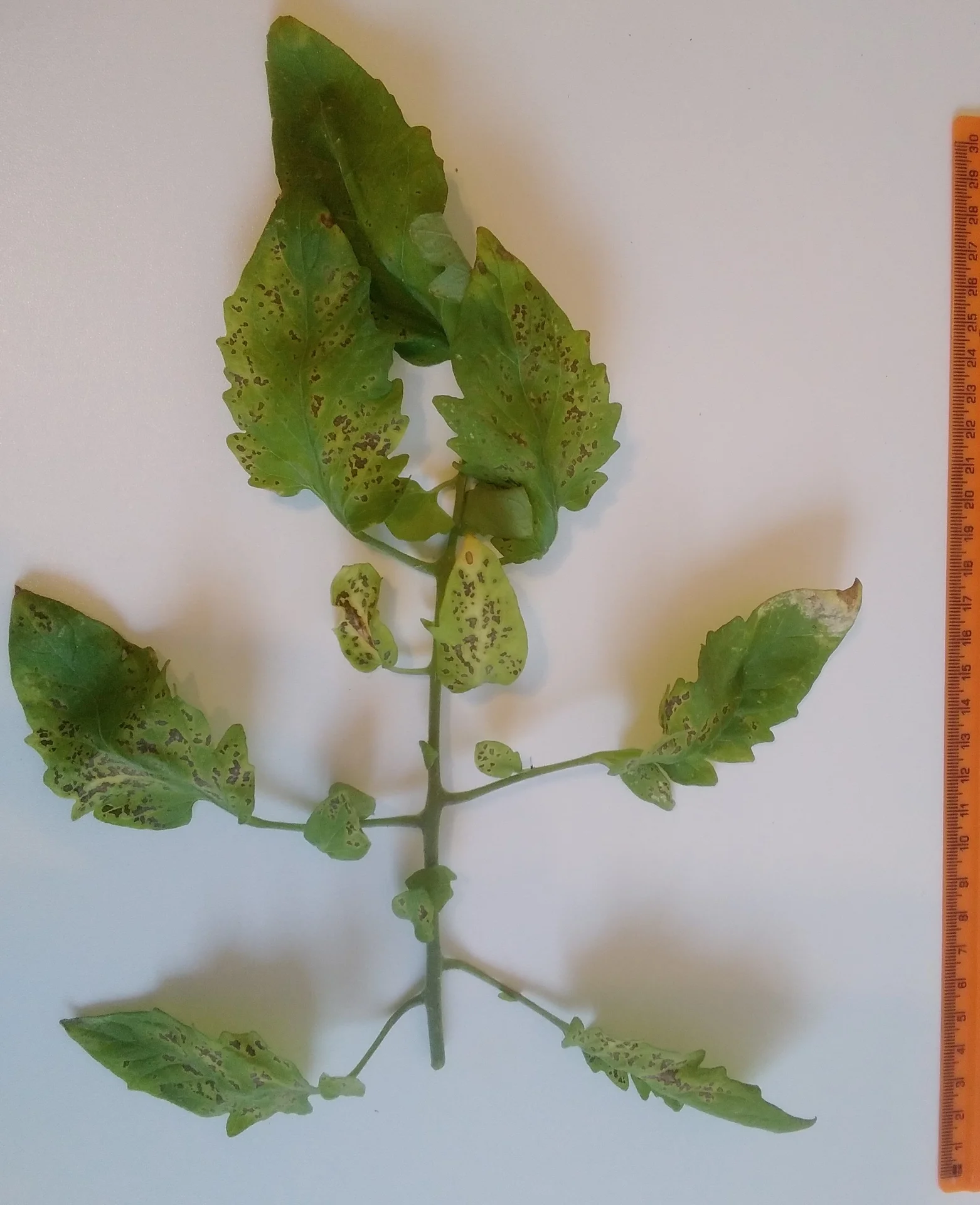
Photo: MerielGJones · CC BY-SA 4.0
Leaf spot is a group of fungal diseases that pepper the leaves of many crops — groundnut, maize, tomato and banana — with distinct dead spots. The fungus survives on old infected leaves and crop trash, and its spores are splashed up onto healthy leaves by rain and carried on the wind. In warm, wet, humid weather the spots multiply and join up, killing the leaf, so the plant sheds its lower leaves early and cannot fill its grain, pods or fruit.
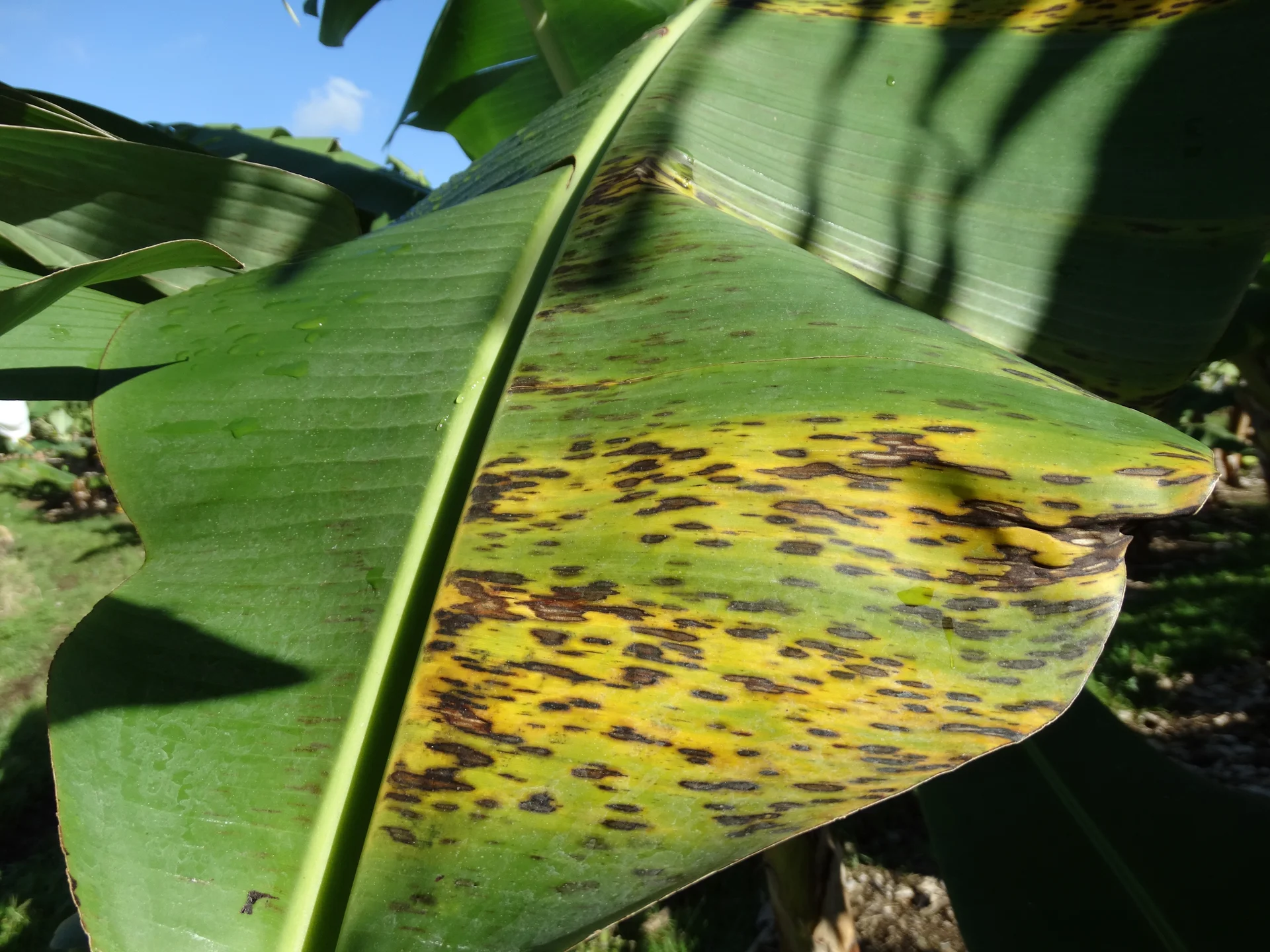
Plant pests and diseases · CC0 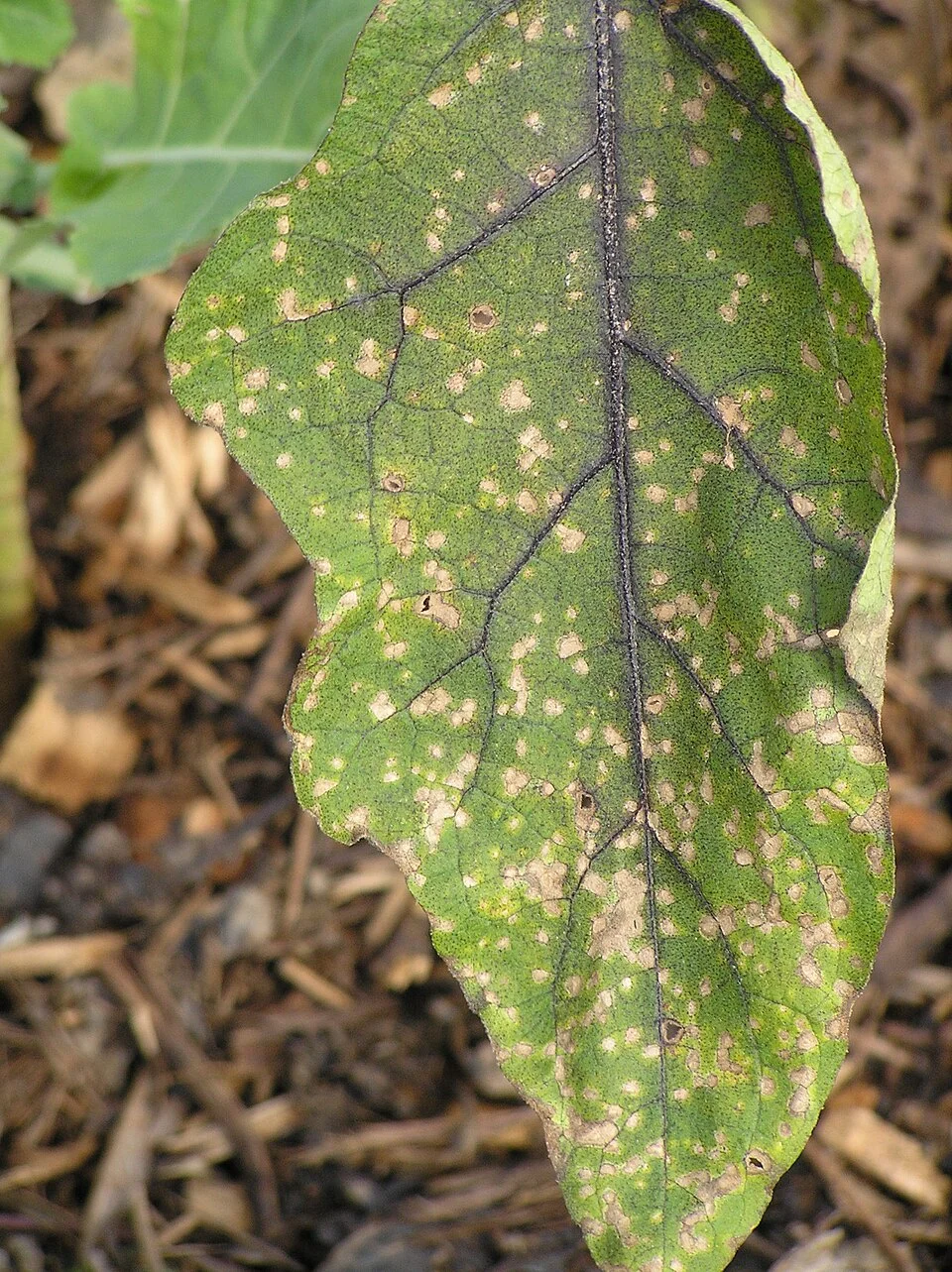
Scot Nelson · CC0
Why it matters
Leaf spot steals the plant's food factory — its leaves. In a bad, wet season it can cost you up to half your crop (50%) because the plant drops its leaves early and never fills its pods, grain or fruit. It is hard to stop once it takes hold: the fungus lives on in old leaves and crop trash, and every rain splashes fresh spores higher up the plant. That is why you must keep it off the top leaves from the start — by the time the whole plant is spotted, the harvest is already lost.
When to act
spots appearing on lower leaves and moving up the canopy, or defoliation beginning before the crop matures
This guidance is general, compiled from published agronomic references including FAO and CABI. Thresholds and timing shift with your crop, your variety and the season.
In much of the region a spray is simply called mushonga — medicine. But a chemical group you cannot name is one you cannot rotate, and a product you did not write down has no pre-harvest interval you can observe. Mushonga, and other farming words →
The full Leaf spot field guide
Identify it
What you see first
small round to angular spots on the oldest, lowest leaves — the ones nearest the ground. They start pin-head size, are brown, tan or black, and many have a yellow ring (halo) around them like a target.
As it spreads
the spots grow, some show rings within rings (like a tiny archery target), then they join up into big dead brown patches. The leaf yellows all over, dries out and falls off. The disease climbs from the bottom leaves up toward the top, so a plant can be bare at the bottom and green at the top.
When it's worst
after warm, humid weather with frequent rain or heavy dew, and in crowded, dense stands where the leaves stay wet and air can't move. Old infected leaves lying on the soil are the seed of next season's attack.
Don't confuse it
with hail or insect chewing (torn edges and holes, not neat round spots with a halo), with plain yellowing from hunger (whole leaf pales evenly, no distinct spots), or with sun-scorch (dry patches at leaf tips and edges, no rings and no yellow halo). True leaf spot makes separate, rounded spots with a coloured edge that later merge.
Scout for it
When
start looking as soon as the crop is growing fast and leafy (the development stage) and keep it up right through the middle and late season until harvest — these are the stages the disease hits hardest. Check within a day or two after every rain or a heavy dewy morning, because that is when new spots appear.
Where to walk
cross the field in a big "W" shape so you cover all four corners and the middle, not just the edge by the path. Make about 10 stops along the W.
What to check
at each stop bend down and look at the lower and middle leaves of a few plants — the bottom of the plant, where the disease always starts. Turn leaves over and look closely for the first tiny spots with a halo.
The number that means ACT
if you find spots on about 1 in 5 of the lower leaves (roughly 2 leaves in every 10 you check), or you see the spots climbing off the bottom leaves onto the middle of the plant, or lower leaves starting to drop before the crop is ripe — that is your threshold. Act now, while it is still low on the plant; do not wait for the top leaves to catch it.
Control it
Prevent it first — this is your strongest tool
Rotate: don't plant the same crop on the same land two seasons running — give it a 2-year break so the fungus in the old trash dies out. Clean up: after harvest, gather and burn or bury the infected leaves and crop trash so there are no spores to splash up next season, and always plant clean, healthy seed.
Grow a resistant variety
Where your local seed supplier or extension officer offers a variety bred to tolerate leaf spot, choose it — it is the cheapest lasting protection and needs no spraying. (Resistant means the plant fights the fungus off on its own.)
Open up the canopy so leaves dry fast
Space plants wider and weed well so air moves through and the leaves don't stay wet — the fungus needs wet leaves to grow. Water at the base, not overhead, water early in the day so leaves dry by night, mulch the soil to stop rain splashing spores up, and never walk through or work the crop while the leaves are wet — you carry spores from plant to plant on your hands and clothes.
Chemical — last resort, a protectant fungicide
A protectant fungicide (a spray that coats the leaf and stops new spores taking hold — it does not cure spots already there, so it must go on early, at the very first spots, and be repeated through wet weather). Safety, every time you spray: cover your skin, eyes, nose and mouth; spray in the cool of morning or evening with the wind at your back so it blows away from you; keep it off food, drinking water, children, animals and bees; and after each spray wash yourself and your clothes. Respect the pre-harvest interval — the number of days the label says you must wait between the last spray and picking or eating the crop. To stop the fungus getting used to one spray (resistance), rotate between different fungicide types rather than using the same one over and over.
If it keeps spreading
tighten up — spray protectant on a shorter cycle in the wet spell, strip and destroy the worst-hit lower leaves, and make sure the canopy is open and dry. But if the plant is already mostly bare and the spots have reached the top before the crop is mature, spraying will not bring the leaves back — cut your losses: harvest whatever you can, then clear and destroy every scrap of infected trash, and next season rotate to a different crop and start with a resistant variety and clean seed so you don't carry the disease forward.
Catch Leaf spot before it costs you the harvest
This guide is the general answer. Divisi works out yours — the week to scout your own field for Leaf spot, and what to do the day you find it.


Crops it affects
Plan the crops it attacks
-
 When to plant Fonio in Luebo
 -
 When to plant Ginger in Kalangala
 -
 When to plant Groundnut in Songo
 -
 When to plant Maize in Mougalaba
 -
 When to plant Sesame in Demba
 -
 When to plant Tomato in Goma
All planting calendars, country by country
Get Insights by email
A short digest of new Divisi articles. No email on quiet weeks.
Frequently asked questions
How do I identify Leaf spot?
What you see first. small round to angular spots on the oldest, lowest leaves — the ones nearest the ground. They start pin-head size, are brown, tan or black, and many have a yellow ring (halo) around them like a target.
When should I take action against Leaf spot?
spots appearing on lower leaves and moving up the canopy, or defoliation beginning before the crop matures
How do I control Leaf spot?
Prevent it first — this is your strongest tool. Rotate: don't plant the same crop on the same land two seasons running — give it a 2-year break so the fungus in the old trash dies out. Clean up: after harvest, gather and burn or bury the infected leaves and crop trash so there are no spores to splash up next season, and always plant clean, healthy seed.
Which crops are attacked by Leaf spot?
Among the crops covered here: Fonio, Ginger, Groundnut, Maize, Sesame, Tomato.