 Divisi
Rust
· Fungal
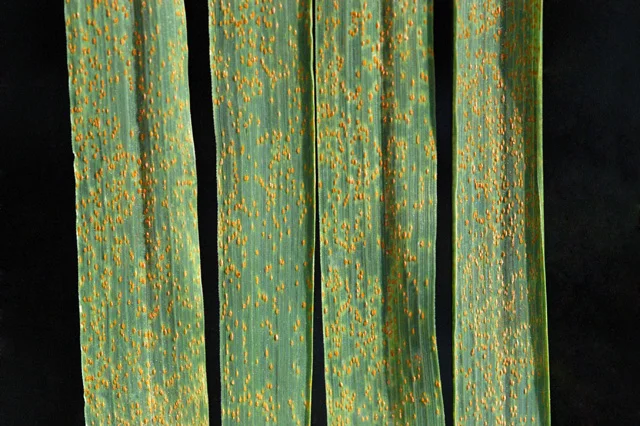
Photo: James Kolmer · Public domain
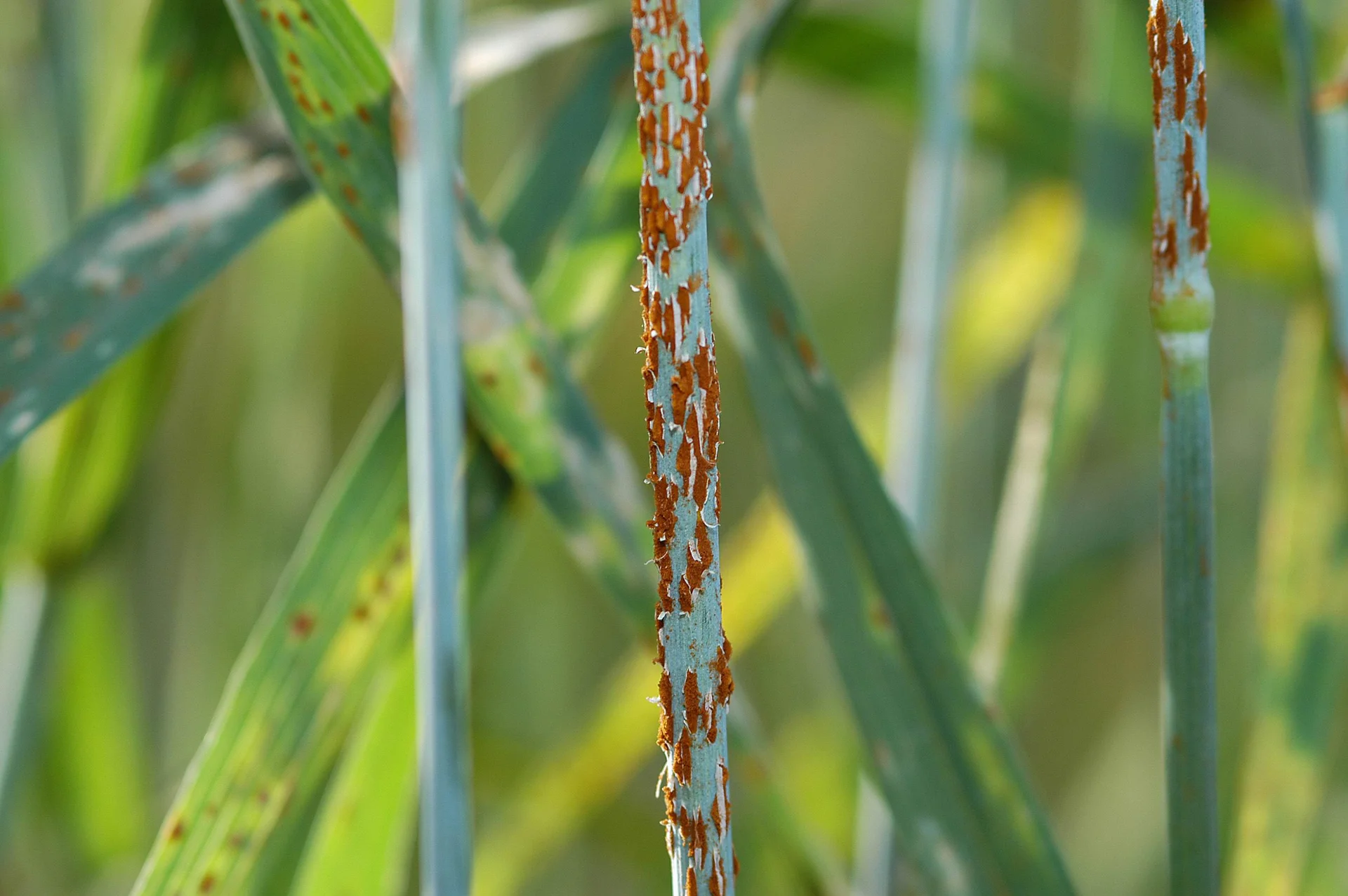
Rust is a wind-borne fungal disease that erupts as powdery, rust-coloured pustules on the leaves and stems of wheat, maize, beans, groundnut, sorghum and sunflower. It thrives in cool, mild weather with heavy dew and damp air, spreads fast on wind and splashing rain, and slowly drains the plant by shutting down the green leaf that fills the grain.
USDA · Public domain 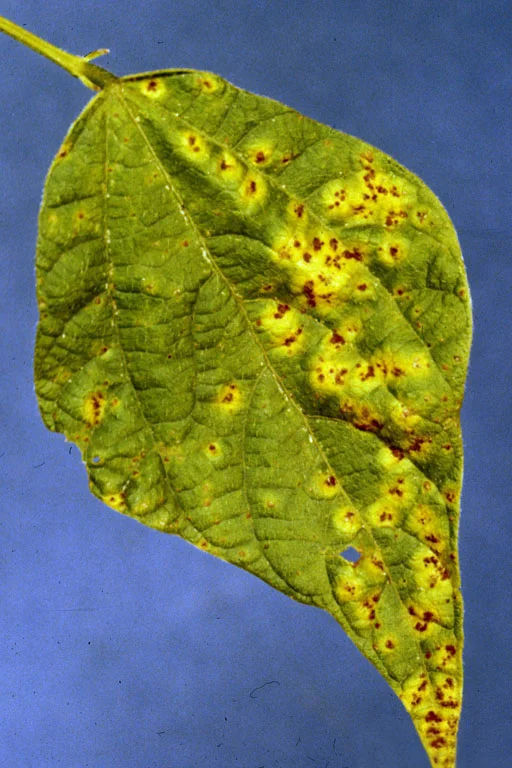
Clemson University - USDA Cooperative Extension Slide Series, Bugwood.org · CC BY 3.0 us
Why it matters
Rust is a quiet thief. Once it takes hold it can rob you of up to 60% of your harvest — grain that comes out small and shrivelled because the leaves died before they could feed it. It matters most because it spreads on the wind from field to field and, once the pustules are everywhere, no spray can bring back a leaf that is already dead. The only way to win is to stop it early or keep it out from the start.
When to act
first rust pustules appearing on lower leaves, especially before or during flowering
This guidance is general, compiled from published agronomic references including FAO and CABI. Thresholds and timing shift with your crop, your variety and the season.
In much of the region a spray is simply called mushonga — medicine. But a chemical group you cannot name is one you cannot rotate, and a product you did not write down has no pre-harvest interval you can observe. Mushonga, and other farming words →
The full Rust field guide
Identify it
What you see first
small raised bumps (pustules) that break open like tiny blisters and dust your finger with powder when you rub the leaf — the powder is orange, brown, reddish or yellow, the exact colour of rust on old iron.
As it spreads
the pustules multiply until the leaf looks freckled all over. Badly hit leaves turn yellow and dry out early, starting from the lower, older leaves and climbing upward. On a heavy attack the whole plant can look scorched and the grain fills poorly and shrivels.
Where to look
check both sides of the leaf — many rusts show most on the underside — and along the stems and pods. The powder wipes off onto your hand; that dusty smear is the sure sign it is rust and not something else.
Don't confuse it
with harmless leaf-spot diseases, which make flat, dry patches or rings that do NOT rub off as powder, or with sun and drought scorch, which dries the leaf edges without any coloured dust. If nothing comes off on your finger, it is not rust.
Scout for it
When
rust does its worst from the development stage right through mid- and late-season, so watch hardest from when the plant is growing fast up to and during flowering — the make-or-break time for grain fill. It loves cool, mild days (about 15–25°C) with heavy morning dew, mist or long wet leaves, so step up checks after damp, humid spells.
How
walk a big "W" across the field so you cover all four corners and the middle, not just the edge by the path. Make about 10 stops along the way.
What to check
at each stop, look at the lower, older leaves first — that is where rust starts. Turn leaves over, and rub a leaf between your fingers: coloured powder on your skin means live rust.
When to act (the number)
the trigger is the very first pustules on the lower leaves, especially just before or during flowering. In plain terms — if you find even 1 in 10 plants with fresh rust powder on the lower leaves at this stage, act now. Rust doubles fast; waiting a week can mean the whole field.
Control it
Prevent it first
-
resistant varieties (your strongest, cheapest shield):
plant a rust-resistant variety suited to your area whenever you can. This is the single most effective control — it stops most of the disease before it starts, with no spraying and no cost each season.
-
smart growing (cultural):
plant early so the crop passes its tender stage before peak rust weather; space plants wider and go easy on nitrogen fertiliser so the canopy dries quickly and air moves through; pull out volunteer plants and weedy relatives that keep rust alive between seasons; and rotate your crops and burn or bury infected leftovers after harvest so spores have nothing to overwinter on.
Act early
rust cannot be handpicked like an insect — so catching it at the first few pustules is the whole game. The moment you find early rust on the lower leaves around flowering, decide fast: if it is just starting and weather is drying out, tighten scouting; if it is spreading and the weather stays cool and damp, move to a spray while it is still small.
Chemical — last resort (triazole fungicide):
if rust is climbing toward the upper leaves before or during flowering, spray an approved triazole fungicide to protect the top (flag) leaf that fills the grain. Note: a fungicide protects healthy leaf and slows the disease — it cannot revive leaf that is already dead, so spray early, not late. Safety: cover your skin, eyes and nose, spray in the cool of the day with the wind at your back, keep it off food, water sources, children and beehives, wait the pre-harvest interval (the number of days on the label between spraying and harvest) before you pick, and wash yourself and your clothes afterward. Resistance: don't use the same chemical group over and over — rotate to a different fungicide group so the fungus cannot get used to it.
If it keeps spreading
if the rust is still climbing after a spray, rotate to a different fungicide group and re-check the weather — a drying spell will slow it on its own. But if the upper leaves are already yellow and dying across most of the field, the harvest for that leaf is lost — stop spending on sprays, harvest what you can early to save some grain, and next season start clean: a resistant variety, early planting, and burnt or buried residues so rust does not carry over.
Catch Rust before it costs you the harvest
This guide is the general answer. Divisi works out yours — the week to scout your own field for Rust, and what to do the day you find it.


Crops it affects
Plan the crops it attacks
-
 When to plant Bambara groundnut in Kitui East
 -
 When to plant Garlic in Nyamasheke
 -
 When to plant Groundnut in Songo
 -
 When to plant Lablab in Burutu
 -
 When to plant Maize in Mougalaba
 -
 When to plant Sorghum in Maracha
All planting calendars, country by country
Get Insights by email
A short digest of new Divisi articles. No email on quiet weeks.
Frequently asked questions
How do I identify Rust?
What you see first. small raised bumps (pustules) that break open like tiny blisters and dust your finger with powder when you rub the leaf — the powder is orange, brown, reddish or yellow, the exact colour of rust on old iron.
When should I take action against Rust?
first rust pustules appearing on lower leaves, especially before or during flowering
How do I control Rust?
Prevent it first — resistant varieties (your strongest, cheapest shield):. plant a rust-resistant variety suited to your area whenever you can. This is the single most effective control — it stops most of the disease before it starts, with no spraying and no cost each season.
Which crops are attacked by Rust?
Among the crops covered here: Bambara groundnut, Garlic, Groundnut, Lablab, Maize, Sorghum, Sunflower, Wheat.