 Divisi
Flea beetles
· Insect
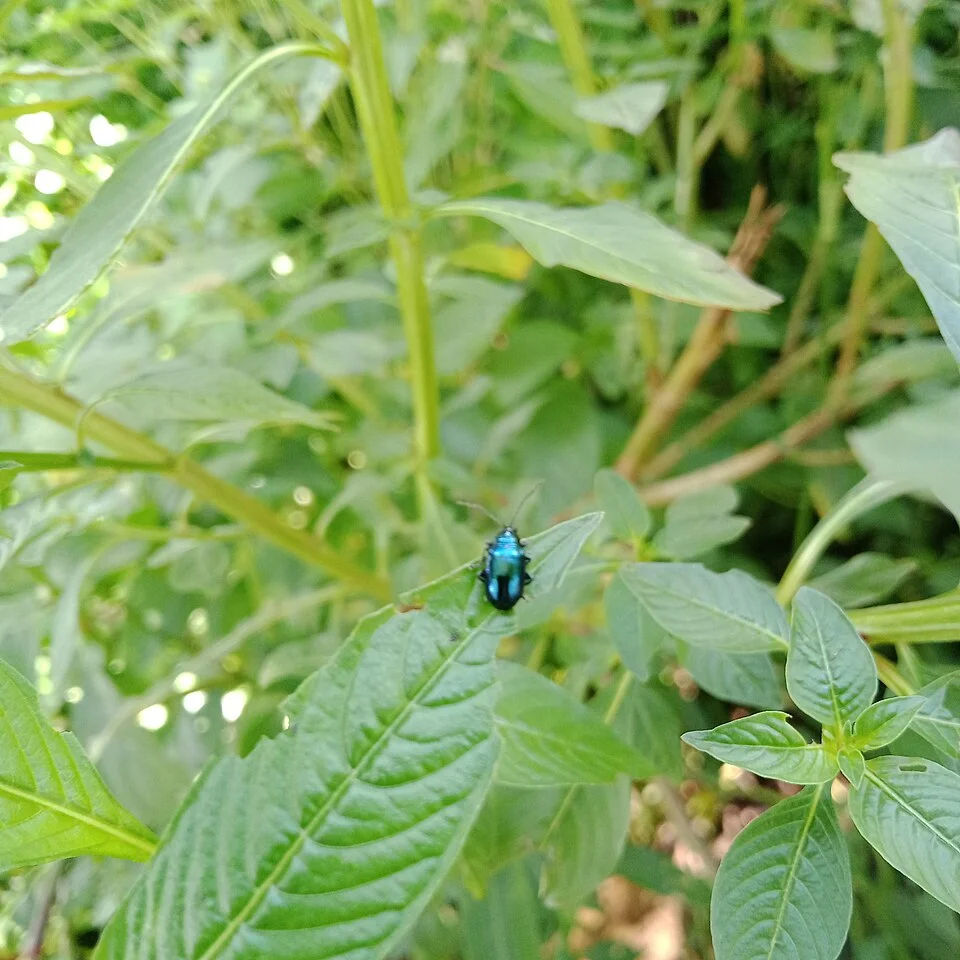
Photo: Anak Sago · CC BY 4.0
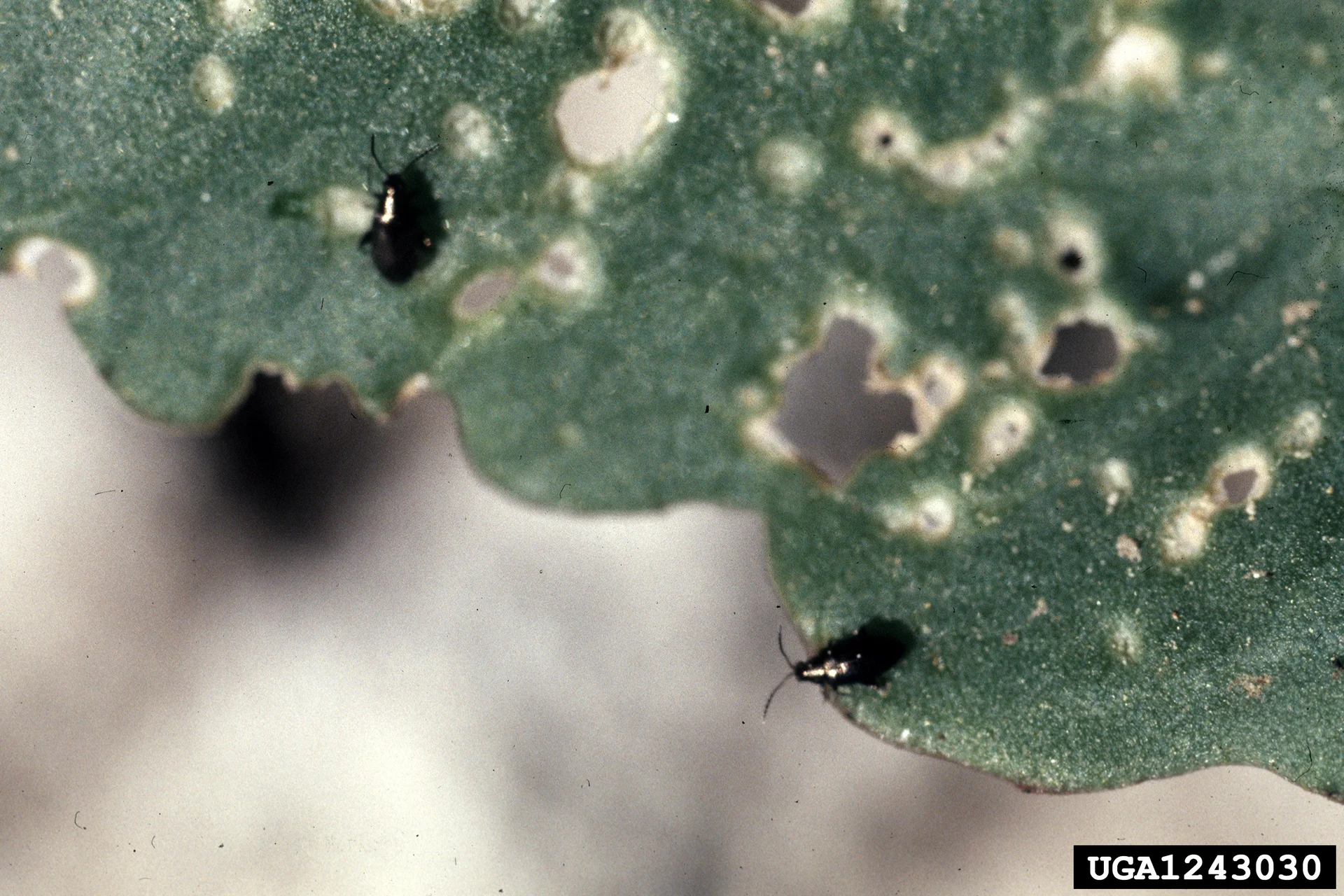
Tiny, shiny beetles about the size of a pinhead that hop like fleas when you disturb the plant. The adults chew the surface of young leaves, peppering seedlings with small round holes; the pale grubs of some kinds also feed on roots below ground. They build up fast in hot, dry weather and march in from weeds and old crop stubble, hitting your cabbage, covo, kale, rape, eggplant, tomato, sweet potato and amaranth hardest while the plants are still small and tender.
Whitney Cranshaw, Colorado State University, Bugwood.org · CC BY 3.0 us 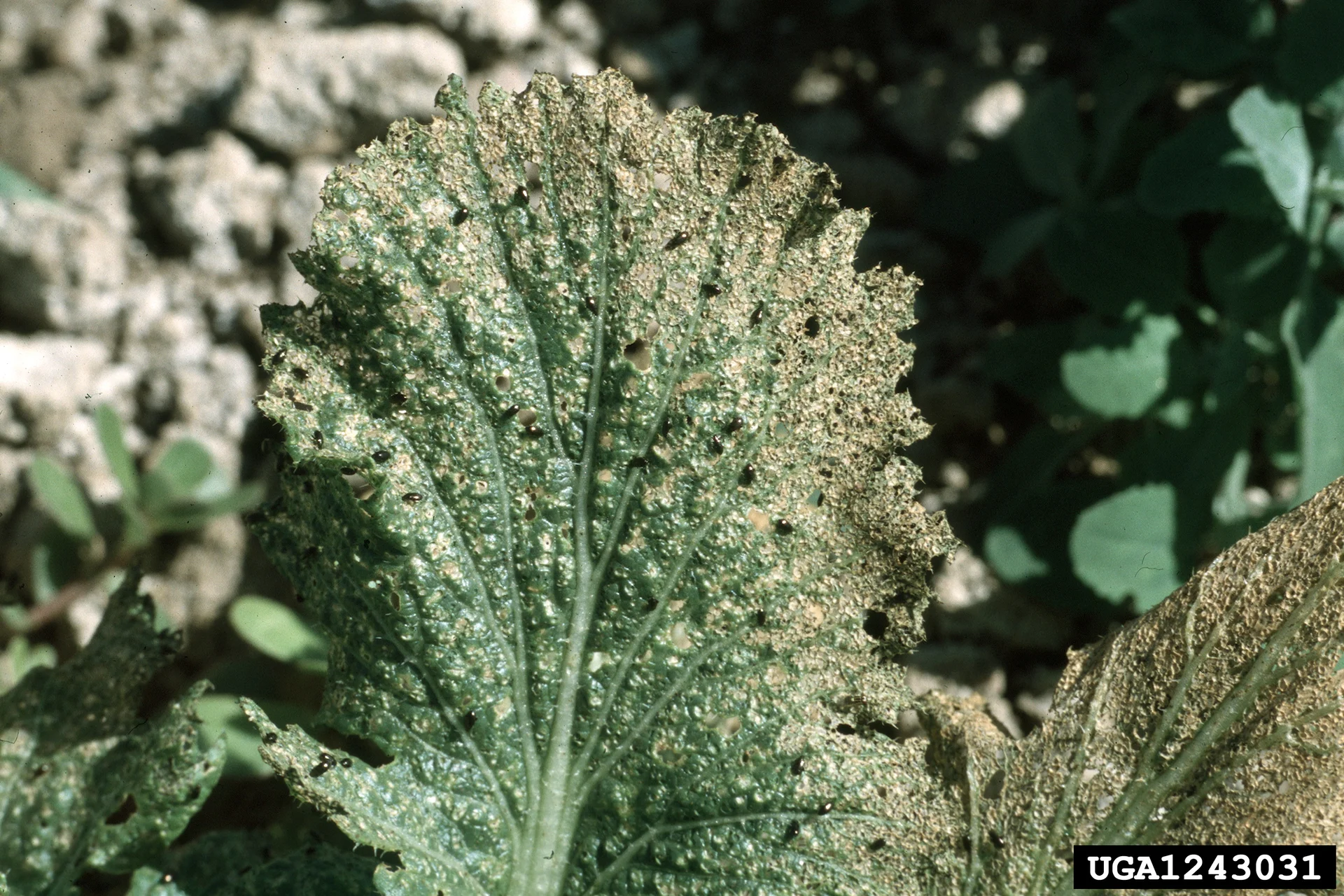
Whitney Cranshaw, Colorado State University, Bugwood.org · CC BY 3.0 us
Why it matters
Flea beetles go for your seedlings — cabbage, covo, kale, rape, eggplant, tomato, sweet potato and amaranth — right when they are too small to fight back. A bad attack can cost you up to a quarter of your crop (25%), and it can kill young seedlings outright before they ever get going. Once the beetles have built up in hot, dry weather they keep coming from the weeds and the old crop next door, so if you wait until the leaves look like a sieve you have already lost the tender window when the plant could have outgrown them. The trick is to protect the seedlings early, before the beetles find them.
When to act
seedlings averaging more than 2-3 fresh shot-holes per leaf, or any wilting of very young seedlings
This guidance is general, compiled from published agronomic references including FAO and CABI. Thresholds and timing shift with your crop, your variety and the season.
In much of the region a spray is simply called mushonga — medicine. But a chemical group you cannot name is one you cannot rotate, and a product you did not write down has no pre-harvest interval you can observe. Mushonga, and other farming words →
The full Flea beetles field guide
Identify it
The damage you see first
lots of tiny round holes and shallow pits peppered across the young leaves, so the leaf looks like a sieve or like it was hit by birdshot ("shot-holes"). On a badly-hit seedling the little holes join up, the leaf dries brown at the edges, and the whole plant wilts and can die.
The beetle itself
look closely in the warm morning and you'll see very small, shiny beetles — about the size of a pinhead or a sesame seed (2-3 mm). Most are shiny black, some are metallic blue-green or have pale stripes down the back. The dead giveaway: when you touch the plant or wave your hand over it, they jump away like fleas on their fat back legs.
Where and when they hide
they feed on the top of the leaves in warm, sunny mornings, then drop to the soil, under leaves, or into cracks and crop trash when it is hot at midday or cool in the evening. They arrive from weeds (especially wild cabbage-family weeds) and the stubble of a recent crop. On sweet potato the pale grubs also scar the roots underground, so a seedling can wilt with nothing showing above the soil.
Don't confuse it with look-alikes
caterpillars and grasshoppers leave big ragged bites from the leaf edge, not many small round holes. Slugs and snails leave shiny slime trails and feed at night. Diamondback moth grubs scrape thin see-through windows on the underside of brassica leaves. Only flea beetles make many small round shot-holes AND jump like fleas when disturbed — those two signs together are your certain answer.
Scout for it
When to look
check every few days from the moment seedlings come up and through the first few weeks after transplanting — the seedling and early-growth stage, while plants are small and soft. This is the only window that matters; once plants are big and leafy they shrug the damage off, so don't waste effort scouting a mature crop. Look extra hard during hot, dry spells, when beetle numbers suddenly climb.
What time of day
scout in the warm morning, when the beetles are up on the leaves and easy to see. Walk quietly — if you thump around they jump off and hide before you spot them.
How to walk the field
walk a big "W" shape across the seedbed or field so you cover all four corners and the middle, not just the row by the path where you always look. Make about 5 stops along the W.
What to check at each stop
look at 10 seedlings — count the fresh shot-holes on the leaves and watch for the tiny jumping beetles. Check the growing tip and the newest leaves of young transplants, where feeding shows first.
The number that means ACT
act now if seedlings are averaging more than 2-3 fresh shot-holes per leaf, or if you see any wilting of very young seedlings. At that point the beetles are ahead of the crop and you must step in the same day — waiting even a few days in hot, dry weather can cost you the seedlings.
Control it
Prevent
-
raise strong, protected seedlings (cultural, your best non-chemical tool):
grow vigorous seedlings and transplant only strong, healthy plants that can outgrow the damage fast. Cover the seedbed with a fine net or floating row cover (a light cloth laid over hoops) so the beetles simply cannot reach the young leaves — this is the single most reliable protection through the tender window.
-
starve them out (cultural):
keep the field and its edges clear of cabbage-family weeds, which feed the beetles between crops, and do not plant a new seedbed right next to a recently harvested host crop — that stubble is where they came from. Clean up old crop trash where they shelter.
-
pull them aside (cultural):
plant a trap crop of a favoured host along the field edges to draw the beetles away from your main seedlings, then deal with them there.
Act early — botanical dusts and sprays (biological):
as soon as you hit the threshold, treat the seedling leaves with a neem spray or a dusting of wood ash and kaolin (fine white clay). This grits and coats the leaves so the beetles won't feed, and it buys the seedlings time to grow past the danger. Apply in the cool of the morning or evening, cover the tops and undersides of the leaves, and re-apply after rain because it washes off.
Last resort — pyrethroid insecticide (chemical), only if the dusts aren't holding and you're still above threshold:
use a pyrethroid (a common contact insecticide — "contact" means it kills only the beetle it lands on, so you must hit them directly). You can treat the seed before sowing or spray the seedlings at threshold. Safety — every time: cover your skin, eyes, nose and mouth; mix and spray in the cool of the day with the wind behind you so the spray blows away from you; keep it off food, off open water, and away from children, animals and bees; wash yourself and your clothes afterwards; and respect the pre-harvest interval — the number of days on the label you must wait after spraying before it is safe to eat or sell the crop — which matters a lot for leafy vegetables you eat soon.
Beat resistance
if you must spray more than once, rotate to a different group of chemical each time (not just a different brand of the same pyrethroid), so the beetles don't get used to it and stop dying.
If it keeps spreading — or it's too late:
re-cover the seedbed with netting, widen your weed and stubble clean-up into the neighbouring plots the beetles are coming from, and repeat the botanical dust every few days. If the seedlings are already killed or badly stunted, cut your losses: pull out the ruined seedlings and re-sow into a clean, netted bed away from the infested ground rather than nursing plants that will never catch up — and put that patch under a non-host crop next season to break the cycle.
Catch Flea beetles before it costs you the harvest
This guide is the general answer. Divisi works out yours — the week to scout your own field for Flea beetles, and what to do the day you find it.


Crops it affects
Plan the crops it attacks
-
 When to plant African eggplant in Ongogni
 -
 When to plant Amaranth in Kinshasa
 -
 When to plant Eggplant in Kiuaba-N'Zoji (Cuaba Nzogo)
 -
 When to plant Rape / covo / kale in Ntoroko
 -
 When to plant Sweet potato in Bailundo
 -
 When to plant Cabbage in Les Eucalyptus
All planting calendars, country by country
Get Insights by email
A short digest of new Divisi articles. No email on quiet weeks.
Frequently asked questions
How do I identify Flea beetles?
The damage you see first. lots of tiny round holes and shallow pits peppered across the young leaves, so the leaf looks like a sieve or like it was hit by birdshot ("shot-holes"). On a badly-hit seedling the little holes join up, the leaf dries brown at the edges, and the whole plant wilts and can die.
When should I take action against Flea beetles?
seedlings averaging more than 2-3 fresh shot-holes per leaf, or any wilting of very young seedlings
How do I control Flea beetles?
Prevent — raise strong, protected seedlings (cultural, your best non-chemical tool):. grow vigorous seedlings and transplant only strong, healthy plants that can outgrow the damage fast. Cover the seedbed with a fine net or floating row cover (a light cloth laid over hoops) so the beetles simply cannot reach the young leaves — this is the single most reliable protection through the tender window.
Which crops are attacked by Flea beetles?
Among the crops covered here: African eggplant, Amaranth, Cabbage, Eggplant, Rape / covo / kale, Sweet potato, Tomato.