 Divisi
Charcoal rot
Macrophomina phaseolina · Fungal
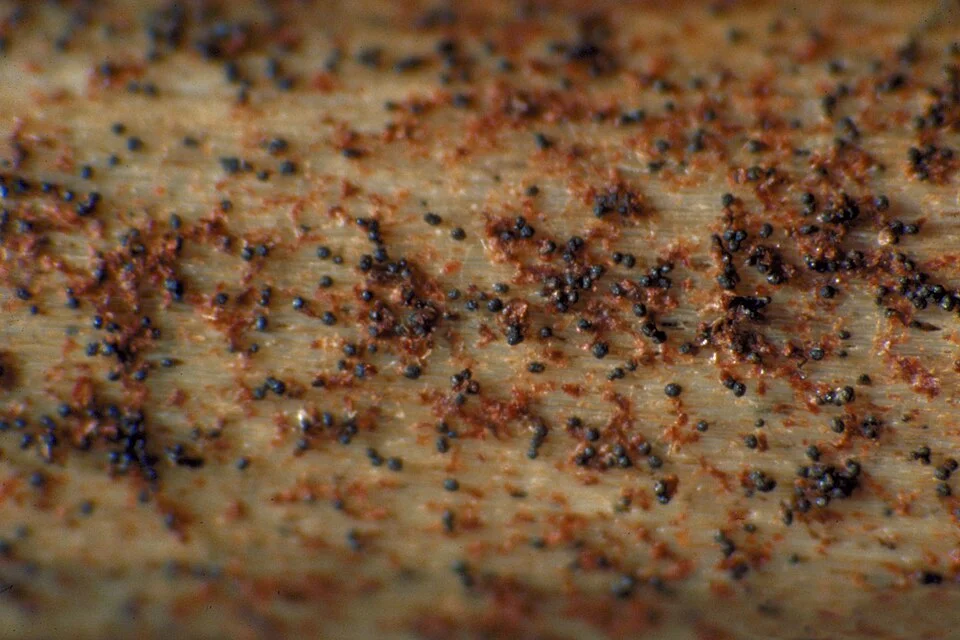
Photo: Edward L. Barnard, Florida Department of Agriculture and Consumer Services · CC BY 3.0 us
Charcoal rot is a fungal disease of hot, dry, stressed crops caused by a soil fungus (Macrophomina phaseolina) that attacks a very wide range of crops — beans, cowpea, groundnut, soybean, chickpea, sunflower, sesame, sorghum and maize. The fungus lives for years in the soil and in old crop stalks as tiny black specks, quietly infects the roots early on, then strikes when the plant is filling grain in hot, dry weather — plugging the pipes that carry water up the stem so the plant wilts and dries off before its time.
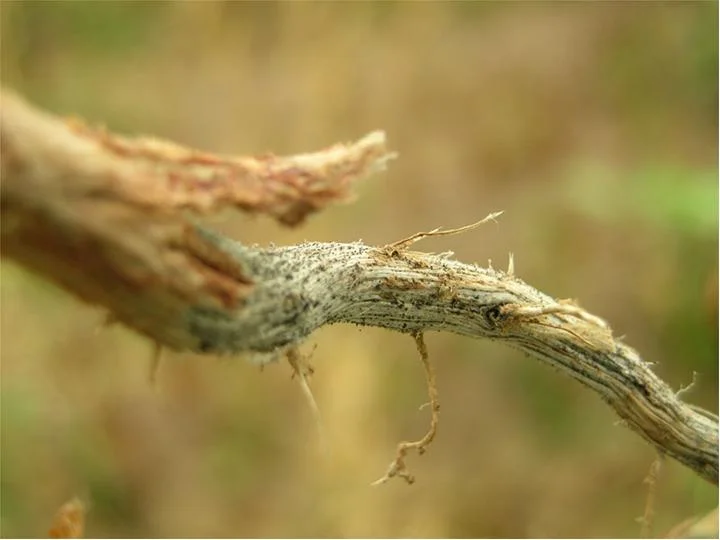
Photchana Trakunsukharati, Department of Agriculture, Thailand · CC BY 3.0 au 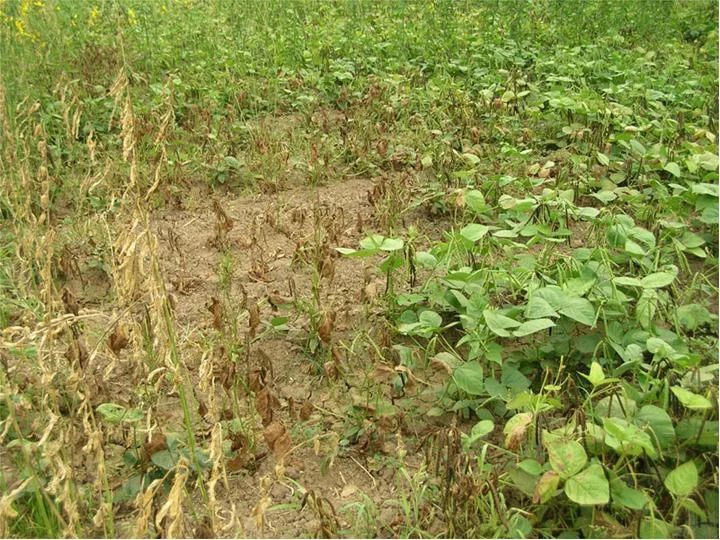
Photchana Trakunsukharati, Department of Agriculture, Thailand · CC BY 3.0 au
Why it matters
Charcoal rot can take up to half your crop (50%) in a bad, dry year — and it hits at the worst time, when your plants are filling grain and you are counting on the harvest. The hard part is there is no spray that cures it: by the time you see plants wilting and drying, the fungus is already inside the stem and those plants are lost. It also lives in the soil for years, so once a field has it, it comes back whenever the weather turns hot and dry. That is why the whole fight is about keeping your crop un-stressed and stopping the disease before it starts.
When to act
A management (not spray) trigger: on susceptible crops in hot, drought-prone fields, act pre-emptively through irrigation and rotation; scattered wilting plants in late season confirm the problem.
This guidance is general, compiled from published agronomic references including FAO and CABI. Thresholds and timing shift with your crop, your variety and the season.
In much of the region a spray is simply called mushonga — medicine. But a chemical group you cannot name is one you cannot rotate, and a product you did not write down has no pre-harvest interval you can observe. Mushonga, and other farming words →
The full Charcoal rot field guide
Identify it
The first thing you see
healthy-looking plants that suddenly wilt and dry off early, still standing, in scattered spots or patches — while the rest of the field is still green. It usually shows during a hot, dry spell when the plants are filling grain or pods. The leaves yellow, then go brown and crispy, and the plant ripens too early, with small, shrivelled, poorly-filled grain or pods.
The sure sign is inside the stem
Pull up a wilting plant and split the lower stem and taproot with a knife or your thumbnail. The skin turns a dull silvery-grey, like the colour of ash or pencil-lead, and inside the stem is shredded and frayed, dusted with tiny black specks — as if someone sprinkled charcoal dust, soot or ground pepper through it. Rub them and they smudge black. Those specks are the fungus's survival seeds (microsclerotia — the tough black grains it lives on for years).
Look at the lower stem, the crown and the taproot
— the parts at and below the soil line. That is where the grey colour and the black dust show. The leaves just wilt and dry; the disease itself sits in the stem base and roots, not on the leaves. On maize and sorghum the stalk also goes greyish, the pith inside shreds, and weak plants fall over (lodge).
Do not confuse it with ordinary drought
A thirsty plant wilts in the afternoon heat but perks up again at night or after rain, and its split stem is clean and white inside. A charcoal-rot plant never recovers and shows the grey stem with black dust.
Also not the same as
even ripening (the whole field ripens together, not in scattered patches), or termite and stem-borer damage (you will see tunnels and holes, no grey dust), or other wilts (they leave a brown or pink streak in the stem, not peppery black specks that smudge). The black charcoal dust in a grey, shredded lower stem is charcoal rot's fingerprint.
Scout for it
Watch from flowering through grain-fill (mid- to late season)
— the weeks when your plants are filling grain or pods. The danger jumps during a hot, dry spell with no rain. Walk the field once a week through this stage, and always straight after a hot, dry spell.
Walk a big "W" across the field so you cover all four corners and the middle — not just the edge by the path. Pay special attention to the spots that dry out and stress first: sandy patches, field edges, shallow or compacted soil, and over-crowded thick stands. Charcoal rot strikes the most stressed plants first.
Make about 5 stops and check 10 plants at each stop. Look for plants wilting or drying early, then split the lower stem and taproot of any suspect plant to check for the silvery-grey skin and the tiny black charcoal specks inside.
Even 1 wilting, early-drying plant in 10 — with black dust in the split stem — means charcoal rot is in your field
Because no spray can cure it, do not wait for more: that one confirmed plant is your trigger to protect the rest (relieve the stress if you can water), harvest affected patches early before they fall over, and fix the causes for next season. The true 'act early' moment is even sooner — the moment a hot, dry spell hits a susceptible crop at grain-fill, act to relieve the stress before any plant wilts.
Control it
Prevent it — keep the crop un-stressed (your strongest tool)
This fungus only wins when the plant is stressed by heat and drought. If you can water, irrigate during hot, dry spells at flowering and grain-fill to keep the crop from drought-stressing — even one or two well-timed waterings in a dry spell can save it. Do not over-crowd: plant at the recommended spacing so plants are not fighting each other for water. Balance your fertiliser and avoid too much nitrogen, which pushes soft, lush growth that then wilts hard when the water runs short.
Break the disease between seasons
The fungus lives in the soil and old crop stalks for years as those black specks. Plough in and break down crop residue after harvest so it rots faster, and rotate — grow a crop that is NOT on its host list next season (rotation just means growing a different crop in that field). Be warned: it attacks most of your usual crops (beans, cowpea, groundnut, soybean, chickpea, sunflower, sesame, sorghum and maize), so choose a genuine non-host break — or rest the land fallow — rather than swapping one host for another.
Plant a tolerant variety
Ask your seed supplier or extension officer for a variety of your crop bred to stand up to charcoal rot. On its own it is not a cure, but a tolerant variety plus keeping the crop un-stressed is the most practical control there is.
At planting, use treated seed for a small head-start
A fungicide seed treatment — a fungicide coated on the seed before you plant — gives limited early protection only. It is not a rescue and will not save a stressed crop, so treat it as a small bonus on top of the real work: stress relief, rotation and a tolerant variety.
There is no spray that cures charcoal rot
A fungicide sprayed on the leaves does nothing against this soil fungus — do not waste money on it. The only chemical that helps at all is the seed treatment above, and treated seed is poison: wear gloves, cover your skin, nose, mouth and eyes, mix and coat the seed in the open air, away from food, water, children and animals, never eat treated seed or feed it to people or livestock, and wash well afterwards. If you use seed treatments year after year, rotate to a different chemical group so the fungus cannot build up resistance, and always follow the label.
If plants keep wilting and dying → cut your losses and save what you can
Those plants will not recover, so harvest the affected patches early, before the weak stems snap and fall over (lodge) or the pods and cobs dry out and shed their grain. Then win it back next season: give the land a non-host rotation or a fallow rest, plough in the residue, plant a tolerant variety, sort out watering so the crop never drought-stresses at grain-fill, and do not over-crowd. Charcoal rot is beaten between seasons, not with a spray.
Catch Charcoal rot before it costs you the harvest
This guide is the general answer. Divisi works out yours — the week to scout your own field for Charcoal rot, and what to do the day you find it.


Crops it affects
Plan the crops it attacks
-
 When to plant Chickpea in Nyaribari Chache
 -
 When to plant Common bean in Dilolo
 -
 When to plant Cowpea in Bangui-Rapides
 -
 When to plant Groundnut in Songo
 -
 When to plant Maize in Mougalaba
 -
 When to plant Sesame in Demba
All planting calendars, country by country
Get Insights by email
A short digest of new Divisi articles. No email on quiet weeks.
Frequently asked questions
How do I identify Charcoal rot?
The first thing you see. healthy-looking plants that suddenly wilt and dry off early, still standing, in scattered spots or patches — while the rest of the field is still green. It usually shows during a hot, dry spell when the plants are filling grain or pods. The leaves yellow, then go brown and crispy, and the plant ripens too early, with small, shrivelled, poorly-filled grain or pods.
When should I take action against Charcoal rot?
A management (not spray) trigger: on susceptible crops in hot, drought-prone fields, act pre-emptively through irrigation and rotation; scattered wilting plants in late season confirm the problem.
How do I control Charcoal rot?
Prevent it — keep the crop un-stressed (your strongest tool). This fungus only wins when the plant is stressed by heat and drought. If you can water, irrigate during hot, dry spells at flowering and grain-fill to keep the crop from drought-stressing — even one or two well-timed waterings in a dry spell can save it. Do not over-crowd: plant at the recommended spacing so plants are not fighting each other for water. Balance your fertiliser and avoid too much nitrogen, which pushes soft, lush growth that then wilts hard when the water runs short.
Which crops are attacked by Charcoal rot?
Among the crops covered here: Chickpea, Common bean, Cowpea, Groundnut, Maize, Sesame, Sorghum, Soybean.