 Divisi
Grasshoppers
· Insect
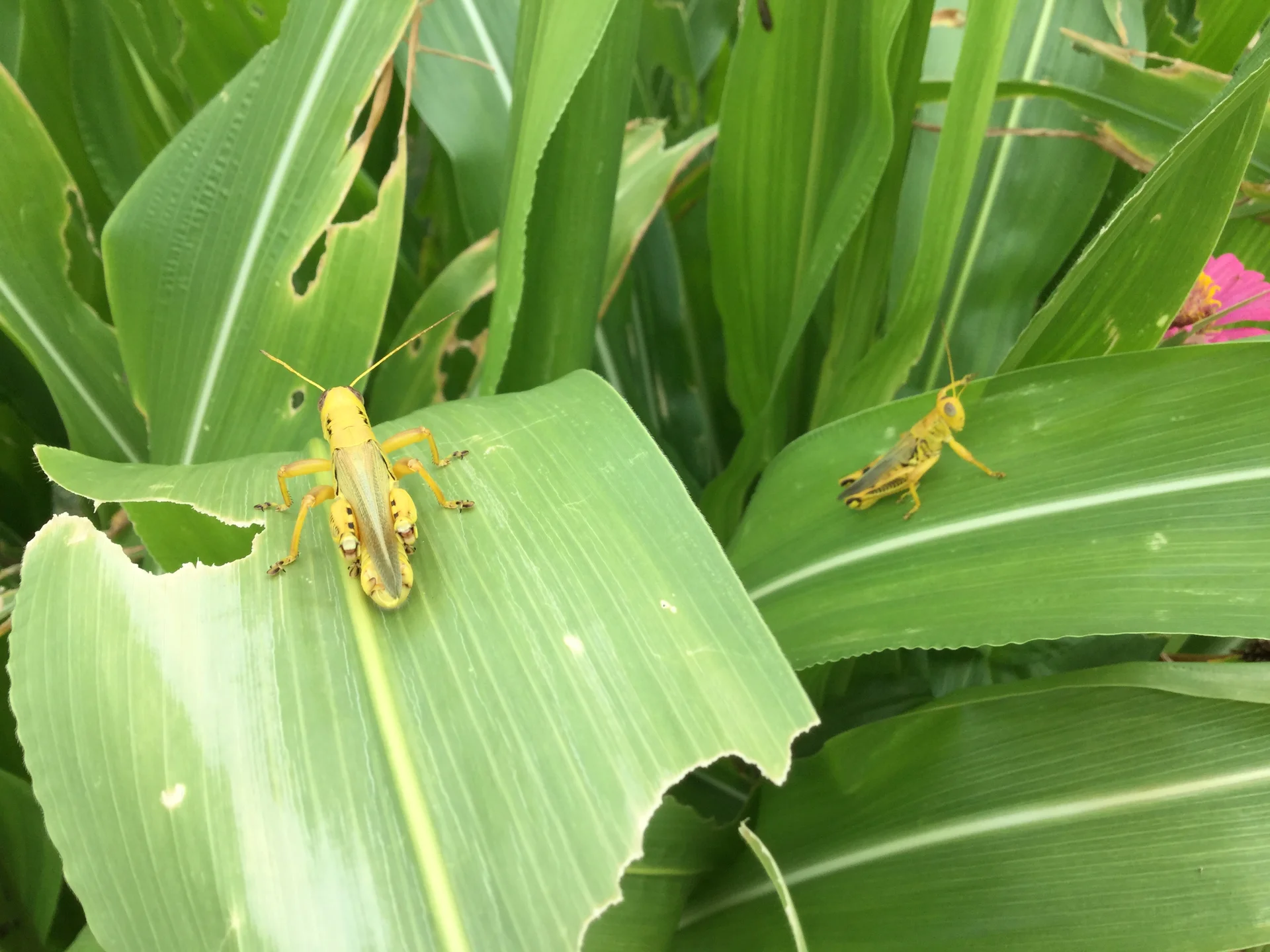
Photo: Geo Lightspeed7 · CC BY-SA 4.0
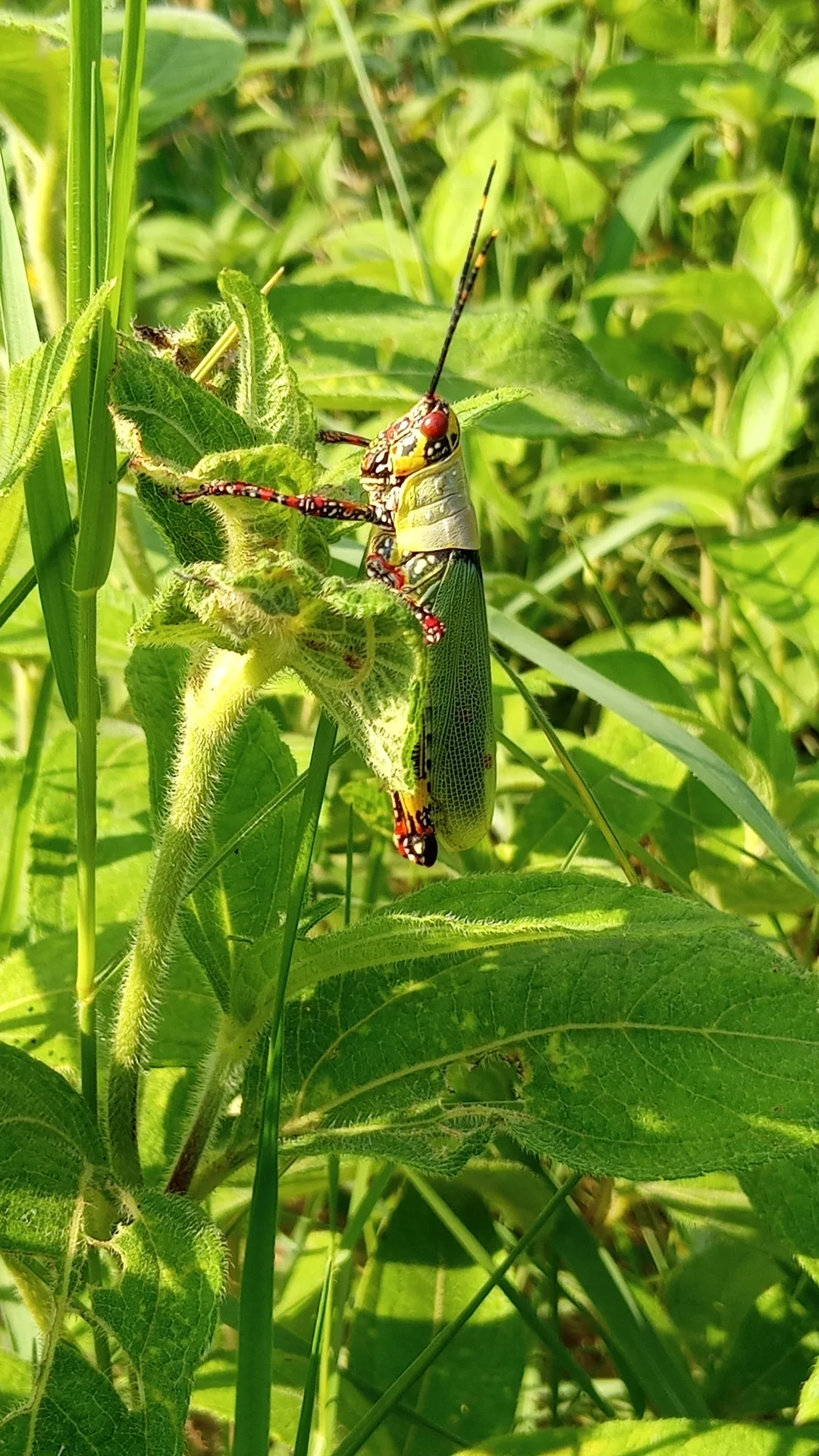
Grasshoppers are hard-bodied, jumping insects with big back legs and short, stiff feelers. Both the wingless young — called nymphs or 'hoppers' — and the winged adults chew leaves, stems and young shoots with strong jaws. They breed on the grassy edges, fallow land and roadsides around your field, then march into the crop in waves, usually massing on the rows nearest the grass. They hit seedlings hardest and, in outbreak years that follow good rains, can strip a whole young stand of maize, sorghum, pearl millet, cowpea, groundnut or cotton down to bare stems.
GodswillSE · CC BY 4.0 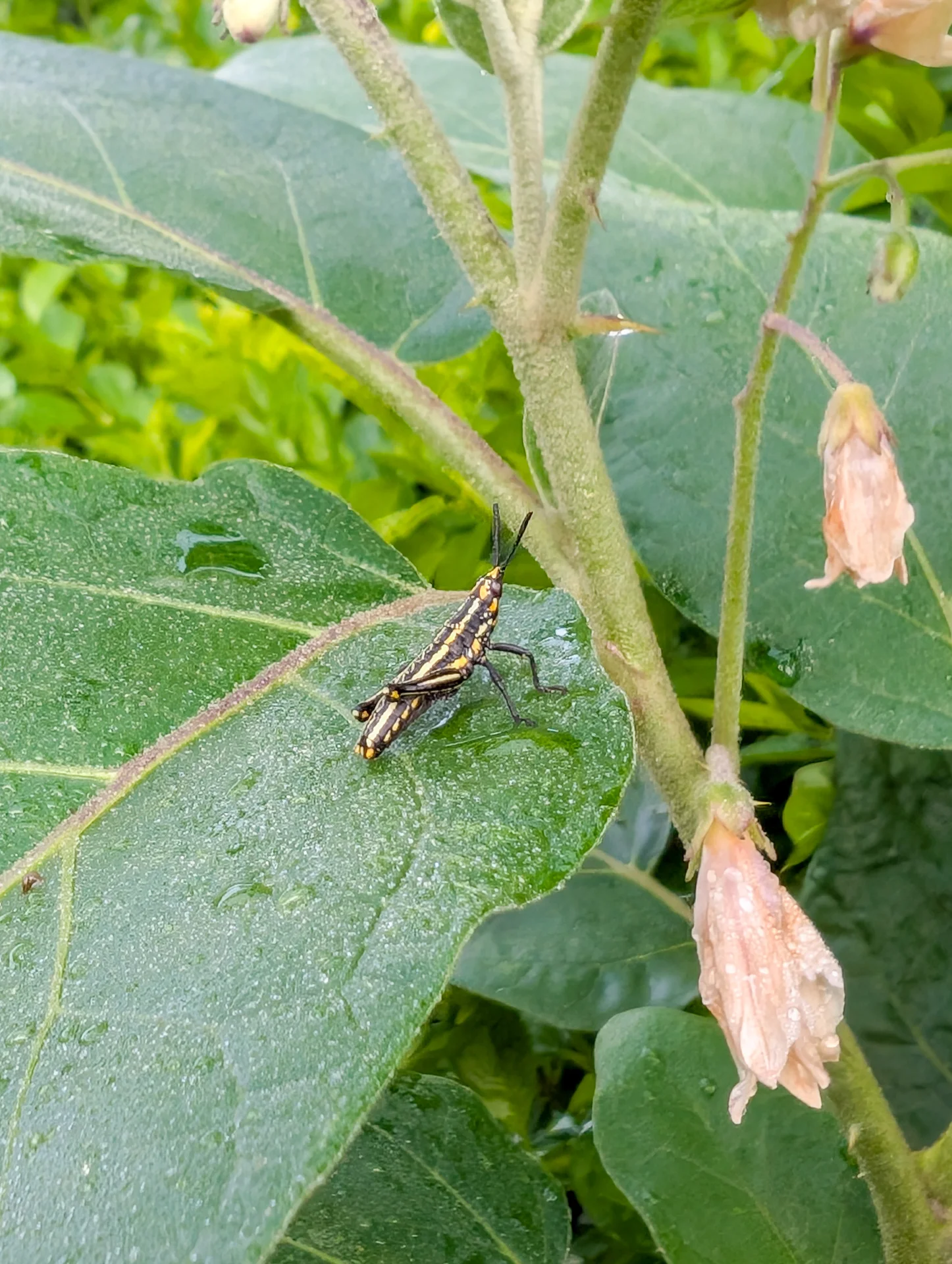
Ssemmanda will · CC BY-SA 4.0
Why it matters
Grasshoppers can eat up to a third — 30% — of your harvest, and they bite hardest when your crop is youngest: a seedling chewed down to the stem is dead, and that gap in the row is one you cannot fill later in the season. They breed in the grass, fallow and roadsides all around your field and keep coming in wave after wave, so even after you clear the ones you can see, more march in from next door. That is why they are so hard to beat once they settle in — the real fix is to hit their breeding ground on your field edges while the crop is still small, not just the hoppers sitting on your plants today.
When to act
Several hoppers per square metre with visible defoliation of seedlings, or ragged feeding on more than 1 in 5 young plants along field edges.
This guidance is general, compiled from published agronomic references including FAO and CABI. Thresholds and timing shift with your crop, your variety and the season.
In much of the region a spray is simply called mushonga — medicine. But a chemical group you cannot name is one you cannot rotate, and a product you did not write down has no pre-harvest interval you can observe. Mushonga, and other farming words →
The full Grasshoppers field guide
Identify it
Look at the damage first — it comes from the edges in
Leaves are chewed ragged from the outside, with notched, uneven margins and holes (not neat rows or clean shot-holes), and young seedlings are clipped or stripped right down to a bare stem. The chewing is almost always worst on the rows next to grass, fallow or a roadside and eases off as you walk deeper into the field — that 'damage fading inward from one side' is the grasshopper's signature.
Then look for the insect itself
Grasshoppers are hard-bodied, brown, grey or green, with large back legs built for jumping and short, stiff feelers (antennae). Adults are about the length of your thumb (2–5 cm); the young nymphs — 'hoppers' — look the same but smaller and have no wings yet. They shelter in grassy edges and weeds, feed in the warm daytime sun, and spring or fly up in a little cloud as you walk through — that flushing is the surest sign they are there.
Tell it apart from look-alikes
Unlike caterpillars (soft 'worms' that leave wet, sawdust-like droppings in the whorl and cannot jump), grasshoppers are hard and spring away when disturbed. Unlike crickets (which feed at night and hide in soil cracks), grasshoppers are out in the daytime sun. And unlike a true locust plague — a huge swarm that flies in from far away and can darken the sky — these are local grasshoppers that build up quietly on your own edges. If a dense swarm suddenly marches or flies in all at once, treat it as a locust alarm and tell your extension officer straight away.
Scout for it
Scout hardest from the day seedlings emerge, right through development and into mid-season
The seedling and early-growth stages are when a hopper attack can kill plants outright, so that is when to watch most closely. Step up your checks after hot, dry spells that follow rains — that is the weather that makes grasshopper numbers explode.
Walk the field edges first
, especially the side facing grass, fallow or a road — that is the doorway they come through. Then cut a big 'W' shape right across the field, stopping about 10 times, so you can see how far in from the edge they have pushed.
At each stop, mark off about one square metre (roughly one big pace each way), count the hoppers that jump up, and check the nearest young plants for fresh, ragged chewing. Do this in the morning, when they are active enough to flush but not yet moving at full speed.
Act now if more than 1 in every 5 young plants (2 in 10) along the edge shows fresh ragged chewing
, or if you flush several hoppers — about 3 or more — from a single square metre and seedlings are being stripped. Below that, keep watching: a few hoppers in a strong, healthy stand is not yet worth spraying.
Control it
Prevent first
-
take away their nursery
Grasshoppers lay their eggs in egg pods (clusters of eggs the females push down into bare, undisturbed soil), so keep field edges, fallow patches and roadside strips weeded and slashed short, leaving them nowhere to breed or hide. Before the season, plough or hoe those margins and old fallow to turn the egg pods up to the surface, where they dry out in the sun or get eaten by birds and ants.
-
grow past the danger fast
Plant early and all at once, ideally together with your neighbours, and keep a thick, even stand so your seedlings race through the tender stage before hopper numbers build. A weak, patchy, late crop sitting right beside tall grass is exactly what gets stripped first.
Act early — natural enemies and the fungus
Let chickens, ducks or guinea fowl work the field edges, and protect wild birds and predatory insects by not blanket-spraying. Where hoppers gather in bands on the margins, spray those patches with Metarhizium — a natural fungus biopesticide (a living fungus that infects and kills grasshoppers but is harmless to people, bees and livestock). Even with a safe product, cover your skin, mouth and eyes and spray in the cool of early morning or evening with the wind at your back, then wash your hands and clothes afterwards — the fungus is living spores that the hot midday sun kills, so cool, calm conditions also make it work better. It acts slowly, so aim it at the breeding patches at the source rather than waiting for hoppers to reach your plants. In the cool early morning, when hoppers are slow and stiff, you can also hand-collect them or drive them into the open for the birds.
Last resort — insecticide, only where they are
If scouting is over threshold and the fungus and cultural steps are not holding, use a registered insecticide — but spot-spray only the infested edges and breeding bands, never the whole field, to save money and spare your natural enemies. Every single time: cover your skin, eyes, nose and mouth; spray in the cool of morning or evening with the wind at your back (never into the wind or the heat of the day); and keep the spray off food, drinking water, children, animals and any flowering plants where bees feed. Wash yourself and your clothes as soon as you finish. Respect the pre-harvest interval — the number of days the label tells you to wait between spraying and eating or selling the crop. And to stop hoppers becoming resistant (immune, so the poison stops working), switch to a different chemical group each time rather than reusing the same product.
If they keep coming — or it is already too late
When wave after wave marches in from the grassland around you, your field alone will never stay clean: team up with your neighbours to clear and treat the shared breeding ground — grass, fallow and roadsides — all at the same time, because your border is their doorway. If you ever see dense bands of hoppers marching on the ground or a swarm flying in, that may be locusts: report it to your local agriculture or extension officer at once, as it needs an organised, area-wide response. And if a patch of seedlings is already chewed down to bare stems and past saving, cut your losses — gap-fill or replant that patch early while there is still enough season left, rather than pouring more money into a stand that cannot recover.
Catch Grasshoppers before it costs you the harvest
This guide is the general answer. Divisi works out yours — the week to scout your own field for Grasshoppers, and what to do the day you find it.


Crops it affects
Plan the crops it attacks
-
 When to plant Cotton in Kalemie
 -
 When to plant Cowpea in Bangui-Rapides
 -
 When to plant Fonio in Luebo
 -
 When to plant Groundnut in Songo
 -
 When to plant Maize in Mougalaba
 -
 When to plant Pearl millet in Kono
All planting calendars, country by country
Get Insights by email
A short digest of new Divisi articles. No email on quiet weeks.
Frequently asked questions
How do I identify Grasshoppers?
Look at the damage first — it comes from the edges in. Leaves are chewed ragged from the outside, with notched, uneven margins and holes (not neat rows or clean shot-holes), and young seedlings are clipped or stripped right down to a bare stem. The chewing is almost always worst on the rows next to grass, fallow or a roadside and eases off as you walk deeper into the field — that 'damage fading inward from one side' is the grasshopper's signature.
When should I take action against Grasshoppers?
Several hoppers per square metre with visible defoliation of seedlings, or ragged feeding on more than 1 in 5 young plants along field edges.
How do I control Grasshoppers?
Prevent first — take away their nursery. Grasshoppers lay their eggs in egg pods (clusters of eggs the females push down into bare, undisturbed soil), so keep field edges, fallow patches and roadside strips weeded and slashed short, leaving them nowhere to breed or hide. Before the season, plough or hoe those margins and old fallow to turn the egg pods up to the surface, where they dry out in the sun or get eaten by birds and ants.
Which crops are attacked by Grasshoppers?
Among the crops covered here: Cotton, Cowpea, Fonio, Groundnut, Maize, Pearl millet, Sorghum, Teff.