 Divisi
Fusarium wilt
Fusarium oxysporum · Fungal
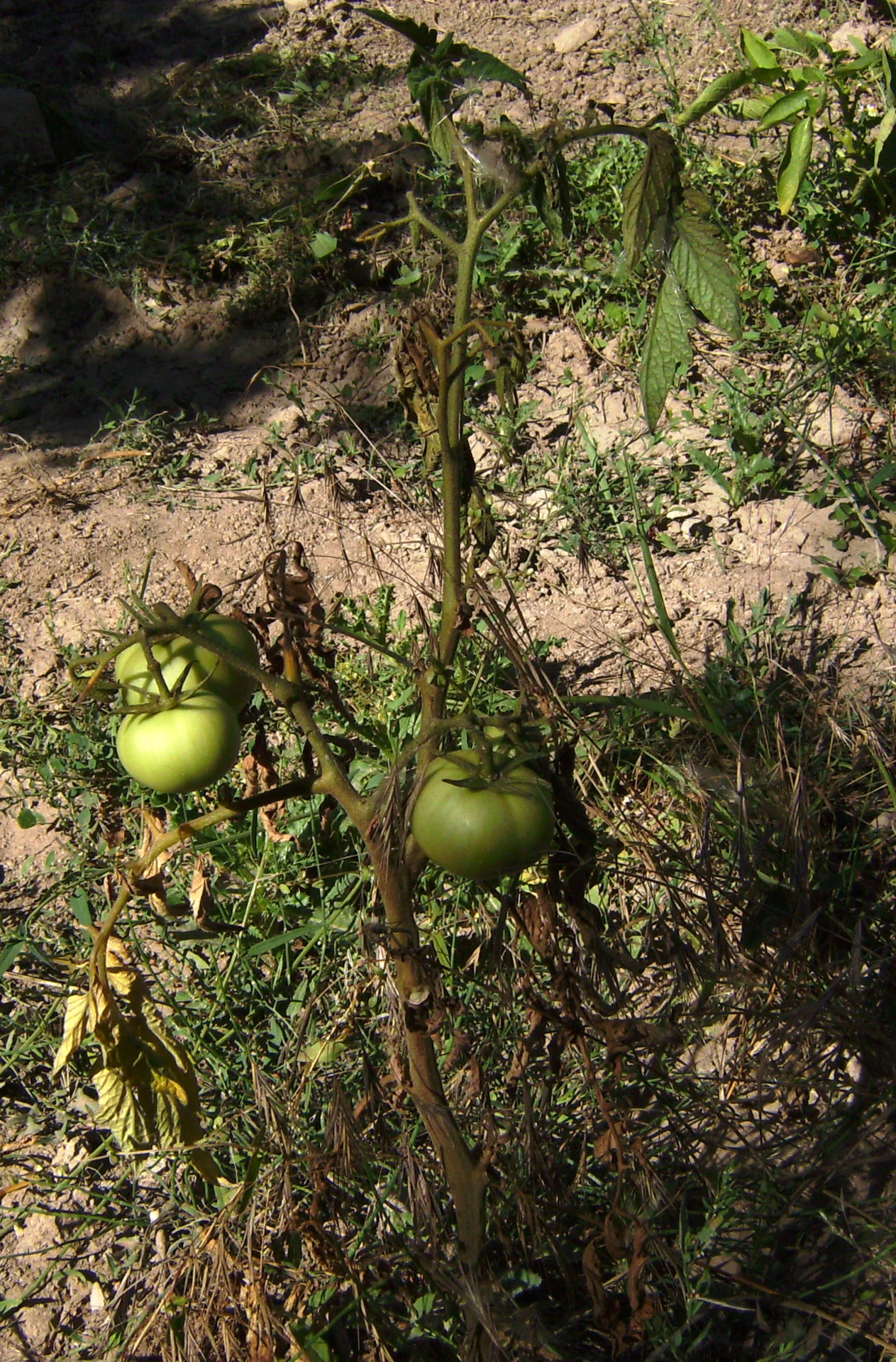
Photo: Victor M. Vicente Selvas · CC BY-SA 3.0
Fusarium wilt is a soil-borne fungal disease (Fusarium oxysporum) that attacks the roots of many crops — banana and plantain, tomato, common bean, cowpea, chickpea, pigeon-pea, cotton and watermelon. Each crop has its own strain of the fungus. It creeps in through the roots and grows up inside the plant's water pipes (the vascular tissue — the thin channels that carry water from root to leaf), clogging them so the plant slowly starves of water even when the soil is wet. It thrives in warm soil (25-32 C) and, once in a field, its resting spores survive there for many years.
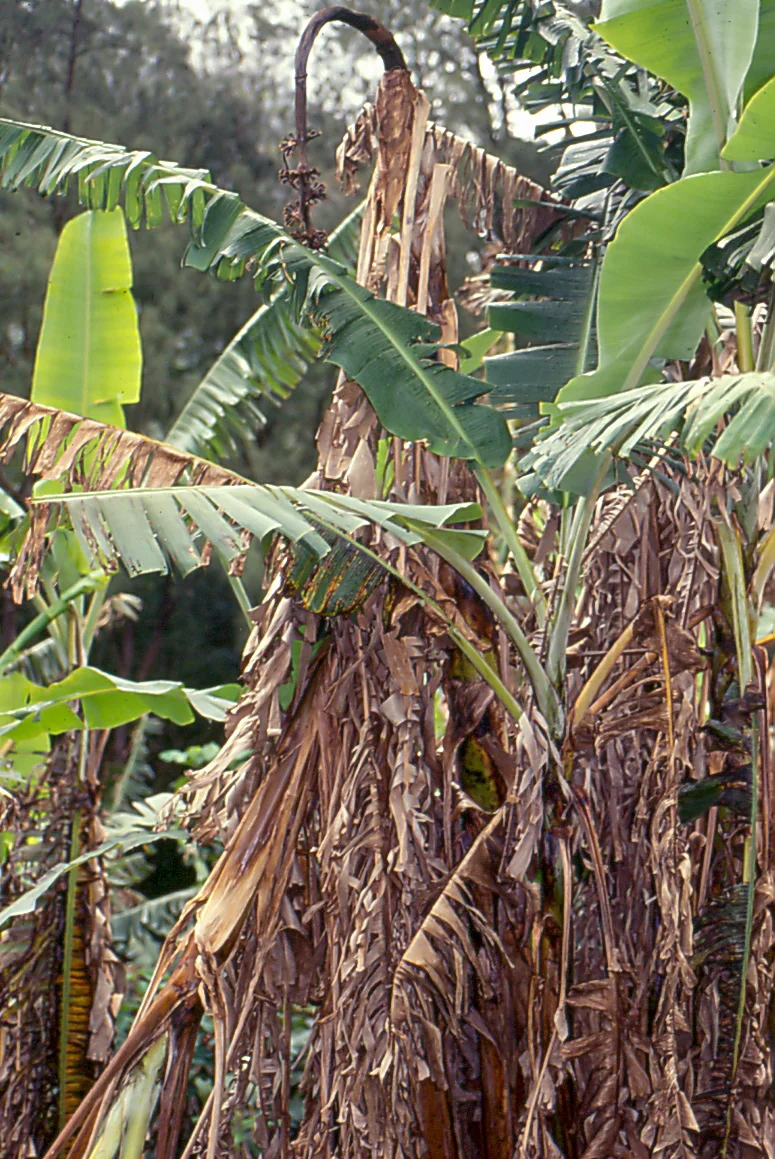
Scot Nelson · CC0 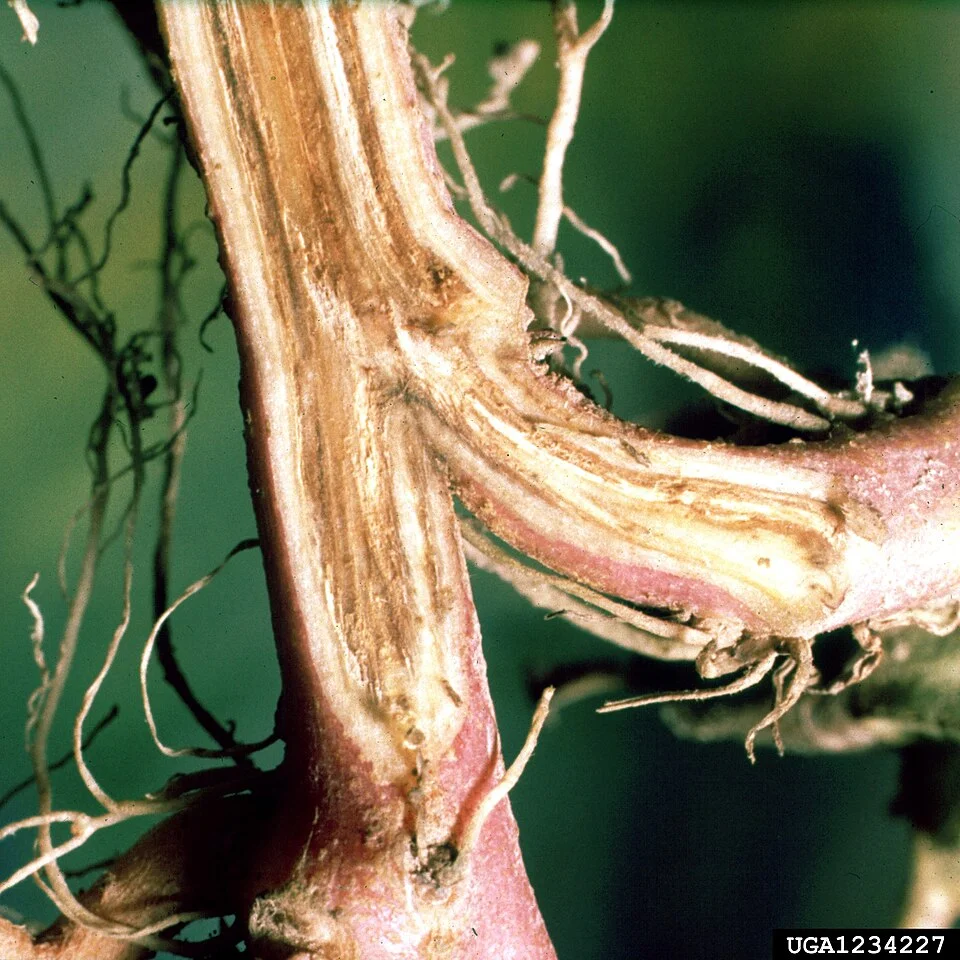
Clemson University - USDA Cooperative Extension Slide Series · CC BY 3.0
Why it matters
Fusarium wilt can wipe out up to 60% of your crop — on bananas or tomatoes a bad patch can mean losing more than half your plants, one wilting stand at a time. What makes it cruel is that it works from inside the plant's water pipes, so no spray can cure a plant once it is sick — by the time you see wilting, the damage is done. Worse, the fungus lives on in the soil for years and rides from field to field on infected suckers, seedlings, soil on your tools and boots, and irrigation water, so a field that gets it stays dangerous for the same crop season after season.
When to act
any plant wilting and yellowing with brown vascular streaking when the stem is cut
This guidance is general, compiled from published agronomic references including FAO and CABI. Thresholds and timing shift with your crop, your variety and the season.
In much of the region a spray is simply called mushonga — medicine. But a chemical group you cannot name is one you cannot rotate, and a product you did not write down has no pre-harvest interval you can observe. Mushonga, and other farming words →
The full Fusarium wilt field guide
Identify it
The first thing you notice
a plant that wilts and droops in the heat of the day, then perks up a little in the cool of the evening or morning. Day after day the wilting gets worse and the plant does not fully recover — while the plants right next to it stay healthy.
The yellowing
leaves turn yellow starting from the bottom of the plant upward, and often the yellowing and wilting is one-sided — one side or one branch goes yellow and limp while the other side still looks green. The plant is stunted and eventually dies.
The sure sign — cut the stem:
slice through the lower stem, root, or (on banana) the pseudostem. A healthy plant is white or green inside; a wilt-sick plant shows brown to reddish-brown streaks or a stained ring running up through the water pipes. This inside-the-stem staining is the tell-tale mark of Fusarium wilt.
Don't confuse it with plain drought or heat
a thirsty plant wilts too, but it fully recovers overnight and after watering, and it stays white and clean inside when you cut it. Fusarium never fully recovers and always shows the brown streak inside.
Don't confuse it with bacterial wilt
(common on tomato and banana): both wilt fast, but bacterial wilt makes the plant collapse while still green, and if you cut a piece of the sick stem and dangle it in a clear glass of water, a milky white thread oozes out. Fusarium does not ooze milk — it shows the brown vascular streak instead. Root-knot damage (knots and galls on the roots) often goes hand in hand with Fusarium and makes it worse.
Scout for it
When to look hardest
watch closely once the crop is past establishment and bulking up — through the vegetative growth and mid-season stages (as bananas throw out big leaves, as tomatoes set fruit, as beans and cowpeas flower and fill pods). This is when the plant demands the most water and clogged pipes show up as wilting — especially in a warm spell, since the fungus loves soil of 25-32 C.
How to walk the field
every week walk a big "W" across the field so you cover all four corners and the middle, not just the row by the path. Make about 10 stops and look at the plants around each stop.
What to check at each stop
look for plants wilting at midday, yellowing from the bottom up or on one side, and stunted plants that stand out from their healthy neighbours. Mark any suspect plant.
Confirm before you decide
on a suspect plant, cut the lower stem or pseudostem and look inside for the brown to reddish streak. That cut is what separates real wilt from ordinary thirst.
The threshold — act on the very first one:
because this disease spreads and cannot be cured, your trigger is low. Even 1 plant that is wilting and yellowing and shows brown streaking when you cut the stem = act now — remove it and start your control steps before it seeds the soil and infects its neighbours.
Control it
Prevent it first
-
plant a resistant variety (your strongest tool):
where wilt is known in your area, grow a resistant variety or grafted plant matched to the local strain. This is the single most effective defence — it is your best protection because, once a plant is infected, nothing cures it.
-
start clean and keep it clean (cultural steps):
use only clean, certified or tissue-culture planting material (never take suckers, runners or seedlings from a field that has had wilt). Do not carry the fungus around — clean soil off tools, boots and hoes and disinfect them, and don't let water run off a sick field into a clean one. Build up the soil: add organic matter (compost, manure) and, on sour sandy soils, raise the soil pH with lime, since the fungus does its worst in warm, acid, sandy ground.
-
break the cycle with rotation:
the fungus feeds on its host, so rotate for several seasons with non-host crops (crops it cannot attack, such as cereals like maize or sorghum for the vegetable and legume wilts) before returning the susceptible crop to that land. Control root-knot nematodes too, as their root wounds open the door for the fungus.
Act early
-
pull out and destroy sick plants (roguing):
as soon as scouting confirms a wilted, brown-streaked plant, rogue it — dig it out with as much root as you can, carry it out of the field in a bag, and burn or bury it deep. Never leave it or throw it on the compost. This removes the factory that is making more spores for the soil.
-
put helpful fungi in the soil (biological, trichoderma):
on new plantings and as a root or soil drench, apply Trichoderma (a helpful fungus that fights the wilt fungus in the root zone), together with plenty of organic matter to feed it. It cannot cure a sick plant, but it helps protect healthy roots and suppress the pathogen. Safety even for a friendly product: keep the powder off your skin and out of your eyes and nose, wear a cloth over your mouth while mixing, keep it away from food and children, and wash your hands after.
There is no chemical cure — don't waste money on sprays:
Fusarium hides inside the plant's water pipes and lives in the soil, so no fungicide spray will save an infected plant or clear an infected field. Any seller promising a spray cure is selling you nothing. Put your money into resistant seed, clean planting material, and soil health instead.
If it keeps spreading — cut your losses cleanly:
if wilt is spreading through the block despite roguing, stop replanting the same crop in that soil. Harvest what healthy plants you can, then switch that land to a non-host crop or a resistant variety and plan a long rotation. Treat the affected field as infected for years to come: keep its tools, boots, suckers and runoff separate so you don't carry the fungus to your clean fields.
Catch Fusarium wilt before it costs you the harvest
This guide is the general answer. Divisi works out yours — the week to scout your own field for Fusarium wilt, and what to do the day you find it.


Crops it affects
Plan the crops it attacks
-
 When to plant Banana & plantain in Nosy-Varika
 -
 When to plant Chickpea in Nyaribari Chache
 -
 When to plant Common bean in Dilolo
 -
 When to plant Cotton in Kalemie
 -
 When to plant Cowpea in Bangui-Rapides
 -
 When to plant Pigeon pea in Buganda
All planting calendars, country by country
Get Insights by email
A short digest of new Divisi articles. No email on quiet weeks.
Frequently asked questions
How do I identify Fusarium wilt?
The first thing you notice. a plant that wilts and droops in the heat of the day, then perks up a little in the cool of the evening or morning. Day after day the wilting gets worse and the plant does not fully recover — while the plants right next to it stay healthy.
When should I take action against Fusarium wilt?
any plant wilting and yellowing with brown vascular streaking when the stem is cut
How do I control Fusarium wilt?
Prevent it first — plant a resistant variety (your strongest tool):. where wilt is known in your area, grow a resistant variety or grafted plant matched to the local strain. This is the single most effective defence — it is your best protection because, once a plant is infected, nothing cures it.
Which crops are attacked by Fusarium wilt?
Among the crops covered here: Banana & plantain, Chickpea, Common bean, Cotton, Cowpea, Pigeon pea, Tomato, Watermelon.